Hyunmoo
South Korea's strike arsenal — the Hyunmoo family runs from Tomahawk-like cruise missiles to the Hyunmoo-5 "monster missile," a conventional ballistic weapon with an 8-tonne bunker-buster warhead built to smash North Korea's deepest command bunkers. The non-nuclear backbone of Seoul's deterrence.
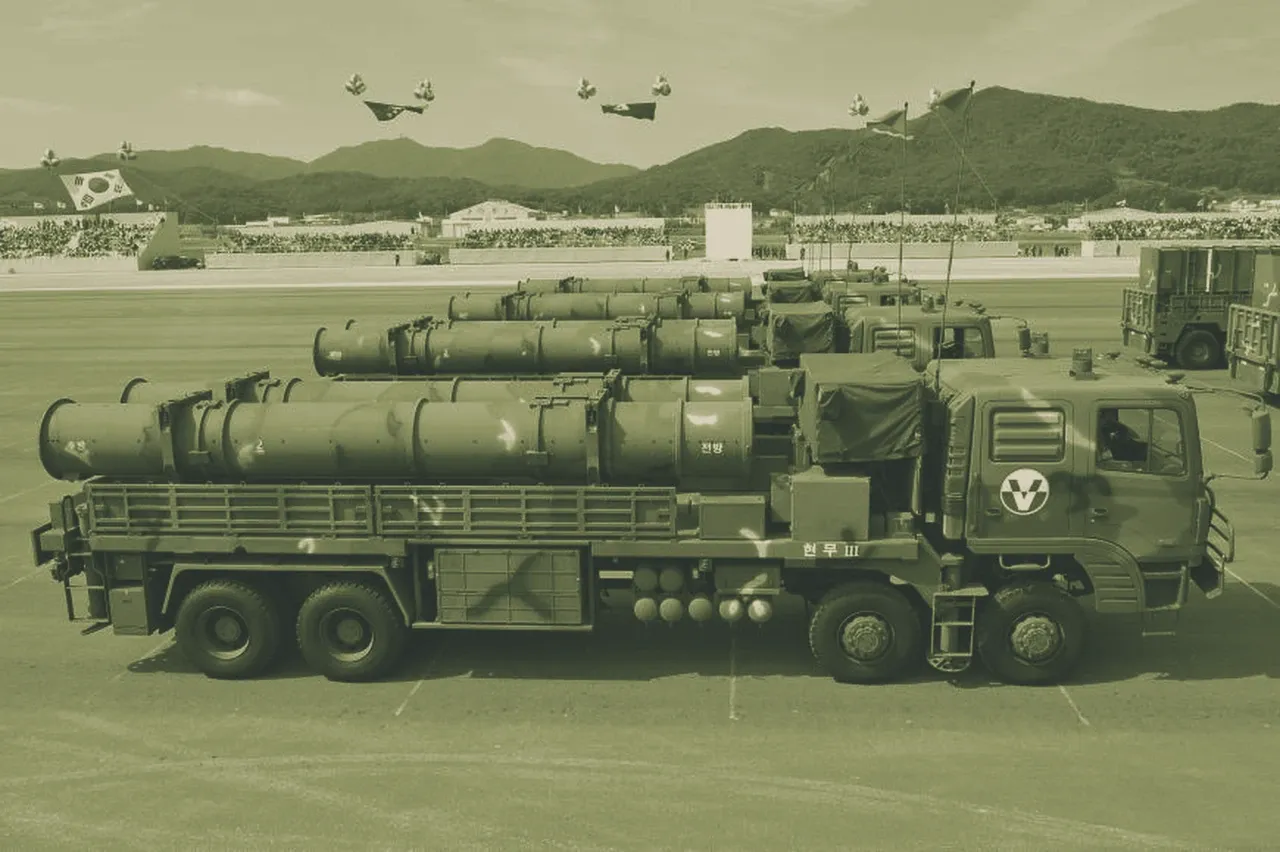

South Korea's strike arsenal — "Hyunmoo" (after the mythical Black Tortoise, guardian of the northern sky) is the family name for Seoul's growing array of conventional ballistic and cruise missiles, running from Tomahawk-like land-attack cruise missiles to the extraordinary Hyunmoo-5 "monster missile," a ballistic weapon carrying an eight-tonne bunker-buster warhead designed to reach and destroy North Korea's deepest, most fortified command bunkers. Built entirely with conventional warheads, the Hyunmoo family is the non-nuclear backbone of South Korea's deterrence — the means by which a non-nuclear state aims to hold a nuclear-armed neighbour at risk.
Overview
Hyunmoo is the designation for a family of South Korean conventional precision-strike missiles developed largely by the Agency for Defense Development (ADD) and produced by firms such as Hanwha and LIG Nex1. It spans both ballistic and cruise missiles: the Hyunmoo-2 ballistic missiles, the Hyunmoo-3 family of long-range cruise missiles (broadly Tomahawk-like), the Hyunmoo-4 ballistic missile with a heavy bunker-buster warhead, and the headline Hyunmoo-5 — described as the most powerful conventional ballistic missile ever built, carrying a warhead of up to roughly eight to nine tonnes to smash deeply-buried targets. Crucially, these are conventionally armed (South Korea is not a nuclear-weapon state), and together they form the strike component of Seoul's "three-axis" defence strategy against North Korea. The Hyunmoo family — alongside the submarine-launched variants on the KSS-III — represents South Korea's bid to deter a nuclear neighbour with overwhelming, precise conventional firepower.
🔒 The full Hyunmoo file is for BattlePolicy Pro members. Below the line: development history, design and capabilities, variants, the combat record, advantages and limitations, comparable systems, outlook, the full specifications table, our sourcing, and the analyst assessment — procurement, suppliers and the BattlePolicy verdict. Unlock the full file with BattlePolicy Pro →
Below this point
- Development
- Design & capabilities
- Variants
- Combat record / operational use
- Advantages
- Drawbacks / limitations
- Counterparts
- Outlook
- Key specifications
- Sources
- Analyst Section
- Procurement & contracts
- Suppliers & related companies
- Comparable systems — analyst view
- Analyst note