Hsiung Feng III
Taiwan's "carrier killer" — the ramjet-powered Hsiung Feng III streaks toward enemy ships at around Mach 3, too fast for many defences to react. Fired from warships, coastal batteries and fighter jets, it is a core asymmetric weapon meant to make any Chinese invasion fleet pay a heavy price.
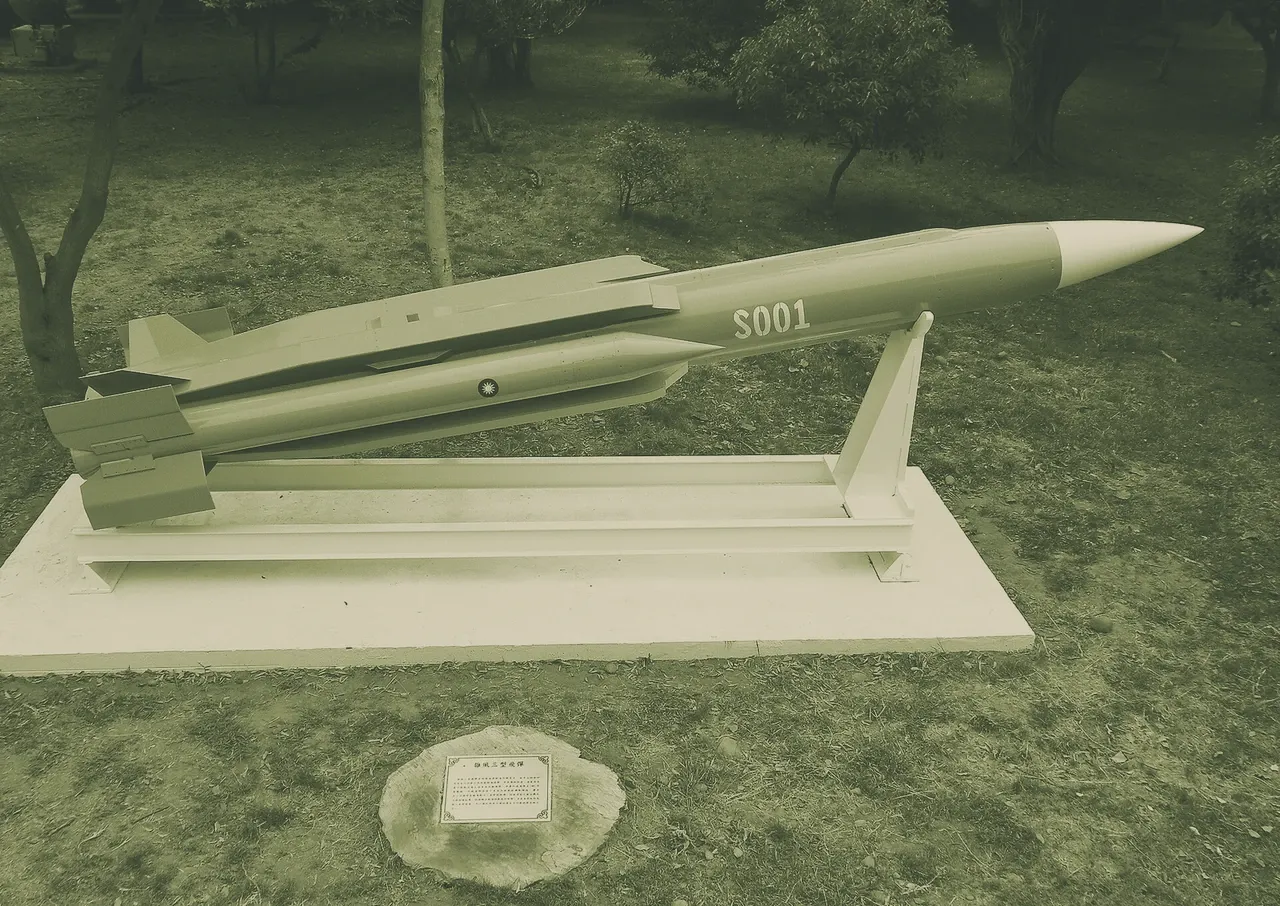

Taiwan's "carrier killer" — the Hsiung Feng III ("Brave Wind III") is a ramjet-powered supersonic anti-ship missile that streaks toward enemy ships at around Mach 3, far too fast for many shipboard defences to react in time. Built by Taiwan's national defence institute and fired from warships, coastal truck-mounted batteries and now fighter jets, it is one of the core asymmetric weapons designed to make any Chinese amphibious-invasion or blockade fleet pay a heavy, perhaps prohibitive, price for approaching the island.
Overview
The Hsiung Feng III (HF-3) is a medium-range supersonic missile developed by Taiwan's National Chung-Shan Institute of Science and Technology (NCSIST), able to strike both naval and land targets. Its defining feature is speed: an integrated rocket-ramjet propulsion system accelerates it to roughly Mach 3 (terminal speeds reported up to Mach 3.5), compressing the time defenders have to detect, track and engage it. Carrying a semi-armour-piercing warhead and fitted with electronic counter-countermeasures comparable to Western anti-ship missiles, it is widely described as a "carrier killer" for the threat its supersonic terminal dash poses to large warships. Taiwan deploys it from warships, from mobile coastal-defence batteries, and — more recently — from fighter aircraft, and has fielded an extended-range version (HF-IIIER). The HF-3 is a centrepiece of Taiwan's asymmetric strategy: relatively affordable, mobile, hard-to-stop missiles meant to deny China the sea control any invasion would require.
🔒 The full Hsiung Feng III file is for BattlePolicy Pro members. Below the line: development history, design and capabilities, variants, the combat record, advantages and limitations, comparable systems, outlook, the full specifications table, our sourcing, and the analyst assessment — procurement, suppliers and the BattlePolicy verdict. Unlock the full file with BattlePolicy Pro →
Below this point
- Development
- Design & capabilities
- Variants
- Combat record / operational use
- Advantages
- Drawbacks / limitations
- Counterparts
- Outlook
- Key specifications
- Sources
- Analyst Section
- Procurement & contracts
- Suppliers & related companies
- Comparable systems — analyst view
- Analyst note