PHL-191
China's modular, long-range wheeled multiple-launch rocket system — built to strike targets up to 500 km across the Taiwan Strait with a mix of guided rockets and Fire Dragon tactical ballistic missiles, and the keystone of the PLAGF's deep-fires modernization.
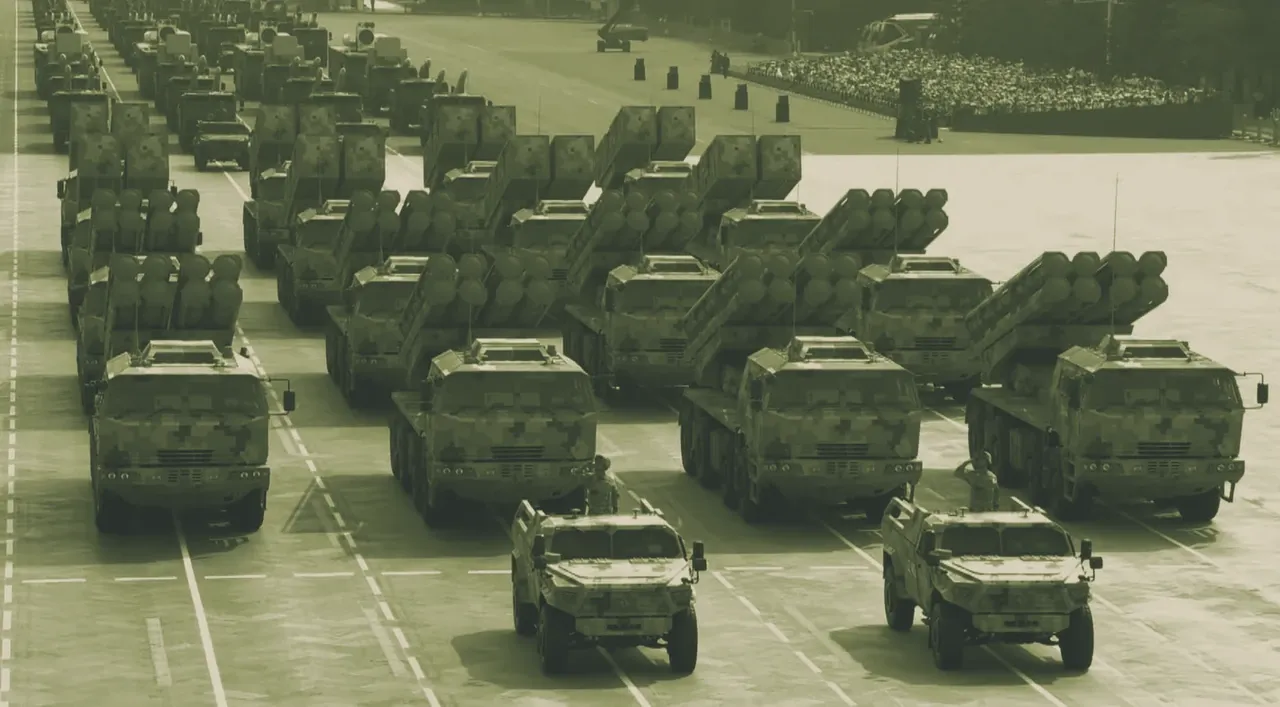
China's modular, long-range wheeled multiple-launch rocket system — the backbone of the People's Liberation Army Ground Force's deep-fires modernization, built to deliver precision strikes with guided rockets and tactical ballistic missiles out to ~500 km and, in operational planning, to range the entirety of the Taiwan Strait.
Overview
The PHL-191 (also known as PCL-191 or PHL-16; export designation AR3) is a modular, 8×8 wheeled multiple-launch rocket system fielded by the People's Liberation Army Ground Force (PLAGF). Unlike previous Chinese MLRS that were fixed-caliber and relatively short-ranged, the PHL-191 introduces swappable ammunition pods, allowing a single launcher to fire 300 mm or 370 mm guided rockets or 750 mm tactical ballistic missiles — a leap that gives a ground-based artillery system the reach to strike across the 180–500 km Taiwan Strait. The type was first seen publicly at the 1 October 2019 National Day parade and has since been issued to PLAGF group-army artillery brigades as the premier long-range precision-fires system.
Development
NORINCO developed the PHL-191 to replace the PHL-03 (a 300 mm, 12-tube system derived from the Russian BM-30 Smerch) as China's heavy long-range rocket artillery. The design — a modular box-launcher architecture adapted from the export AR3 family — was first shown in service colours during the 2019 parade, marking a shift from the earlier tube-based launchers to pre-loaded pods that allow quick reloads and multi-calibre flexibility. The South China Morning Post noted that the system’s introduction immediately “cast a shadow” over the Taiwan Strait, as the combination of guided 370 mm rockets and 750 mm missiles gave the PLAGF the ability to hit fixed and mobile targets on Taiwan from the mainland. Fielding to operational units is believed to have begun around the same time; the system is in active service and production, though exact numbers are not publicly established (low hundreds, external estimates).
Design & capabilities
The PHL-191 is built on an 8×8 high-mobility wheeled truck chassis and carries two modular launch pods that can be swapped according to the mission. According to GlobalSecurity.org, the standard load options are 10–12 × 300 mm rockets, 8 × 370 mm guided rockets, or 2 × 750 mm “Fire Dragon 480” tactical ballistic missiles. The 370 mm rocket, with a range of ~280–350 km, uses a BeiDou satellite navigation plus inertial guidance package to achieve precision akin to a theatre ballistic missile. The 750 mm Fire Dragon 480 extends the reach to ~500 km, as detailed in a U.S. Naval War College assessment, making the PHL-191 one of the longest-range ground-based rocket artillery systems in the world. A full pod can be ripple-fired in seconds, and the pre-loaded box configuration enables a reload in roughly 20 minutes with a resupply vehicle. The launcher carries no conventional secondary armament; crew protection is inherent to the truck cab, though specific armour details are not publicly disclosed. The fire-control system is digital, integrating reconnaissance and targeting data to enable rapid, precise engagements against high-value infrastructure, air-defence sites, and massed forces across the strait.
Combat record / operational use
The PHL-191 has not seen combat, but it is central to China’s military posturing toward Taiwan. Army Recognition reported that during a major drill in April 2025, Chinese state media broadcast a simulation of PHL-191 launchers striking a Taiwan liquefied natural gas terminal — an explicit demonstration of the system’s ability to destroy critical infrastructure well behind the island’s coastal defences. The same Naval War College study described the PHL-191 as the PLAGF’s primary means to “deliver precision strikes from ~500 km” across the strait, targeting ground forces, air defence and coastal-defence sites without relying on the PLAAF or PLAN aviation. No confirmed export combat use exists, but the export AR3 variant is marketed to nations seeking a modular deep-fires capability.
Advantages
- Unmatched ground-launched range for a rocket artillery system — up to ~500 km with Fire Dragon 480 missiles, covering the Taiwan Strait.
- Modular pod architecture permits rapid calibre switching, multi-target flexibility, and faster reloads than tube-by-tube legacy systems.
- BeiDou-aided precision brings missile-like accuracy to artillery rockets, enabling effective counter-force strikes.
- Wheeled 8×8 mobility and shoot-and-scoot tactics increase survivability against counter-battery fire.
- Low per-launcher cost relative to ballistic missile forces allows mass employment in a strait-crossing scenario.
Drawbacks / limitations
- No combat-proven record; all capabilities are manufacturer-claimed or derived from exercise imagery.
- Vulnerable to active defence systems (like Patriot or Iron Dome derivatives) that can intercept subsonic rockets, though saturation salvos may strain them.
- Relies on continuous BeiDou signal for precision; GPS/BeiDou denial could degrade accuracy.
- The wheeled chassis, while mobile, lacks the heavy armour of a tracked vehicle, limiting survivability if caught in a direct firefight.
- Public data on crew size, vehicle range, and details of protection are nearly absent, complicating independent evaluation.
Counterparts
- M142 HIMARS (USA)
- BM-30 Smerch (Russia)
Outlook
The PHL-191 is the land leg of China’s anti-access/area-denial (A2/AD) posture in the Taiwan Strait, where it gives the PLAGF the ability to hold at risk the island’s logistics, air fields, and command nodes without committing air or naval assets. While it lacks the combat heritage of the Ukraine-proven HIMARS, its combination of modularity and extreme range positions it as a system built for a specific, foreseeable conflict. Production continues, and the growing fleet is expected to supplant the older PHL-03 entirely, while upgrades to missile guidance and survivability in a contested electromagnetic environment remain likely priorities.
Key specifications
| Spec | Value |
|---|---|
| Crew | ~3–4 (est.) |
| Combat weight | not publicly established |
| Length / width / height | not publicly established |
| Main armament | Modular pods: 8 × 370 mm guided rockets, 10–12 × 300 mm rockets, or 2 × 750 mm Fire Dragon 480 TBM |
| Secondary armament | None (small arms as issued) |
| Armor & protection | not publicly established (light cabin armour likely) |
| Engine & power | not publicly established |
| Power-to-weight | not publicly established |
| Road / cross-country speed | not publicly established |
| Operational range | ~500 km (Fire Dragon 480 missile); vehicle range not publicly established |
Sources
- GlobalSecurity.org — "AR3 / PHL-16 — 300/370/750 mm." https://www.globalsecurity.org/military/world/china/ar-3.htm
- South China Morning Post — "China's new PCL191 multiple launch rocket system casts shadow over Taiwan Strait." https://www.scmp.com/news/china/military/article/3041007/chinas-new-pcl191-multiple-launch-rocket-system-casts-shadow
- South China Morning Post — "Is the PHL-16 multiple rocket launcher China's answer to the US HIMARS?" https://www.scmp.com/news/china/military/article/3322516/phl16-multiple-rocket-launcher-chinas-answer-us-himars-system
- Army Recognition — "China simulates attack on Taiwan gas terminal with PHL-191 rocket launchers during massive drill." https://www.armyrecognition.com/news/army-news/2025/breaking-news-china-simulates-attack-on-taiwan-gas-terminal-with-phl-191-rocket-launchers-during-massive-drill
- U.S. Naval War College (CMSI Maritime Reports) — "The PCH191 Modular Long-Range Rocket Launcher." https://digital-commons.usnwc.edu/cgi/viewcontent.cgi?params=/context/cmsi-maritime-reports/article/1031/&path_info=CMR_32_Arostegui_FINAL_3_NOV_2023.pdf