Borei-class
Russia's latest nuclear ballistic-missile submarine, the cornerstone of its sea-based nuclear deterrent, carrying 16 Bulava SLBMs and featuring a pump-jet propulsor for enhanced stealth.
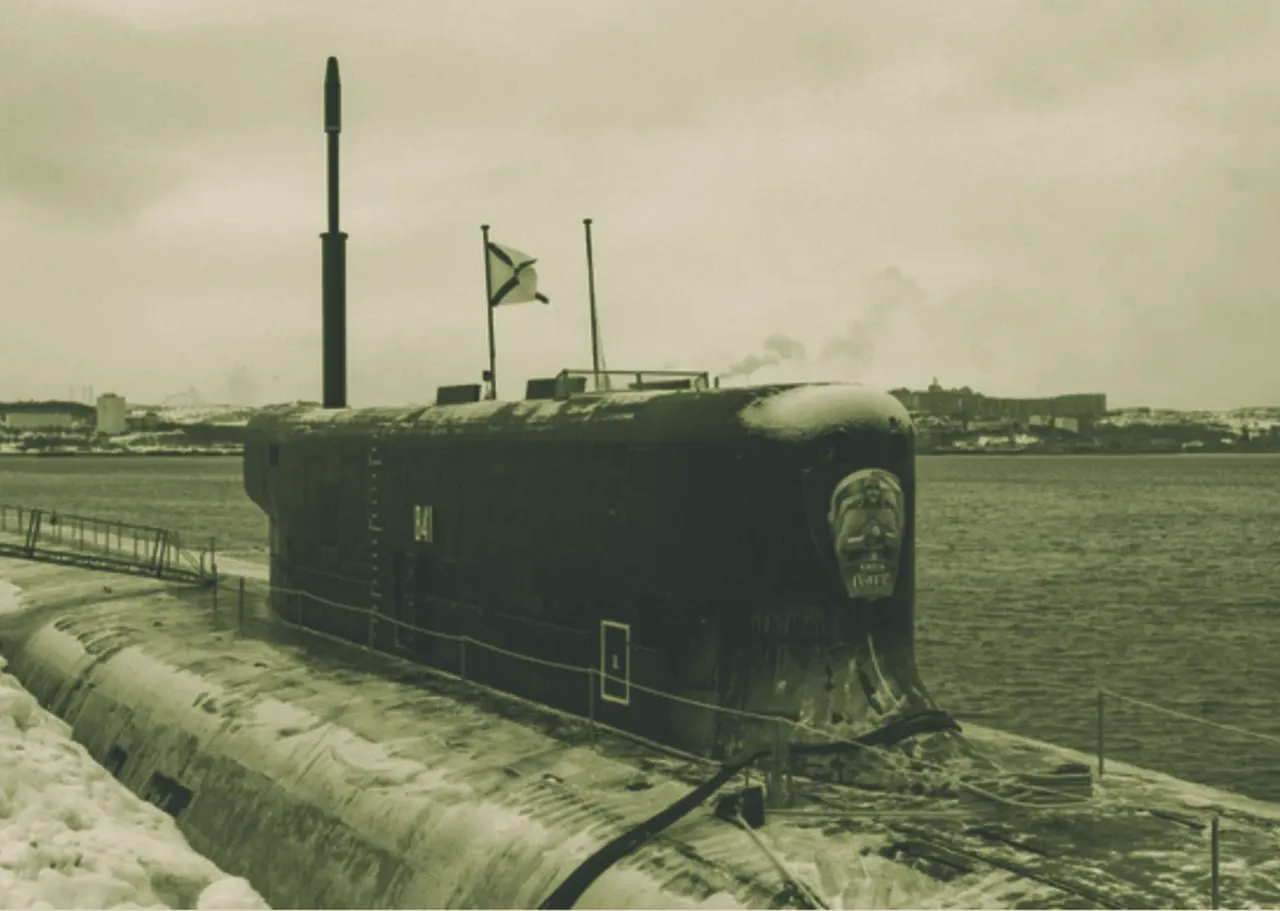
Russia’s premier nuclear-powered ballistic-missile submarine, the sea-based arm of its strategic nuclear triad, designed to conduct long-range deterrent patrols beneath the Arctic ice with up to 16 Bulava SLBMs.
Overview
The Borei class (Project 955) and its improved successor the Borei-A (Project 955A) are the Russian Navy’s fourth-generation ballistic-missile submarines, replacing the Cold-war-era Delta III/IV and the retired Typhoon class. Each boat carries 16 RSM-56 Bulava intercontinental ballistic missiles, giving Russia a survivable second-strike capability. The class is built solely for the Russian Navy at the Sevmash shipyard in Severodvinsk, and as of 2025 eight boats are in service, with additional hulls under construction.
Development
The lead boat, K-535 Yuri Dolgorukiy, was laid down in 1996 and commissioned into the Northern Fleet in 2013 after a protracted development and test programme that included repeated delays in maturing the Bulava missile. According to Wikipedia, the original design used mothballed components from unfinished Akula-class attack submarines, but the improved Borei-A variant introduced a redesigned, hydrodynamically cleaner hull built entirely from new steel. GlobalSecurity.org notes that the Borei was the first Russian SSBN to be designed in the post-Soviet era, and that the programme survived the 1990s funding crisis only by gradually shifting resources from the troubled Bulava missile development to the submarine platform itself.
By 2025 the fleet consisted of three baseline Project 955 boats and five Project 955A boats, with the final Borei-A, Knyaz Pozharsky, commissioned in July 2025. Further hulls are planned, and the shipyard continues to build the class at a steady pace.
Design & capabilities
The Borei-A displaces approximately 14,720 tonnes surfaced and 24,000 tonnes submerged, with a length of 170 metres and a beam of roughly 13.5 metres. It is powered by a single OK-650-series pressurised-water reactor driving a pump-jet propulsor — the first Russian SSBN to adopt that low-noise technology — giving a maximum submerged speed of about 29 knots.
The signature armament is 16 vertical launch tubes for the RSM-56 Bulava (R-30) SLBM, a three-stage solid-fuel missile with an estimated range of 8,000 km and a MIRV payload of up to six warheads, as detailed by NTI. Self-defence is provided by six 533 mm torpedo tubes (the Borei-A may carry a mix of 533 mm and 650 mm tubes) firing conventional torpedoes and anti-submarine missiles. The boat is equipped with an MGK-600-series sonar suite and is reported to have a diving depth of around 450 metres, although all depth and quieting figures remain classified.
Russian state media have claimed that the Borei is “twice as quiet as the US Virginia class”; the assertion is a state (TASS) claim and has not been independently verified, as noted by Wikipedia. Still, the combination of a refined hull form, anechoic coatings, and a pump-jet undoubtedly makes it the quietest SSBN Russia has ever fielded.
Variants
- Project 955 Borei (Baseline): Three boats (Yuri Dolgorukiy, Alexander Nevsky, Vladimir Monomakh); built with a raised superstructure and a less optimised hull.
- Project 955A Borei-A: Improved hull lines, relocated diving planes, updated electronics, and revised torpedo-tube layout; the five later boats belong to this variant.
Combat record / operational use
No Borei has fired a missile in anger, but the boats perform continuous deterrent patrols in the Barents Sea, the Arctic, and the North Atlantic. In September 2025 a Borei was monitored by Japanese maritime patrol forces during a Pacific transit — the first such observed movement. The war in Ukraine has also touched the programme indirectly: in August 2025 Ukraine’s military intelligence directorate (GUR) announced that it had obtained combat-related documentation for the just-commissioned Knyaz Pozharsky through a cyber-operation, according to Euro-SD. Separately, a Ukrainian official told Business Insider that analysis of those files had identified potential weak points in the boat’s design, though no further detail was released.
Advantages
- Carries 16 modern Bulava SLBMs, forming the survivable sea-leg of Russia’s nuclear triad.
- First Russian SSBN with a pump-jet propulsor, significantly reducing broadband radiated noise.
- Designed for Arctic under-ice operations, complicating detection and tracking.
- Sufficient endurance — unlimited reactor range and provisions for roughly one year — enables extended patrols.
- Production is serial; the fleet is growing, not shrinking, unlike the legacy Delta IV force.
Drawbacks / limitations
- The Bulava missile suffered severe reliability problems during development; the missile’s current maturity is not fully verifiable from open sources.
- The “twice as quiet” TASS claim is unproven; the Borei’s true acoustic performance remains classified and is almost certainly below that of the latest US and UK SSBNs.
- A modest complement of 16 tubes — fewer than the Ohio-class’s 24 — limits salvo weight.
- As with all SSBNs, it is a high-value target for adversary anti-submarine efforts; any cyber or intelligence breach (as alleged by Ukraine) could degrade its survivability.
- Unit cost is not publicly established, making programmatic sustainability difficult to assess from open sources.
Counterparts
- Ohio-class (USA)
- Type 094 Jin (China)
Outlook
The Borei-A will remain the backbone of Russia’s sea-based deterrent for at least the next two decades. Serial construction is continuing, and the class is likely to reach a total of 10–12 hulls. The main question is whether the Bulava missile can be modernised further — perhaps with hypersonic warheads — and how much the Ukrainian cyber-intrusion will erode confidence in the boat’s security architecture. In the near term, the Borei-A ensures that Russia retains a credible second-strike capability even as its land-based missiles age.
Key specifications
| Spec | Value |
|---|---|
| Type | Nuclear-powered ballistic-missile submarine (SSBN) |
| Full-load displacement | ~24,000 t submerged (est.) |
| Length / beam / draft | 170 m / ~13–13.5 m / ~10 m |
| Propulsion | 1 × OK-650-series PWR, pump-jet propulsor |
| Max speed (kts) | ~29 kts submerged |
| Range / endurance | Unlimited range (nuclear); ~1-year provisions endurance |
| Complement | ~107 |
| Armament | 16 × RSM-56 Bulava SLBM tubes; 6 × 533 mm torpedo tubes (Pr 955A: mix of 533 mm & 650 mm) |
| Sensors / combat system | MGK-600-series sonar suite |
| Aviation facilities | None fitted |
Sources
- Wikipedia — Borei-class submarine. https://en.wikipedia.org/wiki/Borei-class_submarine
- GlobalSecurity.org — Project 955 Borei. https://www.globalsecurity.org/wmd/world/russia/955.htm
- Business Insider — Ukraine Says It Found Weak Points in New Russian Nuclear Missile Submarine. https://www.businessinsider.com/ukraine-found-weak-points-in-new-russian-nuclear-missile-submarine-2025-8
- Euro-SD — GUR obtains Russian SSBN files. https://euro-sd.com/2025/08/major-news/45760/gur-obtains-russian-ssbn-files/
- Nuclear Threat Initiative (NTI) — Russia Submarine Capabilities. https://www.nti.org/analysis/articles/russia-submarine-capabilities/