C-17 Globemaster III
The Boeing C-17 Globemaster III is a long-range heavy airlifter that combines intercontinental reach with the ability to operate from short, austere airfields, serving as the backbone of U.S. and allied strategic airlift since 1995.
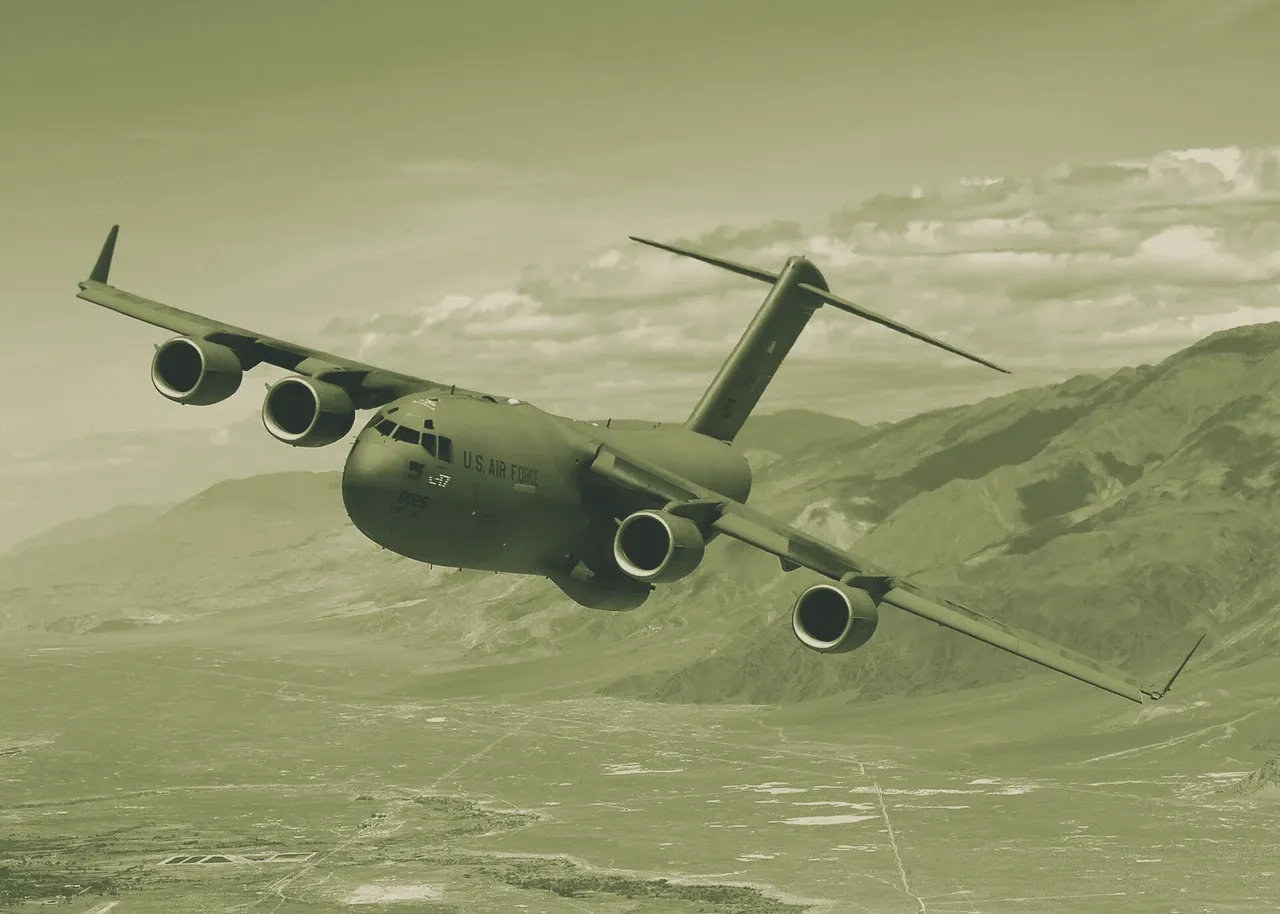
A four-engine, high-wing heavy transport that bridges the gap between strategic range and tactical short-field performance, delivering outsize cargo directly to the front line and forming the spinal column of Western military airlift for three decades.
Overview
The Boeing C-17 Globemaster III is the U.S. Air Force’s premier heavy airlifter and serves a broad set of allied and NATO operators. It unites a payload capacity of over 77 metric tonnes—enough for a single M1 Abrams main battle tank—with the ability to land on austere airstrips as short as 1,064 meters and only 27.4 meters wide, a combination that no other Western transport achieves. Air-refuellable and capable of intercontinental ferry flights, the C-17 has been the indispensable enabler of rapid global force projection, sustained combat logistics, humanitarian relief, and the direct resupply of forces under fire since 1995.
Development
The C-17 emerged from the U.S. Air Force’s 1980s requirement for a C-141 replacement that could carry outsize cargo directly to forward operating locations without the trans-shipment needed for the C-5 Galaxy. McDonnell Douglas (later Boeing) won the contract, and the first prototype flew on 15 September 1991. The type entered operational service with the first squadron at Charleston Air Force Base in January 1995. Over the following two decades, production ramped up and then tapered as the U.S. buy was completed, with the final aircraft—the 279th—delivered to the USAF in September 2013. Boeing announced the closure of the Long Beach production line in 2015 after completing outstanding foreign orders, capping a 22-year assembly run.
Design & capabilities
The C-17 is a high-wing, T-tail monoplane powered by four Pratt & Whitney F117-PW-100 turbofans, each rated at 40,440 lbf (179.9 kN) of thrust. The wing is fitted with externally blown flaps that direct engine exhaust over the upper surface to generate immense lift, enabling the aircraft to lift a maximum payload of 77,519 kg (170,900 lb) while retaining the ability to take off and land from runways as short as 1,064 m (3,500 ft). The wide fuselage accommodates an M1 Abrams tank, three AH-64 Apache helicopters, or up to 102 paratroops, and the rear loading ramp allows both aerial delivery and ground-level drive-on/drive-off loading. The type is fully air-refuellable, and its unrefueled range with a 74,800 kg payload is approximately 4,400 km, while the ferry range exceeds 11,500 km. A two-pilot digital glass cockpit and a loadmaster station reduce the crew to just three, and the robust landing gear permits operations from dirt, gravel, and ice strips.
Combat record / operational use
The C-17 has been the workhorse of U.S. and coalition strategic lift in every major operation since its introduction. It sustained the heavy logistics flow into and out of Iraq and Afghanistan for two decades, routinely operating from damaged or unimproved runways to keep forward bases supplied. During the chaotic August 2021 withdrawal from Afghanistan, C-17s performed the largest non-combatant evacuation operation in U.S. history from Hamid Karzai International Airport, at times carrying over 600 passengers in a single sortie. Since 2022, U.S., UK, and NATO Heavy Airlift Wing C-17s have been central to the Western air bridge delivering military aid to Ukraine, shuttling tens of thousands of tonnes of ammunition, vehicles, and air-defense systems into Eastern Europe under tight turnarounds. The type’s combat record is overwhelmingly one of humanitarian and logistics support, with aircraft occasionally drawing hostile ground fire but maintaining an excellent survivability and operational readiness rate.
Advantages
- Unique combination of strategic-range payload (77.5 t) with true tactical short-field performance (operations from 1,064 m unpaved strips).
- Carries an M1 Abrams, three AH-64s, or equivalent outsize combat loads without the need for intermediate handling.
- Air-refuelable and capable of intercontinental ferry flights, providing genuine global reach.
- Small three-person crew reduces manpower demand compared to older heavy transports.
- Proven across decades of combat logistics, humanitarian relief, and the Ukraine air bridge, with high mission-capable rates and robust survivability.
Drawbacks / limitations
- Production line closed in 2015, constraining fleet growth and making replacement or expansion dependent on a potential restart or a successor program.
- 279 airframes are distributed across nine operators; the U.S. fleet of 223 remains large, but the global pool is finite and heavily tasked.
- Unit cost of approximately $202.3 million (FY1998 est.) makes any new-build acquisition exceptionally expensive.
- The aircraft cannot carry the largest single-piece loads of the C-5 Galaxy (though its tactical utility offsets that limitation).
- High operational tempo since 2001 has placed considerable fatigue on the fleet, requiring sustained depot maintenance.
Counterparts
Outlook
The C-17 will remain the core of U.S. and allied heavy airlift well into the 2030s and likely beyond, with no direct replacement program in advanced development. In 2025, Boeing explored the possibility of restarting production in response to renewed international interest and the heightened demand demonstrated by the Ukraine war, though no formal order book had materialized by mid-2026. The fleet’s future therefore hinges on service-life extension, judicious use of the remaining airframes, and a potential political decision to restart the Long Beach line or launch a next-generation airlifter. For the present, the C-17 remains unmatched in its niche.
Key specifications
| Spec | Value |
|---|---|
| Crew | 3 (pilot, co-pilot, loadmaster) |
| Length / wingspan | 53 m / 51.75 m |
| Max speed | ~833 km/h (Mach 0.74) |
| Service ceiling | ~13,716 m (45,000 ft) |
| Combat radius / range | ~4,400 km with 74,800 kg payload; ferry >11,500 km |
| Payload | 77,519 kg (carries one M1 Abrams) |
| Hardpoints | None |
| Radar / sensors | Weather and navigation radar; integrated communications suite |
| Powerplant | 4 × Pratt & Whitney F117-PW-100 turbofans (40,440 lbf / 179.9 kN each) |
| Armament | None |
Sources
- Boeing — C-17 Globemaster III — https://www.boeing.com/defense/tankers-and-transports/c-17-globemaster
- Dover Air Force Base — C-17 Globemaster III Fact Sheet — https://www.dover.af.mil/Units/Fact-Sheets/Article/4402368/c-17-globemaster-iii/
- Boeing — Boeing to Complete Production of C-17 Globemaster III in 2015 — https://boeing.mediaroom.com/2013-09-18-Boeing-to-Complete-Production-of-C-17-Globemaster-III-in-2015
- Wikipedia — Boeing C-17 Globemaster III — https://en.wikipedia.org/wiki/Boeing_C-17_Globemaster_III