CH-901
China's tube-launched, electric loitering munition — a man-portable, recoverable-or-lethal reconnaissance-strike system that can be launched singly or in swarms from a 48-tube vehicle, and is being aggressively export-marketed alongside the larger Rainbow and Wing Loong families.
Overview
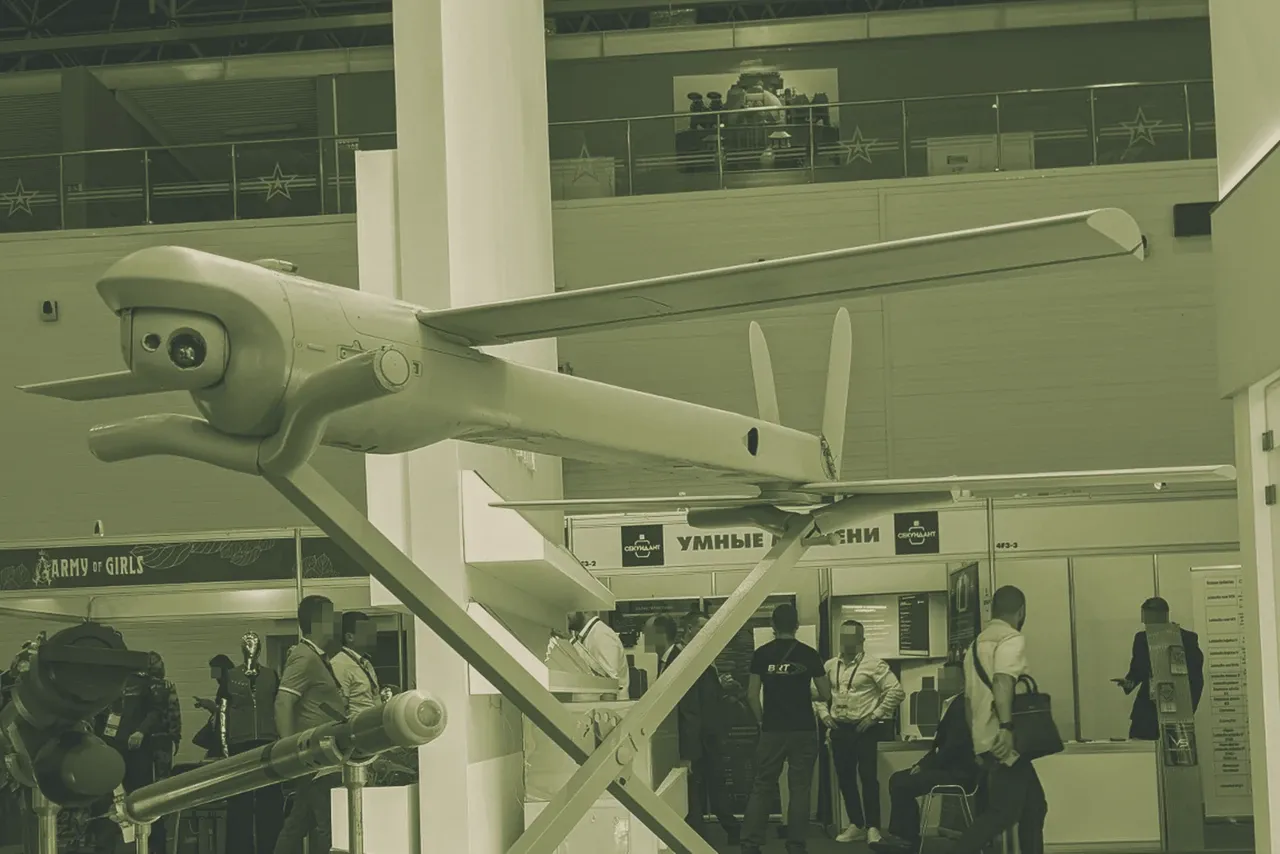
The CH-901 (also designated FH-901 and marketed for export as the BG-201) is a compact, tube-launched loitering munition developed by the China Aerospace Science and Technology Corporation (CASC). It bridges the gap between a disposable reconnaissance drone and a guided munition: an electro-optical seeker feeds a remote operator, who can circle a target area for up to an hour before designating a terminal dive attack. The system’s 48-tube swarm launcher, first displayed on a Dongfeng Mengshi vehicle, signals Beijing’s ambition to field cheap, coordinated mass-attack drones alongside its higher-end MALE UCAV exports.
Development
CASC unveiled the CH-901 in 2016, positioning it as a Switchblade-class system for both the People’s Liberation Army and international buyers, according to Popular Mechanics. The design was later shown at the 2018 SOFEX exhibition in Jordan and briefed to Thai officials in 2022, as reported by SP’s MAI. The most distinctive development milestone was the 2025 demonstration of a 48-cell box-launcher mounted on a military truck, a configuration that would allow a single vehicle to saturate a target area with dozens of low-cost munitions in rapid succession.
Design & capabilities
The CH-901 is a fixed-wing, electrically propelled munition that stows inside a transport/launch tube and deploys its wings after launch. It can carry either a 3.5 kg high-explosive, high-explosive fragmentation, or high-explosive anti-tank warhead for a one-way attack, or an optical-inertial reconnaissance head for recoverable surveillance missions. Popular Mechanics details a cruise speed of about 180 km/h and a terminal dive of 288 km/h, with a range of roughly 15 km. An operator-in-the-loop guidance via electro-optical seeker allows man-in-the-loop terminal control, and the system supports swarm launches, with the aforementioned 48-tube vehicle enabling coordinated mass attacks.
Combat record / operational use
The CH-901 has no publicly documented combat use, according to its limited open-source record. No confirmed engagements by Chinese or export-customer forces have appeared. The system’s operational significance rests on its export marketing and swarm-launch demonstrations, which place it at the vanguard of CASC’s cheap-mass loitering-munition portfolio, even while the larger CH-4 and Wing Loong lines carry out most of China’s real combat through foreign customers.
Advantages
- Man-portable tube launch; easily carried by infantry or mounted in vehicle arrays.
- Recoverable reconnaissance option saves munitions; one system can scout and then strike.
- Swarm-launch capability from the 48-tube launcher enables saturation of defenses at low cost.
- Small size and electric propulsion give low visual, thermal, and acoustic signatures.
- Export-marketed alongside proven CASC drone families, offering a lower-cost entry point for foreign buyers.
Drawbacks / limitations
- Range is limited to approximately 15 km, far shorter than a Lancet or Switchblade 600.
- The 3.5 kg warhead is modest, restricting lethality against heavy armor.
- No combat record exists, leaving its real-world performance and reliability unverified.
- The control link is likely line-of-sight only, limiting operational flexibility in complex terrain.
- The system’s actual unit cost remains undisclosed, making cost-exchange comparisons speculative.
Counterparts
- Switchblade (USA)
- Lancet (Russia)
Outlook
The CH-901 sits inside a broader Chinese push to dominate the global drone market. While the Wing Loong and Rainbow series have made China the world’s leading exporter of armed combat drones — SIPRI data records 282 combat UAV deliveries to 17 countries in the decade to 2023 — the loitering munition layer remains an area where Beijing is still building a track record. Should the CH-901’s 48-tube swarming demonstration be followed by export sales and combat debut, it could replicate the cost-exchange dynamic that the Lancet and Shahed have demonstrated in Ukraine, at a price point aimed at non-Western budgets.
Key specifications
| Spec | Value |
|---|---|
| Type | Tube-launched fixed-wing electric loitering munition |
| Range | ~15 km |
| Speed (Mach / km·s⁻) | cruise ~180 km/h; terminal dive 288 km/h |
| Warhead (type & weight) | ~3.5 kg HE / HE-frag / HEAT shaped charge, or EO recon head |
| Guidance | Electro-optical seeker, operator-in-the-loop |
| Accuracy (CEP) | not publicly established |
| Launch platform(s) | Man-portable tube; vehicle (48-tube Dongfeng Mengshi); aircraft or UCAV |
| Propulsion | Electric |
| Length / diameter / launch weight | Length 1.2 m / tube diameter not publicly established / launch weight 9 kg |
Sources
- CASC CH-901 — Wikipedia — https://en.wikipedia.org/wiki/CASC_CH-901
- China's Mini-Drone Packs a Heavyweight Punch — Popular Mechanics — https://www.popularmechanics.com/military/a20722/china-mini-drone/
- China's FH-901 and Russia's new EW System — SP's MAI — https://www.spsmai.com/experts-speak/?id=1232&q=Chinas-FH-901-and-Russias-new-EW-System
- How China became the world's leading exporter of combat drones — Al Jazeera (SIPRI) — https://www.aljazeera.com/news/2023/1/24/how-china-became-the-worlds-leading-exporter-of-combat-drones
- China's Increasing Global Drone Footprint — Eurasia Review — https://www.eurasiareview.com/24112024-chinas-increasing-global-drone-footprint-analysis/