CJ-10
China's principal subsonic land-attack cruise missile — fielded from ground launchers, H-6K bombers, and warships, with reported nuclear capability and ranges exceeding 2,000 km — widely viewed as a direct counterpart to the US Tomahawk and Russian Kalibr.
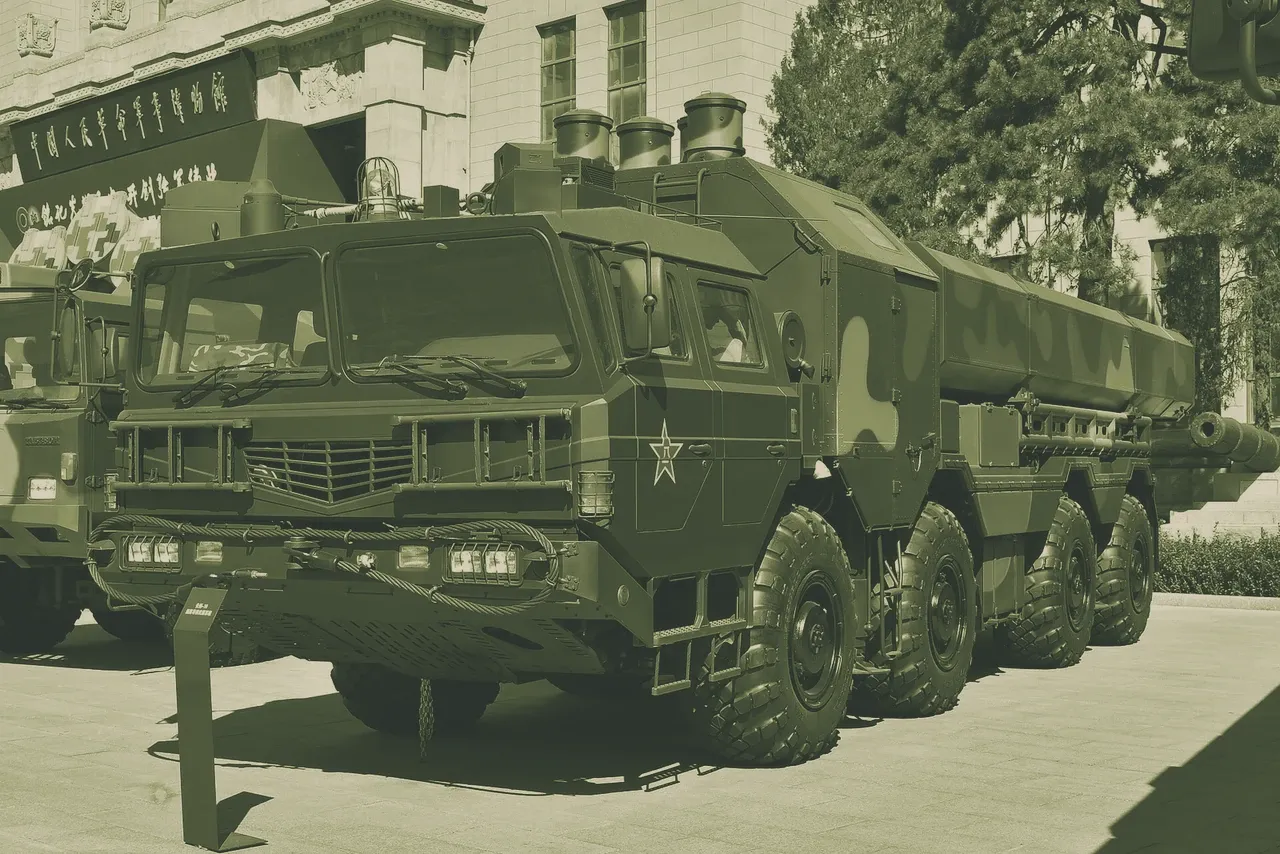
China's principal subsonic land-attack cruise missile — deployed across ground, air, and naval platforms, with a growing range envelope and a reported nuclear option — widely seen as Beijing's answer to the Tomahawk and Kalibr.
Overview
The CJ-10 (Changjian-10) is the People’s Liberation Army’s primary long-range, subsonic land-attack cruise missile. It belongs to a family that spans ground-launched (DF-10/DF-10A), air-launched (KD-20/CJ-20), and naval (YJ-100) variants, all derived from a common airframe. The U.S. Department of Defense associates the missile with the Hong Niao lineage, tracing its propulsion and design technology to Soviet-era Kh-55 cruise missiles acquired by China in the 1990s. Army Recognition catalogues the weapon as a terrain-hugging, turbofan-powered cruise missile with a high subsonic speed and a range conventionally placed between 1,500 and 2,200 km, depending on variant. It is a cornerstone of China’s conventional precision-strike capability, and some open-source assessments report that the missile is nuclear-capable — a claim that remains officially unacknowledged by Beijing.
Development
China’s cruise-missile program accelerated after the acquisition of several Kh-55 airframes from Ukraine in the 1990s, which allowed CASIC’s Third Academy to reverse-engineer the compact turbofan engine, airframe layout, and guidance architecture. Missile Defense Advocacy Alliance notes that the resulting DH-10/CJ-10 system entered service with the PLA Rocket Force in the mid-2000s, with the first public appearance at the 2009 National Day parade in Beijing. The ground-launched DF-10 was the initial operational variant; an air-launched KD-20 was subsequently integrated onto the H-6K bomber, and a ship- and submarine-launched YJ-100 entered service with the People’s Liberation Army Navy. Over the following decade the range of the ground-launched variant was extended beyond 2,000 km, yielding the DF-10A, while the basic airframe remained the common denominator across all services.
Design & capabilities
The CJ-10 is a subsonic cruise missile powered by a turbofan engine, supplemented by a solid-rocket booster for ground- and ship-launched variants. It flies at approximately Mach 0.7–0.8, using a low-altitude terrain-following profile to reduce detection and engagement windows. Guidance relies on an inertial navigation system (INS) updated by China’s BeiDou satellite constellation, with terrain contour matching (TERCOM) and a terminal scene-matching seeker for target acquisition. According to Army Recognition, the system achieves an estimated circular error probable (CEP) of 5–10 metres.
The warhead, estimated at 450–500 kg, can be configured as a unitary high-explosive, submunition dispenser, or penetrating charge. Several open-source references assert that the missile is nuclear-capable, though this has not been publicly confirmed by Chinese authorities. Launch platforms reflect the multi-service nature of the system: a WS2400 8×8 transporter-erector-launcher carries three canisters for the ground-based DF-10; the H-6K bomber can carry up to six KD-20s; and the YJ-100 is deployed from the vertical launch systems of Type 052D and Type 055 destroyers, as well as from Type 093A nuclear-powered attack submarines. Exact physical dimensions (length, diameter, launch weight) are not publicly established with confidence.
Variants
- DF-10 / DF-10A — Ground-launched land-attack cruise missile for the PLA Rocket Force. DF-10 range ~1,500–2,000 km; DF-10A extends beyond 2,000 km.
- KD-20 (CJ-20) — Air-launched variant carried by the H-6K bomber, with an estimated range of 2,000–2,200 km.
- YJ-100 — Naval variant for surface combatants and submarines, with a range of approximately 800 km.
Combat record / operational use
The CJ-10 family has no confirmed combat use. It is employed in PLA exercises and forms the backbone of the Rocket Force’s long-range conventional strike brigades. The Missile Defense Advocacy Alliance estimates a total inventory of 200–500 missiles and 40–55 ground launchers as of 2023, reflecting a steady buildup of cruise-missile capacity.
Advantages
- Multi-domain reach: A single missile family equips ground, air, and naval forces, simplifying logistics and enabling coordinated strike packages.
- Long stand-off range: The DF-10A and KD-20 can strike targets more than 2,000 km away, placing key Western Pacific bases within reach.
- Low-altitude penetration: Subsonic terrain-following flight reduces radar detection range and complicates interception.
- Satellite-independent precision: BeiDou-augmented INS with TERCOM provides accurate guidance without reliance on foreign navigation signals.
- Strategic ambiguity: Unconfirmed reports of nuclear capability add a layer of deterrence uncertainty.
Drawbacks / limitations
- Subsonic speed: At Mach 0.7–0.8, the missile is vulnerable to modern air-defence systems, particularly those with integrated early-warning and fighter-interceptor networks.
- No combat provenance: The CJ-10 has never been fired in anger; its real-world reliability and effectiveness under electronic-warfare and kinetic-defence conditions are unknown.
- Unconfirmed nuclear capability: The lack of official acknowledgment leaves open questions about the weapon’s role in China’s nuclear posture.
- Opacity of specifications: Key physical dimensions and the exact CEP are not publicly established, complicating open-source assessments.
- Inventory still relatively modest: With only a few hundred missiles estimated, the total salvo weight is far smaller than the U.S. Tomahawk arsenal.
Counterparts
The CJ-10 is widely regarded as China’s closest analogue to the U.S. Navy’s Tomahawk — a subsonic, long-range, multi-platform cruise missile with a combat record stretching back to 1991 — and to Russia’s Kalibr family, particularly the 3M-14 land-attack variant, which has been employed extensively over Syria and Ukraine. All three systems share a turbofan-propelled, terrain-hugging flight profile, INS/satellite/TERCOM guidance, and a conventional (and, in some cases, nuclear) payload.
Outlook
Production of the CJ-10 family continues, and the extended-range DF-10A suggests that further performance improvements are achievable within the existing airframe. The separate CJ-100/DF-100 program — a larger, near-supersonic cruise missile — points toward a future succession, but the CJ-10 is expected to remain the PLA’s principal subsonic cruise missile through this decade. Its multi-service integration and growing arsenal size ensure it will be a central element of Chinese strike planning for the foreseeable future.
Key specifications
| Spec | Value |
|---|---|
| Type | Subsonic land-attack cruise missile |
| Range | DF-10: ~1,500–2,000 km; DF-10A: >2,000 km; KD-20: ~2,000–2,200 km; YJ-100: ~800 km (est.) |
| Speed (Mach / km·s⁻) | ~Mach 0.7–0.8 |
| Warhead (type & weight) | ~450–500 kg HE/submunition/penetrator; nuclear-capable claimed |
| Guidance | INS + BeiDou + TERCOM + terminal scene-matching |
| Accuracy (CEP) | ~5–10 m (est.) |
| Launch platform(s) | WS2400 8×8 TEL (3 canisters), H-6K bomber, Type 052D/055 VLS, Type 093A submarine |
| Propulsion | Turbofan (+ solid booster for ground launch) |
| Length / diameter / launch weight | not publicly established |
Sources
- Army Recognition — DF-10 / CJ-10 / DH-10 cruise missile data sheet — https://www.armyrecognition.com/military-products/army/missiles/cruise-missiles/df-10-cj-10-dh-10-cruise-missile-surface-to-surface-technical-data-sheet-specifications-pictures-video-12301163
- Wikipedia — CJ-10 (missile) — https://en.wikipedia.org/wiki/CJ-10_(missile)
- Missile Defense Advocacy Alliance — DH-10 / CJ-10 — https://www.missiledefenseadvocacy.org/missile-threat-and-proliferation/todays-missile-threat/china/dh-10-cj-10/
- CSIS Missile Threat — Tomahawk — https://missilethreat.csis.org/missile/tomahawk/
- CSIS Missile Threat — Kalibr (SS-N-30A) — https://missilethreat.csis.org/missile/ss-n-30a/