GRID-REF 37°47′N 122°25′W
DISPATCH 02/26 · 11 Jun 2026
BATTLEPOLICY
Startup to front line. Strategy to consequence.
Lexicon · USA

Dark Eagle

The US Army’s first intermediate-range hypersonic weapon — a road-mobile boost-glide missile designed to strike defended targets at theatre depth with a speed of Mach 5+, up to 3,500 km range, and a common All-Up Round shared with the Navy’s Conventional Prompt Strike programme.
Dark Eagle
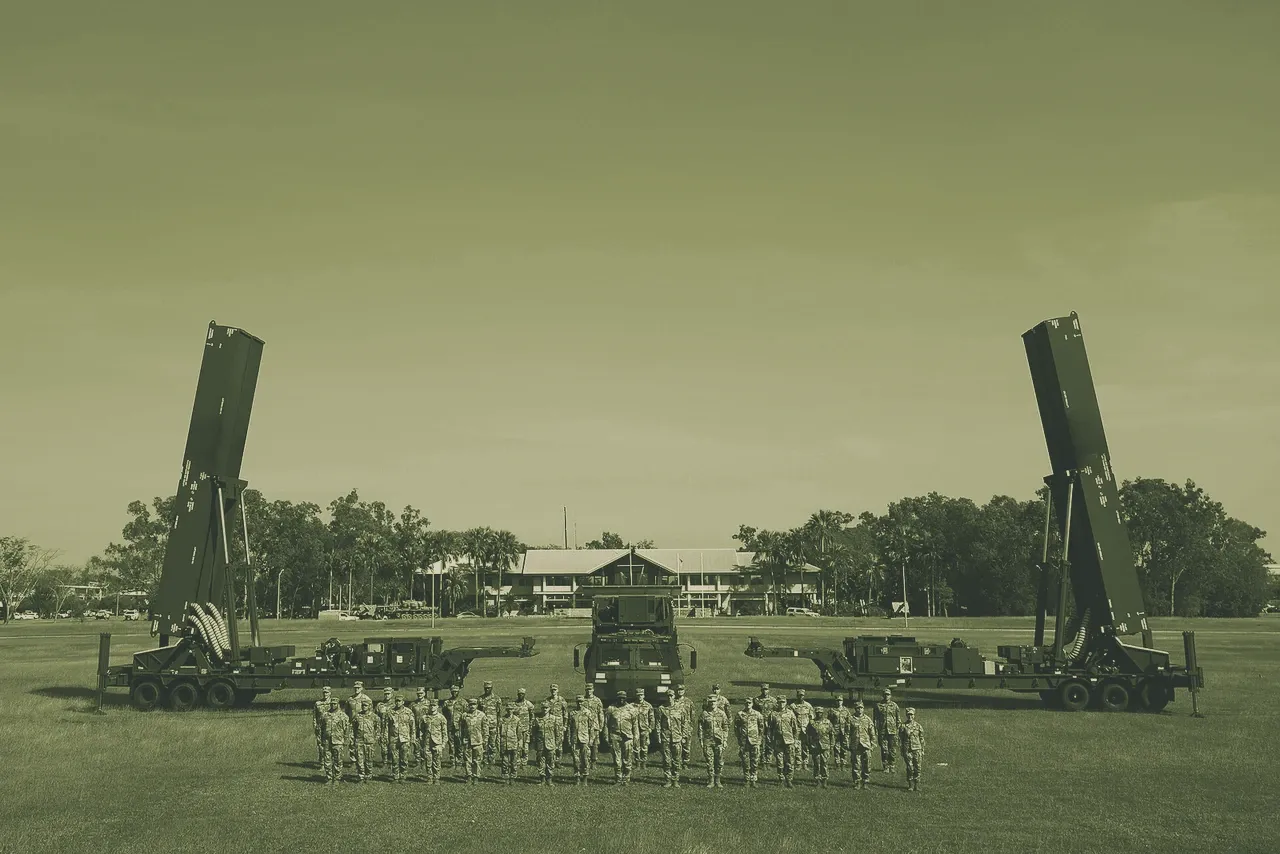
FIG.01 · USA Image - Dark Eagle Long-Range Hypersonic Weapon launcher during Talisman Sabre 2025. Photo by U.S. Army photo by Sgt. Perla Alfaro, Public domain, via Wikimedia Commons.jpg).
A road-mobile, intermediate-range hypersonic boost-glide missile that arms the US Army’s first conventional prompt-strike battery — designed to race across the Pacific at Mach 5+ and strike time-critical targets deep inside an adversary’s anti-access bubble.

Overview

The Dark Eagle, formally the Long-Range Hypersonic Weapon (LRHW), is the United States’ first ground-launched hypersonic boost-glide missile. It mates a two-stage solid-fuel booster with the Common Hypersonic Glide Body (C-HGB), an unpowered maneuvering vehicle that separates high in the atmosphere and flies a depressed, unpredictable trajectory to its target. The US Army fields the system on a road-mobile Transporter Erector Launcher (TEL) that carries two sealed “All-Up Round plus Canister” (AUR+C) launch tubes; each battery holds four TELs, eight missiles, and a Battery Operations Center tied into the Advanced Field Artillery Tactical Data System (AFATDS). The same AUR also equips the Navy’s Conventional Prompt Strike (CPS) programme aboard Zumwalt-class destroyers and later Block V Virginia-class submarines, giving the weapon surface-, ship- and submarine-launched basing without redesigning the missile. The head of US Army Pacific has stated the missile can reach 3,500 km — enough to cover mainland China from Guam — and an official line-of-site range of 2,776 km (1,725 mi) was long cited by the Congressional Research Service.

Development

Dark Eagle descends directly from the early-2000s Conventional Prompt Global Strike effort. Sandia National Laboratories matured a wedge-shaped re-entry vehicle, SWERVE, which the Army and Navy tested in the 2011 Advanced Hypersonic Weapon flight and a 2014 failure. That design evolved into the C-HGB, with the Navy taking design lead from 2018 and Dynetics (now Leidos) producing the flight articles. Lockheed Martin was selected as the LRHW system integrator and launcher provider; Northrop Grumman and Aerojet Rocketdyne supply booster components. The 2019 National Defense Authorization Act pushed the Army toward a fielding date of fiscal 2023 that proved impossible. A booster “no-test” in October 2021, an all-up-round failure at Hawaii in June 2022, and two scrubbed Cape Canaveral attempts in 2023 — traced to launcher mechanical issues — forced the service to publicly admit the slip in September 2023. A revamped, subcomponent-focused test strategy culminated in the programme’s first end-to-end success on 28 June 2024, when a missile launched from the Pacific Missile Range Facility in Kauai flew more than 3,200 km to the Marshall Islands, as confirmed by the Department of War. A second major test on 12 December 2024 — the first live-fire through the operational TEL and Battery Operations Center — demonstrated the complete tactical system. The Army formally christened the system Dark Eagle on 24 April 2025, with “dark” referring to its ability to “dis-integrate adversary capabilities” and “eagle” to a master hunter, according to the Department of Defense.

Design & capabilities

The LRHW is a two-stage solid-propellant booster that lifts a hypersonic glide body to a velocity well above Mach 5. After boost the C-HGB separates and flies a depressed, non-ballistic path, delaying detection and keeping its final course uncertain for defenders. The glide body is a kinetic-energy weapon; an Army program officer described a small explosive charge “under 30 pounds” (~14 kg) that disperses projectiles over an area, but the exact warhead configuration remains classified. The guidance suite is officially secret; a Defense Post assessment describes it as inertial navigation with GPS augmentation. The missile is packaged in an AUR+C canister that protects it during storage, transport, and launch, and each TEL carries two canisters. The Battery Operations Center passes target data from AFATDS to the launchers, and the whole battery is designed to move on highways and airlift into theatre by C-17. Production is paced by the Courtland, Alabama final-assembly line that Lockheed Martin operates; the C-HGB itself comes from Dynetics and sources across the defence industrial base, as noted by Lockheed Martin.

Variants

The core missile is a single common All-Up Round, but the basing solutions constitute two programme families:
- LRHW / Dark Eagle (US Army): ground-launched from a TEL.
- Conventional Prompt Strike (CPS) (US Navy): ship-launched from the Zumwalt-class (four 87-inch vertical launch tubes, each holding up to three AUR+C rounds, for a maximum of 12 missiles per ship) and later submarine-launched from Block V Virginia-class boats via the Virginia Payload Module, as detailed by USNI News.

Combat record / operational use

Dark Eagle has not been fired in anger. All employment to date consists of tests, training deployments, and the ongoing arming of the first operational battery. The 1st Multi-Domain Task Force’s long-range fires battalion (5-3 FA) at Joint Base Lewis-McChord received the ground equipment in October 2021 and has exercised it in exercises Thunderbolt Strike, Resolute Hunter, and Bamboo Eagle. The 3rd MDTF deployed the system to Australia for Talisman Sabre in July 2025. The pivotal live-fire events — the June 2024 end-to-end shot from Hawaii and the December 2024 TEL/BOC live fire — cleared the way for missile deliveries. According to Army Recognition, three missiles reached the JBLM unit in 2025 and a further eight (plus a soldier-fired test round) were scheduled to complete the first battery’s initial load by December 2025. A successful Army-Navy joint flight test followed on 26 March 2026. In April 2026, Bloomberg reported that U.S. Central Command requested Dark Eagle be sent to the Middle East, the first potential operational deployment, after Iranian launchers moved beyond the reach of the Precision Strike Missile, as reflected in the Wikipedia summary.

Advantages

  • Sustained Mach 5+ flight on a depressed, maneuvering trajectory (peak ~Mach 17) compresses defender reaction times and defeats interceptors designed for predictable ballistic arcs.
  • Theater-class reach — officially ~2,776 km and, per Lieutenant General Lozano, up to 3,500 km — enables “shoot-and-scoot” strikes against mainland-depth targets from Guam, the Philippines, or Japan.
  • Joint Army-Navy common missile (same AUR) lowers development costs and gives the same round land, surface-ship, and submarine basing.
  • Program turned a corner in 2024-2025 after years of failed tests, recording three consecutive successful end-to-end flights (June 2024, December 2024, March 2026).
  • Kinetic-energy lethality threatens hardened or deeply buried A2/AD and command-and-control nodes that conventional warheads struggle against.

Drawbacks / limitations

  • Extreme per-round cost (~$41 million per missile, CBO estimate) and a ~$2.69 billion prototype battery make it a niche “silver bullet”; the Army Chief of Staff has said forthcoming missiles will be “a tenth of the price” to build magazine depth.
  • Director, Operational Test and Evaluation (DOT&E) judged in 2024 that “not enough data” exist to assess operational effectiveness, lethality, suitability, or survivability, and earlier lethality trials lacked operationally representative targets.
  • Production remains tiny — roughly one missile per month as of late 2025 — meaning a single eight-round battery represents many months of output.
  • Programme schedule repeatedly slipped, with booster and launcher problems delaying the original FY2023 fielding goal by about two years.
  • Conventional-warhead ambiguity: an adversary detecting a Dark Eagle launch cannot distinguish the weapon from a nuclear strike, a recognised escalation risk for a system aimed at high-value targets potentially co-located with nuclear command-and-control facilities.

Counterparts

Outlook

The Army plans to field three batteries by FY2027, with the second battery arriving in the final quarter of FY2026. Production is intended to double to about 24 missiles per year once the industrial base matures, and forward basing discussions with Japan and the Philippines are open. The Navy track runs in parallel: USS Zumwalt completed installation of four CPS tubes and is expected to begin at-sea testing imminently, with fielding possible in 2026; Block V Virginia boats will follow around 2028. Yet congressional overseers, the GAO, and DOT&E will continue to press on per-round cost, unresolved lethality data, and stockpile size. Dark Eagle is likely to become the high-end tier of a high-low strike mix, bracketed by cheaper, slower long-range fires that the Army is already pursuing.

Key specifications

Spec Value
Type Ground-launched intermediate-range hypersonic boost-glide missile (conventional)
Range ~2,776 km official; 3,200 km demonstrated; up to 3,500 km stated
Speed (Mach / km·s⁻¹) Mach 5+ sustained; reported peak ~Mach 17
Warhead (type & weight) Kinetic-energy effect with small explosive dispersal charge; warhead weight not publicly established
Guidance Classified; assessed as INS with GPS augmentation
Accuracy (CEP) Not publicly established
Launch platform(s) M870A4 trailer (TEL) with two AUR+C canisters; Navy Zumwalt-class (4 CPS tubes, up to 12 missiles) and Block V Virginia-class submarines
Propulsion Two-stage solid-fuel booster; unpowered C-HGB glide vehicle
Length / diameter / launch weight Length not publicly established; diameter ~0.88 m (34.5 in); launch weight ~7,400 kg (16,300 lb)

Sources

  1. Congressional Research Service — The U.S. Army’s Long-Range Hypersonic Weapon (LRHW): Dark Eagle (IF11991, updated April 29, 2026). https://www.congress.gov/crs-product/IF11991
  2. Wikipedia — Long-Range Hypersonic Weapon. https://en.wikipedia.org/wiki/Long-Range_Hypersonic_Weapon
  3. The Defense Post — Dark Eagle Takes Flight: Ultimate Guide to America's Landmark Hypersonic Weapon. https://thedefensepost.com/2025/08/26/dark-eagle-hypersonic-weapon-guide/
  4. U.S. Department of War — Army and Navy Successfully Test Conventional Hypersonic Missile (Dec. 12, 2024). https://www.war.gov/News/Releases/Release/Article/3999835/army-and-navy-successfully-test-conventional-hypersonic-missile/
  5. U.S. Department of War — DOD Completes Flight Test of Hypersonic Missile (June 28, 2024). https://www.war.gov/News/Releases/Release/Article/3821376/dod-completes-flight-test-of-hypersonic-missile/
  6. U.S. Department of Defense — Army Announces Official Name for its Long-Range Hypersonic Weapon (April 24, 2025). https://www.defense.gov/News/Releases/Release/Article/4164997/army-announces-official-name-for-its-long-range-hypersonic-weapon/
  7. The War Zone — New Dark Eagle Hypersonic Weapon Details Emerge. https://www.twz.com/land/new-dark-eagle-hypersonic-weapon-details-emerge
  8. Army Recognition — US Army's first Dark Eagle hypersonic battery to complete initial load by December. https://www.armyrecognition.com/news/army-news/2025/us-armys-first-dark-eagle-hypersonic-battery-to-complete-initial-load-by-december
  9. USNI News — First Zumwalt to Wrap Missile Tube Install This Year, Michael Monsoor to Deploy to WESTPAC. https://news.usni.org/2025/01/15/first-zumwalt-to-wrap-missile-tube-install-michael-monsoor-to-deploy-to-westpac
  10. Lockheed Martin — Hypersonics (capabilities: ARRW, CPS, LRHW). https://www.lockheedmartin.com/en-us/capabilities/hypersonics.html
FIELD DISPATCH · WEEKLY

BattlePolicy Weekly — free.

Defense tech, startups, and security — weekly. No paywall.

Related
USA · missiles · loitering-munition · vtol · autonomous · ai-guided · man-portable · AndurilPro

Anduril Bolt-M

Anduril's man-portable VTOL loitering munition — AI-guided, returnable if no strike, and the U.S. Marine Corps' first squad-level autonomous organic precision fires system, ordered under the $249M OPF-L program.

USA · missiles · loitering-munition · vtol · autonomous · ai-guided · man-portable · Anduril
USA · drones · autonomous · tanker · carrier · navy · unmanned · aerial-refuelingPro

MQ-25 Stingray

The U.S. Navy's first operational carrier-based unmanned system—a dedicated aerial tanker designed to free Super Hornets from buddy-tanking and extend the reach of the carrier air wing.

USA · drones · autonomous · tanker · carrier · navy · unmanned · aerial-refueling
USA · Air · fighter · multirole · aesa · semi-stealth · indigenous · 4-5-generation · asia-pacificPro

KF-21 Boramae

South Korea's indigenous 4.5-generation twin-engine fighter—a semi-stealth, AESA-equipped multirole platform designed to replace legacy ROKAF jets and compete for export orders among nations that cannot obtain the F-35.

USA · Air · fighter · multirole · aesa · semi-stealth · indigenous · 4-5-generation · asia-pacific