Gerald R. Ford-class
The world's largest warship — a nuclear-powered supercarrier with electromagnetic catapults, built to sustain a ~75-aircraft air wing and project power globally, and the centerpiece of the US Navy's 11-carrier fleet.
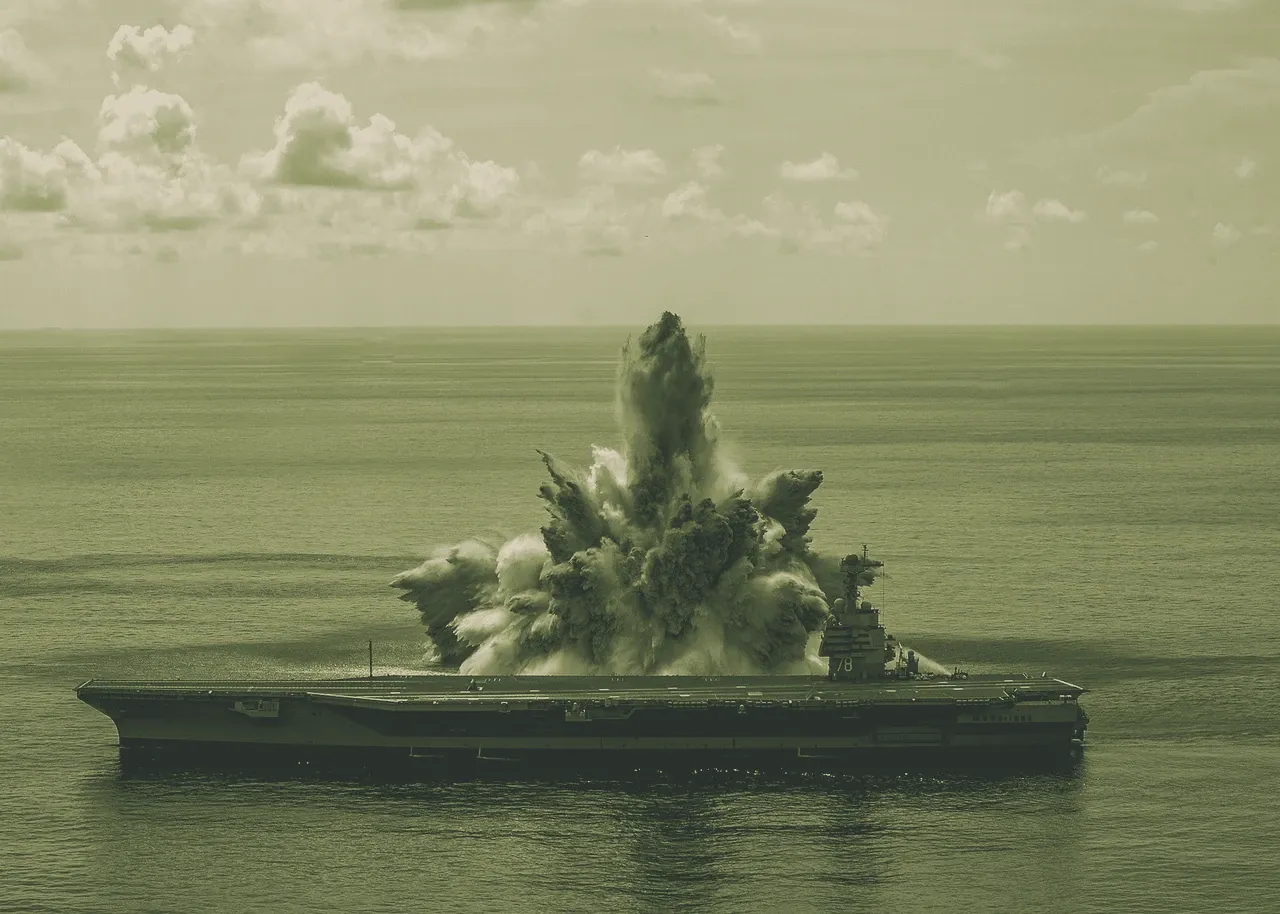
Overview
The Gerald R. Ford-class is the United States Navy's newest class of nuclear-powered aircraft carriers, succeeding the Nimitz-class as the backbone of American carrier strike group operations. The lead ship, USS Gerald R. Ford (CVN-78), was commissioned in 2017 and represents the first new US carrier design in over four decades. With a full-load displacement exceeding 100,000 tonnes, electromagnetic catapults in place of steam, and a redesigned flight deck optimized for higher sortie-generation rates, the class is built to sustain air operations at a tempo no other warship can match. According to The Defense Post, the Ford-class introduces 23 new or upgraded systems compared to the Nimitz-class, ranging from its A1B nuclear reactors to its dual-band radar suite.
Development
The Ford-class originated in the US Navy's CVN-21 program, a future-carrier effort launched in the 1990s after post-Cold War analysis concluded that incremental Nimitz upgrades would not deliver the leap in sortie-generation capability, survivability, and reduced manning the Navy required. Naval Technology notes that the design phase formally began in 2000, with construction of the lead ship commencing at Huntington Ingalls Industries' Newport News Shipbuilding yard in 2009. The vessel was christened in 2013 and commissioned on 22 July 2017, as documented by Britannica. The class absorbed significant research-and-development costs — the lead ship alone cost approximately $13 billion including R&D, according to The Defense Post — driven largely by the new electromagnetic aircraft launch system (EMALS), advanced arresting gear (AAG), and the Bechtel A1B nuclear reactor plant. Follow-on hulls are CVN-79 John F. Kennedy, CVN-80 Enterprise, and CVN-81 Doris Miller; the Navy is conducting a design review ahead of future contract awards, as reported by USNI News.
Design & capabilities
The Ford-class displaces over 100,000 tonnes at full load, with an overall length of 337 meters and a flight deck beam of approximately 78 meters, making it the largest warship ever built. Its two A1B nuclear reactors, designed by Bechtel, produce roughly 25 percent more power than the Nimitz-class A4W plants, according to Naval Technology, providing ample electrical margin for the ship's signature electromagnetic systems. The defining innovation is the four EMALS catapults, which replace traditional steam catapults with linear-induction motors — reducing wear on airframes, enabling smoother acceleration profiles, and allowing the launch of heavier aircraft and unmanned systems. Paired with the Advanced Arresting Gear, the launch-and-recovery architecture is designed to support a sustained sortie-generation rate significantly higher than the Nimitz-class. The flight deck itself was reconfigured with a relocated island, a smaller footprint, and optimized aircraft-movement paths. The air wing, typically around 75 aircraft and scalable to approximately 90, comprises F/A-18E/F Super Hornets, F-35C Lightning IIs, EA-18G Growlers, E-2D Advanced Hawkeyes, and MH-60R/S helicopters, with the CMV-22B Osprey for carrier onboard delivery and the MQ-25 Stingray unmanned tanker entering service. Defensive systems include Evolved Sea Sparrow Missiles (ESSM), RIM-116 Rolling Airframe Missiles, and Phalanx CIWS, all integrated through the dual-band radar (DBR), which combines S-band and X-band active electronically scanned arrays for volume search and horizon-search/fire-control functions simultaneously. The Defense Post highlights that the redesigned weapons-handling elevators — now electromagnetic rather than cable-driven — speed the movement of ordnance from magazines to the flight deck, directly supporting higher sortie rates.
Variants
The class encompasses four planned hulls, each incorporating incremental improvements: the baseline CVN-78 Gerald R. Ford, CVN-79 John F. Kennedy (launched 2019, fitting out), CVN-80 Enterprise (under construction), and CVN-81 Doris Miller (on order). While all share the same core hull, reactor, and EMALS/AAG architecture, later ships benefit from lessons learned during CVN-78's post-commissioning trials — particularly around weapons-elevator reliability and EMALS durability — and the Navy's ongoing design review may introduce further modifications to reduce build cost and accelerate delivery.
Combat record / operational use
USS Gerald R. Ford conducted its maiden combat-credible deployment to the Atlantic and Mediterranean between October 2022 and early 2023, operating under US European Command and demonstrating the class's ability to integrate with NATO naval forces and generate sorties at operationally relevant tempos. No carrier of the class has yet been employed in high-intensity combat, but the deployment validated core systems — including EMALS and AAG — after a protracted post-commissioning testing and rectification period. USNI News notes that the Navy is reviewing Ford-class sortie-generation data from the deployment to inform design adjustments for future hulls. The air wing embarked during the deployment combined Super Hornets, Growlers, and E-2D Hawkeyes, flying patrols and exercising with allied carrier groups, building the operational playbook for a class expected to serve into the 22nd century.
Advantages
- Largest and most survivable aircraft carrier ever built; full-load displacement exceeding 100,000 tonnes provides exceptional damage tolerance.
- EMALS catapults enable higher sortie-generation rates, gentler aircraft handling, and compatibility with heavier platforms including future unmanned combat air vehicles.
- 25 percent greater electrical generating capacity over the Nimitz-class provides margin for directed-energy weapons and future sensor upgrades.
- Reduced crew complement (~4,600 versus ~5,000+ on Nimitz) lowers lifecycle cost without reducing operational capability.
- Dual-band radar integrates volume search and fire control in a single suite, eliminating legacy single-function radars.
Drawbacks / limitations
- Extreme unit cost — CVN-78 at ~$13 billion including R&D — constrains fleet procurement and makes each hull an irreplaceable high-value asset.
- EMALS and AAG experienced protracted teething problems during post-commissioning trials, delaying the lead ship's operational availability.
- Advanced weapons elevators proved a persistent reliability challenge in early service.
- Large radar cross-section and unmistakable signature make the ship a priority target for anti-access/area-denial (A2/AD) systems.
- Nuclear propulsion, while providing unlimited range, requires specialized port infrastructure and limits allied basing options.
Counterparts
- Admiral Kuznetsov (Russia) — Russia's sole, ski-jump-equipped carrier, non-operational and facing likely scrapping.
- Type 003 Fujian (China) — China's first CATOBAR carrier with EMALS, conventionally powered, commissioned November 2025.
Outlook
The Ford-class is the US Navy's capital-ship program for the 21st century, intended to sustain an 11-carrier fleet that no other navy approaches. As CVN-78 transitions from post-commissioning remediation to full operational capability and CVN-79 through CVN-81 move through construction, the class will incrementally replace the aging Nimitz-class hulls. The Navy's ongoing design review signals a focus on cost control and production efficiency, while the EMALS-and-AAG architecture positions the class as the launchpad for the next generation of carrier aviation, including unmanned platforms and increasingly capable fifth- and sixth-generation strike fighters. In an era of proliferating anti-ship missiles, the Ford-class's value lies in its combination of raw striking power, mobility, and the diplomatic weight that only a 100,000-tonne nuclear supercarrier can convey.
Key specifications
| Spec | Value |
|---|---|
| Type | Nuclear-powered supercarrier |
| Full-load displacement | ~100,000+ t |
| Length / beam / draft | 337 m / ~40.8 m (waterline), ~78 m (flight deck) / not publicly established |
| Propulsion | 2 × Bechtel A1B nuclear reactors, 4 shafts |
| Max speed (kts) | >30 kt |
| Range / endurance | Unlimited (nuclear propulsion) |
| Complement | ~4,600 (ship + air wing) |
| Armament | ESSM, RIM-116 RAM, Phalanx CIWS, Mk 38 Mod 2 25 mm guns |
| Sensors / combat system | Dual-Band Radar (AN/SPY-3 X-band + AN/SPY-4 S-band AESA), Cooperative Engagement Capability |
| Aviation facilities | 4 × EMALS electromagnetic catapults, Advanced Arresting Gear, air wing ~75–90 aircraft |
Sources
- The Defense Post — "A Breakdown of the Gerald R. Ford-Class Aircraft Carrier" — https://thedefensepost.com/2026/05/29/gerald-ford-class-aircraft-carrier-guide/
- Naval Technology — "Gerald R. Ford-class Nuclear-Powered Aircraft Carriers" — https://www.naval-technology.com/projects/gerald-r-ford-class/
- Britannica — "USS Gerald R. Ford" — https://www.britannica.com/technology/USS-Gerald-R-Ford
- USNI News — "Navy Reviewing Ford-class Carrier Design Ahead of Future Contract Awards" — https://news.usni.org/2026/04/21/navy-reviewing-ford-class-carrier-design-ahead-of-future-contract-awards