H-6K
China's primary long-range strike platform — a modernized Tu-16 derivative that carries up to six cruise missiles, conducts persistent bomber patrols around Taiwan and the first island chain, and forms the backbone of PLAAF/PLANAF bomber aviation.
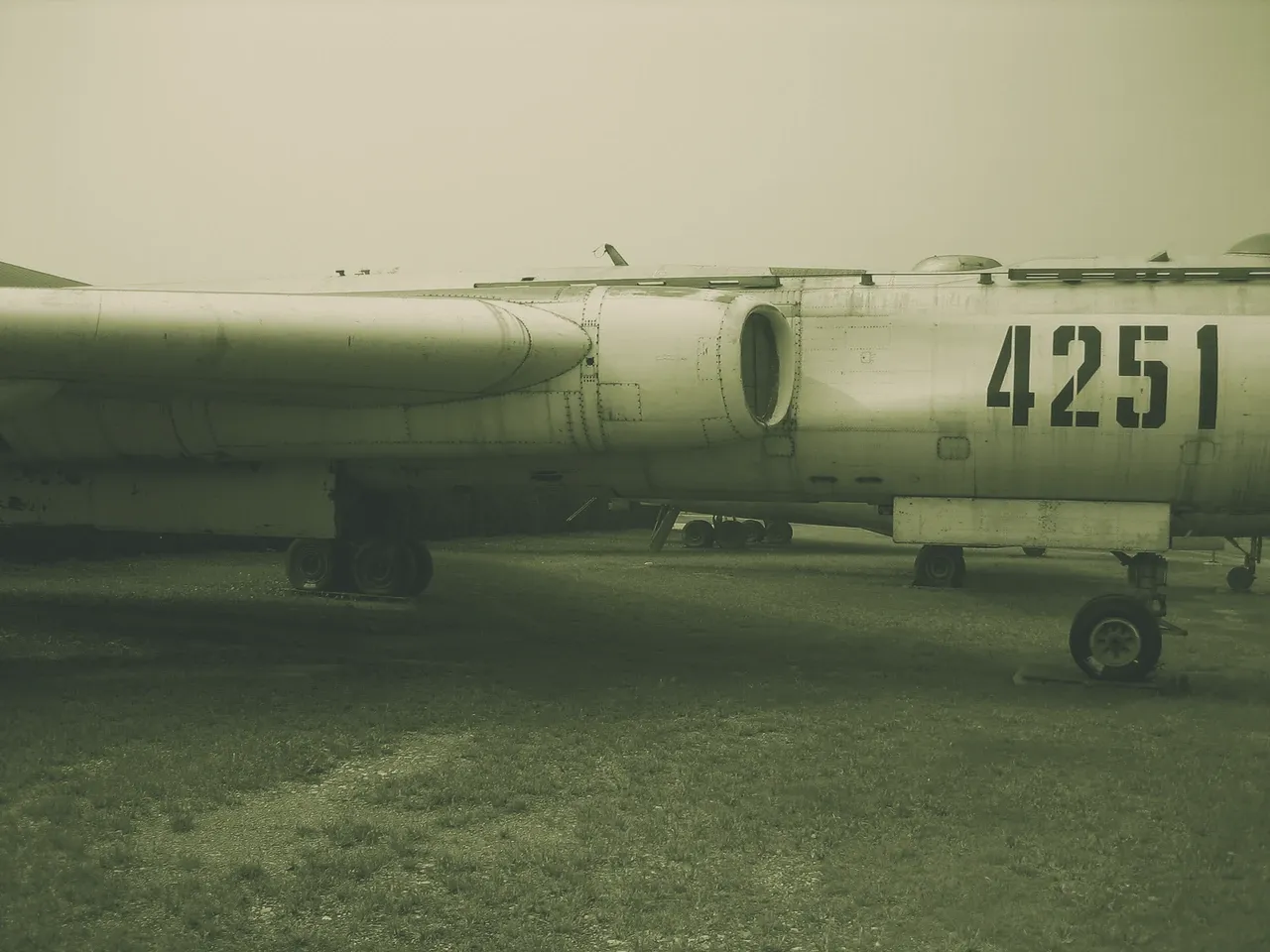
China's principal long-range conventional stand-off strike aircraft — a heavily rebuilt Tu-16 derivative that carries up to six cruise missiles on underwing pylons and anchors the People's Liberation Army's bomber patrols across the western Pacific.
Overview
The Xian H-6K is the most numerous and operationally significant modern variant of the H-6 family, a Chinese-built evolution of the Soviet Tupolev Tu-16 medium bomber (NATO reporting name “Badger”). While the airframe traces its lineage to the 1950s, the H-6K is an essentially new aircraft: it replaces the original turbojets with high-bypass turbofans, fits a modern glass cockpit and a nose-mounted radar, and transforms the old bomb bay into a fuel tank to make room for six underwing hardpoints carrying long-range cruise missiles. It is operated by both the People’s Liberation Army Air Force (PLAAF) and the PLA Naval Air Force (PLANAF) and is the backbone of China’s bomber-based conventional deterrence posture, with no export customers.
Development
The Xian Aircraft Corporation (XAC) under AVIC began development of the H-6K in the early 2000s to give the PLAAF a true long-range precision-strike capability. The prototype flew in 2007 and the type entered service around 2011, according to Wikipedia. Re-engining with Russian-supplied (and later indigenous) turbofans dramatically increased range and payload, while a full avionics overhaul brought the H-6K into the digital age. Production of the H-6K and subsequent variants has continued through the 2020s, with the total H-6 fleet estimated at 150–230 airframes across all versions, according to the Mitchell Institute.
Design & capabilities
The H-6K departs from earlier H-6 marks in three decisive ways: propulsion, payload architecture, and sensors. Two high-bypass turbofans — initially the Soloviev D-30KP-2 and later the domestic Shenyang WS-18 — replace the original thirstier turbojets, giving the aircraft a ferry range of roughly 6,000–8,000 km. The bomb bay is sealed to accommodate additional fuel, freeing the centre fuselage for structural strengthening that supports six heavy underwing pylons. Those hardpoints carry the PLAAF’s principal air-launched cruise missiles: the CJ-10K (also referred to as KD-20) and, since its public debut at the September 2025 parade, the improved CJ-20A, as reported by SPAS Consulting. A modern nose radar — described as an active electronically scanned array (AESA) or a high-performance pulse-Doppler set — together with an electro-optical/infrared (EO/IR) turret provide target acquisition and weapon guidance. The crew is typically three or four, seated in a redesigned glass cockpit, and the aircraft can operate from hardened bases across mainland China.
Variants
The H-6K is the baseline cruise-missile carrier. The most significant derivative is the H-6N, first observed in late 2018 and built for the bomber leg of China’s nascent nuclear triad. The H-6N is air-refuelable and carries a large air-launched ballistic missile (ALBM) — reported as the CH-AS-X-13, possibly with a hypersonic glide vehicle — on a recessed centreline station, making it nuclear-capable according to the US Department of Defense, as noted by Janes and Key.Aero. The H-6N fleet is estimated at more than 20 aircraft. Other H-6 variants include surveillance, electronic warfare and tanker conversions, but the H-6K and H-6N are the only operational strike types.
Combat record / operational use
No H-6K has been used in large-scale combat, but the type is flown intensively in peacetime coercive patrols. PLAAF and PLANAF H-6Ks regularly circumnavigate Taiwan, transit the Miyako Strait into the western Pacific, and operate over the South China Sea, often accompanied by fighters, AEW&C aircraft and tankers. These sorties, documented by the Japanese Air Self-Defense Force and Taiwanese authorities, serve to normalise long-range bomber operations beyond the first island chain and to practise cruise-missile release profiles against surface and land targets, as detailed by the Mitchell Institute. The H-6K also participated in the September 2025 parade displaying the new CJ-20A cruise missile.
Advantages
- Six-pylon cruise-missile load gives each sortie heavy stand-off firepower.
- Re-engined with modern turbofans, dramatically boosting range and endurance versus older H-6 marks.
- Mature, proven airframe with low operating costs and high readiness rates.
- Fits squarely into integrated kill chains with AEW&C (KJ-500), tankers (YY-20) and fighter escorts.
- Large fleet (>150 family members) allows surge operations from multiple axes.
Drawbacks / limitations
- Ageing core airframe design limits stealth, speed, and manoeuvrability; it is a large, non-stealthy radar target.
- Subsonic and unmanoeuvrable, making it highly dependent on escort and stand-off range to survive against modern air defences.
- No internal weapons bay for cruise missiles (unlike the Tu-160 or B-52); all major munitions are carried externally, increasing drag and radar signature.
- Nuclear capability is confined to the small H-6N sub-fleet; the H-6K is purely conventional.
- Indigenous engine production has historically been a bottleneck, though the WS-18 and WS-20 programme have improved matters.
Counterparts
- B-52 Stratofortress (USA)
- Tu-160 Blackjack (Russia)
Outlook
The H-6K will likely remain the quantitative backbone of PLAAF/PLANAF bomber aviation through the 2030s, even as the long-delayed H-20 stealth bomber eventually arrives. China continues to upgrade the fleet with new weapons (CJ-20A, hypersonic stores) and sensors, and the H-6N’s air-refuelable nuclear ALBM role gives the family a strategic niche that complements the H-20. The type is expected to see further growth in the number of cruise-missile sorties, particularly in Taiwan-contingency scenarios, and to remain a central instrument of Beijing’s anti-access/area-denial (A2/AD) and stand-off precision-strike posture.
Key specifications
| Spec | Value |
|---|---|
| Crew | ~3–4 |
| Length / wingspan | ~34.8 m / ~33 m |
| Max speed | ~Mach 0.75 (~1,050 km/h) |
| Service ceiling | ~12,800 m (est.) |
| Combat radius / range | ~1,000–1,800 km (loaded) / ~6,000–8,000 km (ferry) |
| Payload | ~9,000–12,000 kg |
| Hardpoints | 6 underwing pylons |
| Radar / sensors | Nose AESA or advanced pulse-Doppler radar + EO/IR turret |
| Powerplant | 2 × D-30KP-2 or WS-18 turbofans |
| Armament | CJ-10K / KD-20 and CJ-20A air-launched cruise missiles (H-6K); air-launched ballistic missile on H-6N |
Sources
- Mitchell Institute — H-6 — https://www.mitchellaerospacepower.org/weapons/h-6/
- Wikipedia — Xi’an H-6 — https://en.wikipedia.org/wiki/Xi%27an_H-6
- Janes — PLAAF’s new H-6N bomber seen carrying large missile — https://www.janes.com/osint-insights/defence-news/plaafs-new-h-6n-bomber-seen-carrying-large-missile
- Key.Aero — Xian H-6N: China’s Carrier-Killing Bomber — https://www.key.aero/article/xian-h-6n-chinas-carrier-killing-bomber
- SPAS Consulting — China Unveils CJ-20A Air-Launched Cruise Missile — https://www.spasconsulting.com/p/china-unveils-cj-20a-air-launched
- The National Interest — China needs a new bomber to replace the H-6 — https://nationalinterest.org/blog/buzz/china-needs-new-bomber-to-replace-h-6-hk-110525