GRID-REF 37°47′N 122°25′W
DISPATCH 02/26 · 25 Jun 2026
BATTLEPOLICY
Startup to front line. Strategy to consequence.
Lexicon · Israel

IAI Harpy

Israel's pioneering anti-radiation loitering munition — a delta-wing flying-wing drone that autonomously hunts and destroys radar emitters over 200 km, firing no active signal, and the genealogical root of the Harop family that reshaped SEAD in Nagorno-Karabakh and South Asia.
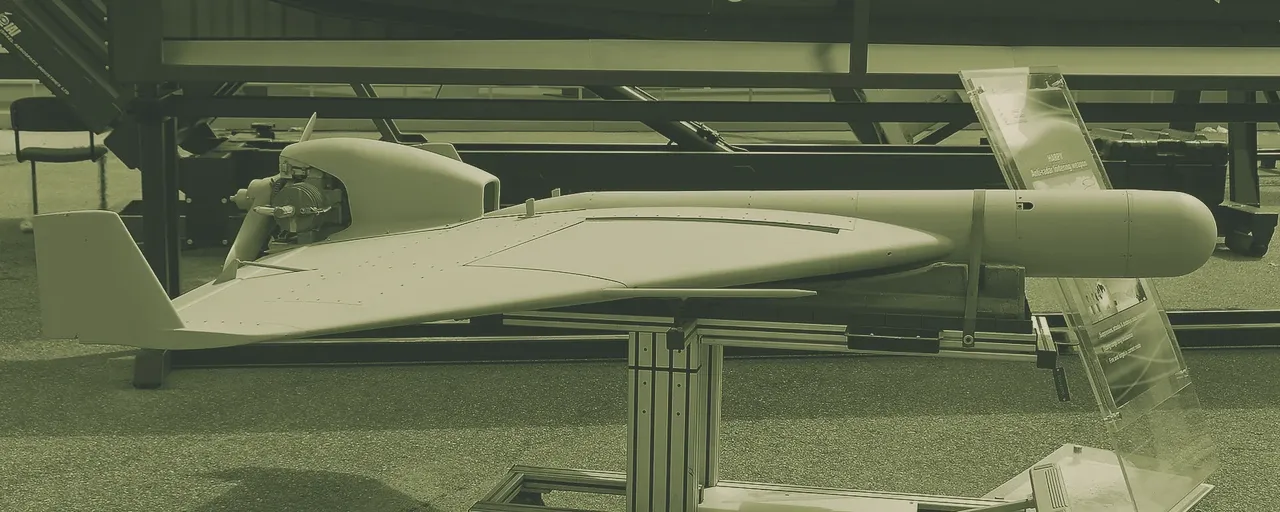
IAI Harpy
FIG.01 · Israel Image - An IAI Harpy anti-radiation loitering munition. Photo by Jastrow, Public domain, via Wikimedia Commons.
Israel's ground-launched anti-radiation loitering munition — a fire-and-forget SEAD weapon that autonomously hunts emitting radars and dives to kill them, and the genealogical root of the combat-proven Harop family.

Overview

The IAI Harpy is an autonomous loitering munition developed by Israel Aerospace Industries (IAI) for the suppression of enemy air defenses (SEAD). It cruises over a target area passively listening for radar emissions, then dives on any emitter with a 32 kg warhead. Shipped in containerised ground launchers, it requires no data-link or pilot-in-the-loop and emits no active signal, making it difficult for targeted radars to detect. Exported to India, South Korea and China, its direct descendant — the Harop — reshaped drone warfare in the Nagorno-Karabakh conflicts and in the India-Pakistan theater. A June 2026 manufacturing partnership with Palladyne AI opens the family to the U.S. market.

Development

The Harpy traces its design to the South African Kentron ARD-10 drone, acquired by IAI in the late 1980s. A first flight occurred in 1989 and the system entered Israeli Defense Forces service in the early 1990s, according to Wikipedia. India and South Korea became the first export customers shortly afterward. In 1994, China purchased Harpy systems for approximately US$55 million. When those units were returned to Israel for a contracted upgrade in 2004, U.S. pressure forced Israel to hand them back without any modifications in 2005, triggering a temporary suspension of Israel from the F-35 Joint Strike Fighter program. The episode demonstrated the political sensitivity of the technology and spurred IAI to develop the more capable Harop, which adds an electro-optical/infrared seeker and a human-in-the-loop data-link. On June 8, 2026, IAI signed a strategic memorandum of understanding with Palladyne AI, granting the company exclusive U.S. manufacturing and marketing rights for the Harpy, Harop, and Mini Harpy, as reported by BusinessWire. No U.S. government procurement contract has yet materialized.

🔒 The rest of the IAI Harpy file is for BattlePolicy Pro members. Stop here and you miss the part that actually matters: how it performs and where it falls short, its combat record, how it stacks up head-to-head against its real counterparts, the complete specifications table, and our analysts’ procurement, supplier and assessment notes. Unlock the full file with BattlePolicy Pro →
FIELD DISPATCH · WEEKLY

BattlePolicy Weekly — free.

Defense tech, startups, and security — weekly.

Related
USA · Funding · analysis · Autonomy · Ukraine · Israel · EuropePro

Defense Tech's Valuations Keep Climbing. The Battlefield's Verdict Is Still Cheap.

UVision wants up to $4 billion on Nasdaq, Shield AI just closed a deal at a $12.7 billion valuation, and Stark's round swelled to €500 million, even as public defense stocks fall and the war the money keeps citing is being won by $500 drones.

USA · Funding · analysis · Autonomy · Ukraine · Israel · Europe
Israel · Iran · Space · Ofek · Rafael · Elbit Systems · IAI

Israel imaged Iran 50,000 times from orbit during Roaring Lion

Ofek satellites generated the targets and AI electronic warfare "opened" Iran's skies for an 18,000-bomb campaign, and both just won Israel's 2026 Defense Prize as the primes behind them sell the next generation.

Israel · Iran · Space · Ofek · Rafael · Elbit Systems · IAI