The Wire · live GRID-REF 37°47′N 122°25′W
DISPATCH 03/26 · 23 Aug 2026
BattlePolicy
Startup to front line. Strategy to consequence.
Lexicon · Israel

Hero-120

A canister-launched, electric-propulsion loitering munition for precision anti-armor strikes with man-in-the-loop control, adopted by the US Army and Marine Corps.
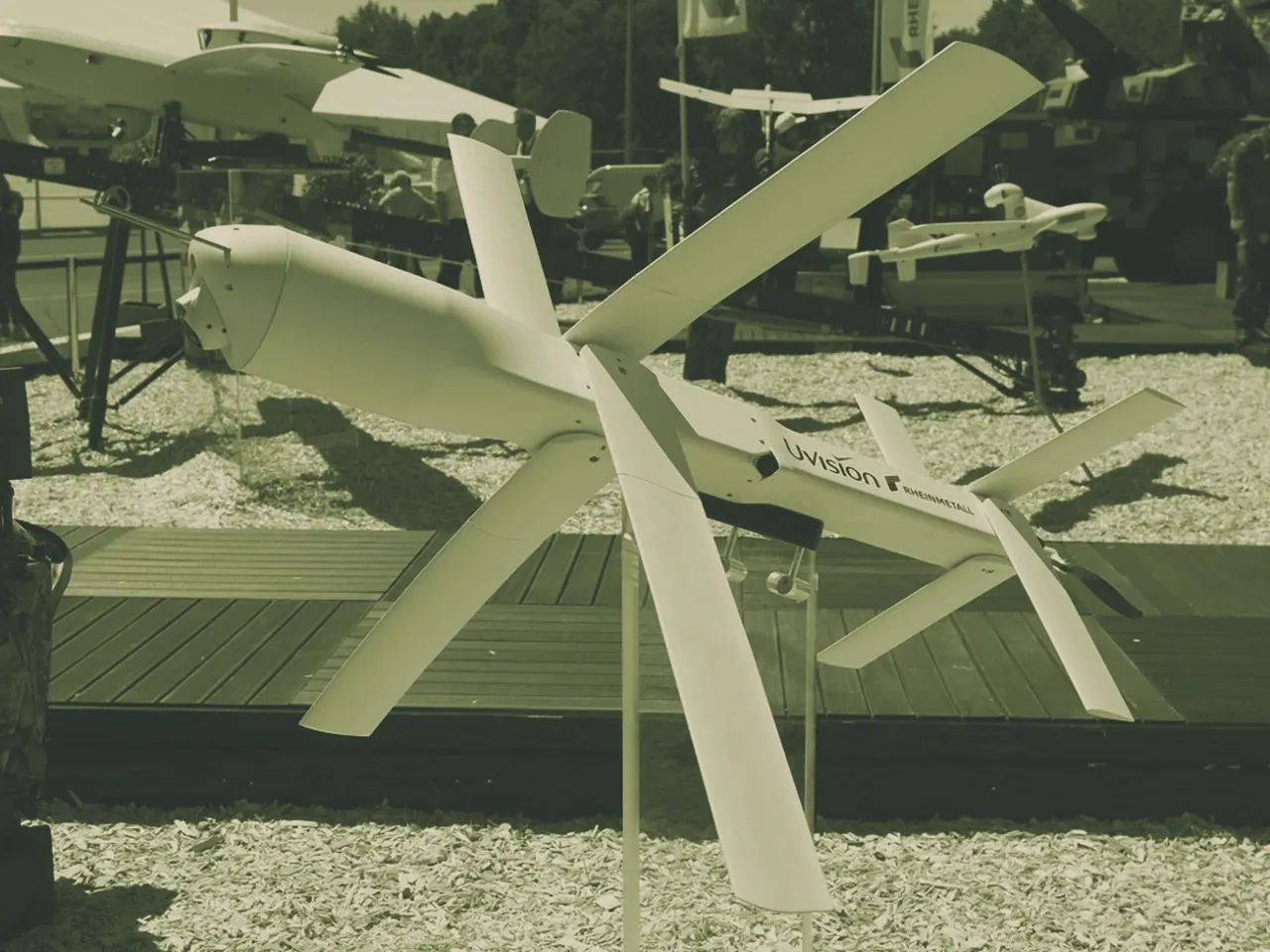
Hero-120
FIG.01 · Israel Image - A UVision Hero-90, smaller sibling of the Hero-120. Photo by Boevaya mashina, CC BY-SA 3.0, via Wikimedia Commons.
A canister-launched, electric-propulsion loitering munition designed for precision anti-armor strikes with man-in-the-loop control, now adopted by the US Army and Marine Corps.

Overview

The Hero-120 is a medium-range loitering munition developed by Israel’s UVision Air Ltd. It combines an electro-optical/infrared (EO/IR) seeker with a 4.5 kg combined anti-armor/anti-personnel warhead, enabling it to loiter over a target area, provide real-time ISR, and execute precision top-attack or direct-impact strikes with claimed sub-1-metre accuracy. The system is tube-launched from a canister, can be operated from land vehicles, naval vessels, and—since 2025—combat helicopters, and is recoverable by parachute if an engagement is aborted. By mid-2026, the US Army had awarded a $982 million sole-source IDIQ contract for the Lethal Unmanned System (LUS) programme, the US Marine Corps had selected it for its Organic Precision Fires – Mounted (OPF-M) requirement, and a Rheinmetall-led production line was delivering systems to an unnamed NATO customer.

Development

UVision Air Ltd. was founded in Israel in 2011 to develop the Hero family of loitering munitions, with the Hero-120 positioned as the medium-class platform between the infantry-portable Hero-30 and the longer-range Hero-400. In 2021, UVision and Rheinmetall signed a partnership that gave Rheinmetall European marketing and industrial rights, leading to licensed production at RWM Italia’s Sardinia facilities Army Technology. That same year the US Marine Corps selected the Hero-120 to meet its OPF-M requirement FlightGlobal. The first NATO contract through the Rheinmetall channel followed in 2022. A US government contract worth $73.55 million for the Hero-120SF variant was awarded in June 2024 EDR Magazine. In June 2025 UVision unveiled an aerial-launch rack that allows the Hero-120 to be deployed from combat helicopters UVision. The program’s most significant milestone came on 3 October 2025, when US prime contractor Mistral Inc. and Uvision Inc. received a $982 million multi-year IDIQ from the US Army for the Lethal Unmanned System (LUS) programme, covering deliveries through 2030 Mistral/Uvision. Rheinmetall’s Sardinia production was expanded later that month, and in November 2025 a low-three-digit-million euro order for “several hundred” systems was booked for an undisclosed NATO nation Army Technology; EDR Magazine.

Design & capabilities

The Hero-120 is a canister-launched, electrically-propelled monoplane with a two-bladed pusher propeller. It carries a gimbaled dual-channel EO/IR seeker that provides day/night ISR imagery and an automatic tracker; the operator can designate a target, abort an attack, re-engage, or command the air-vehicle to return for parachute recovery as long as battery endurance permits UVision. The system operates in GPS-denied environments using onboard autonomy to maintain target lock.

Key performance figures include a 60 km data-link range, 60-minute loiter endurance, a speed envelope of 90–260 km/h, and a service ceiling of 5,500 m Designation-Systems. The 4.5 kg combined blast/fragmentation warhead is optimised against light-armour vehicles, APC, artillery, radar and command nodes, though it cannot guarantee penetration of heavily-armoured MBT hulls without a top-attack profile Designation-Systems. UVision claims a CEP of less than 1 m and highlights the minimised collateral damage from the low-signature air-frame and small warhead.

The weapon adheres to a Modular Open Systems Approach (MOSA), enabling integration with a wide variety of host platforms: single-tube man-portable packs, vehicle-mounted multi-canister launchers (4-, 6- or 8-cell), naval vessels, and—since the 2025 Paris Air Show—combat helicopters via a modular aerial launch rack Janes and UVision.

Variants

  • Hero-120 (standard): Baseline configuration with 60 km range, 60 min endurance and 4.5 kg warhead.
  • Hero-120SF: Special-forces variant cited in the June 2024 US government $73.5 M contract; exact modifications are not publicly detailed EDR Magazine.
  • Hero-120 aerial-launch variant: Modular rack for helicopter carriage, unveiled at the Paris Air Show in June 2025 UVision.
  • Rheinmetall/RWM Italia variant: License-built in Sardinia with Rheinmetall-supplied “latest generation high-performance anti-tank warheads,” supplied to the unnamed NATO customer Army Technology.

Combat record / operational use

As of June 2026, no publicly confirmed combat engagement of the Hero-120 has been recorded. The US Army has noted “demonstrated effectiveness across varied operational environments” and that “initial tests have demonstrated improved situational awareness and target tracking” Uvision USA. These assessments stem from trials and exercises—including successful Arctic testing—rather than hostile-fire use. The US Marine Corps OPF-M fielding on LAV-M, JLTV and LRUSV platforms will create combat-ready units, but no live-fire engagements have been disclosed. The broader Hero family’s “operational value” is frequently cited by UVision and Mistral executives, yet independent verification of battle-proven status for the Hero-120 remains absent.

Advantages

  • Deep US institutional adoption: A $982 M IDIQ from the US Army paired with USMC OPF-M selection provides a level of validation unmatched by any other Western loitering munition; the sole-source justification implies no competing system met the requirement Uvision USA.
  • Abort, re-engage and ISR cycle: Man-in-the-loop control with the ability to observe, assess, abort and re-attack until the battery is depleted reduces fratricide risk; the vehicle can be recovered by parachute, a feature absent in one-way loitering munitions such as the Russian Lancet Designation-Systems.
  • All-domain multi-platform integration: MOSA-compliant architecture enables native fitment to land vehicles, naval vessels and helicopters; the 2025 aerial launch rack extends the weapon to rotary-wing aviation UVision.
  • Dual-channel industrial base: UVision/Mistral supplies the US market while Rheinmetall/RWM Italia caters to European NATO customers through a trusted European prime, easing political constraints and accelerating procurement for European allies Army Technology.
  • GPS-denied operation: Onboard autonomy maintains target tracking even when satellite navigation is jammed, a critical attribute for contested electromagnetic environments UVision.

Drawbacks / limitations

  • No confirmed combat record: Unlike Switchblade (Ukraine) or SkyStriker (Operation Sindoor), the Hero-120 cannot yet point to a verified combat employment, which weakens its hand in competitive export evaluations Overt Defense.
  • Shorter range than SkyStriker: The 60 km data-link reach falls well short of SkyStriker’s 100 km baseline (or beyond 200 km in some configurations), offering less stand-off in large-area contested airspace BAVOVNA.
  • Smaller warhead vs Harop-class munitions: A 4.5 kg warhead limits lethality against MBT-grade armour without precise top-attack geometry; larger loitering munitions such as Harop carry a 23 kg warhead Designation-Systems.
  • Cold-weather battery degradation: Electric propulsion suffers reduced endurance in sub-zero temperatures, a constraint for forward-deployed NATO forces on the Eastern flank despite successful Arctic testing.
  • US sole-source model risk: The $982 M IDIQ was awarded without competition; shifts in US industrial policy or domestic competitors (e.g. AeroVironment) could challenge the programme’s durability, and an IDIQ ceiling does not obligate full expenditure Overt Defense.

Counterparts

Outlook

The Hero-120 is secured as the US Army’s primary medium-range loitering munition through 2030 and is simultaneously being fielded across key US Marine Corps platforms. The Rheinmetall production channel provides a parallel European supply line that already serves at least one NATO force. The 2025 aerial launch capability opens rotary-wing integration, and UVision’s acquisition of Trim Robotics in April 2026 points toward future upgrades in autonomy and swarming. The main uncertainties are whether the USMC’s April 2026 solicitation for a new anti-tank loitering munition signals an intent to supplement or replace the Hero-120 in that role, and whether the continued absence of verified combat data will hinder export sales relative to battle-tested competitors.

Key specifications

Spec Value
Type Canister-launched loitering munition, electric propulsion
Range Up to 60 km
Speed (Mach / km·/s) 90–260 km/h (loiter to attack)
Warhead (type & weight) 4.5 kg combined anti-armor/anti-personnel
Guidance Gimbaled EO/IR day/night seeker with auto-tracker; GPS-denied autonomy; CEP <1 m (manufacturer claim)
Accuracy (CEP) <1 m (manufacturer)
Launch platform(s) Man-portable single canister; vehicle-mounted multi-canister (4/6/8-cell); naval vessels; combat helicopters (aerial launch rack, 2025)
Propulsion Electric motor, two-blade pusher propeller
Length / diameter / launch weight 18 kg (incl. canister) / canister diameter not publicly established / wingspan not publicly established

Sources

  1. UVision Air — HERO 120 product page — https://uvisionuav.com/loitering-munitions/hero-120/
  2. Army Technology — Rheinmetall secures contract for Hero loitering munition systems — https://www.army-technology.com/news/rheinmetall-hero-loitering-muitions/
  3. Uvision Inc. press release — Mistral Inc. and Uvision Inc. Secure a $982 Million Multi-Year IDIQ Contract with the U.S. Army for HERO 120 Loitering Munition System — https://uvisionusa.com/mistral-inc-and-uvision-inc-secure-a-982-million-multi-year-idiq-contract-with-the-u-s-army-for-hero-120-loitering-munition-system/
  4. Overt Defense — U.S. Army Awards $982 Million Contract to Mistral and UVision for HERO 120 Loitering Munitions — https://www.overtdefense.com/2025/10/14/u-s-army-awards-982-million-contract-to-mistral-and-uvision-for-hero-120-loitering-munitions/
  5. Designation-Systems.net — UVision Hero-120 — https://www.designation-systems.net/dusrm/app4/hero-120.html
  6. Janes — Paris Air Show 2025: Israel debuts air-launched Hero-120 loitering munition — https://www.janes.com/defence-intelligence-insights/defence-news/weapons/paris-air-show-2025-israel-debuts-air-launched-hero-120-loitering-munition
  7. FlightGlobal — US Marine Corps to buy UVision Hero-120 loitering munition — https://www.flightglobal.com/military-uavs/us-marine-corps-to-buy-uvision-hero-120-loitering-munition/144245.article
  8. EDR Magazine — U.S. Government Secures $73 Million Contract with UVision and Mistral for Hero-120SF Loitering Munitions — https://www.edrmagazine.eu/u-s-government-secures-73-million-contract-with-uvision-and-mistral-for-hero-120sf-loitering-munitions
  9. EDR Magazine — Rheinmetall supplies NATO customer a significant number of HERO Loitering Munitions — https://www.edrmagazine.eu/rheinmetall-supplies-nato-customer-a-significant-number-of-hero-loitering-munitions-oder-worth-in-the-three-digit-million-euro-range
  10. UVision — UVision Unveils Game-Changing Aerial Launch Capability for Hero-120 — https://uvisionuav.com/uvision-unveils-game-changing-aerial-launch-capability-for-hero-120/
  11. BAVOVNA — SkyStriker reference (range) — https://bavovna.ai/uav/skystriker/
🔒 The Analyst Section on Hero-120 is for BattlePolicy Pro members. Below the line: procurement and contract history, the suppliers and companies behind the system, our head-to-head analyst view of the systems it actually competes with, and the BattlePolicy assessment note. Unlock the full file with BattlePolicy Pro →
Related
Israel · software · command-softwarePro

UVision CORTEX

UVision's CORTEX is a battle-intelligence and mission-management layer, launched in June 2026, that fuses sensor feeds and routes targets to the company's Hero, Viper and Peregrine loitering munitions, letting one operator supervise many munitions across air, land and sea.

Israel · Space · counter-uavPro

D-Fend EnforceAir

D-Fend's EnforceAir is an Israeli counter-drone system that detects a rogue drone's radio protocol, takes over its control link and lands it at a predefined safe spot - no jamming, no shooting. Motorola Solutions agreed in June 2026 to buy D-Fend for $1.5 billion.