HQ-22
China's medium/long-range surface-to-air missile system — a cheaper complement to the HQ-9, exported as the FK-3 and marking China’s first strategic SAM in Europe with its sale to Serbia.
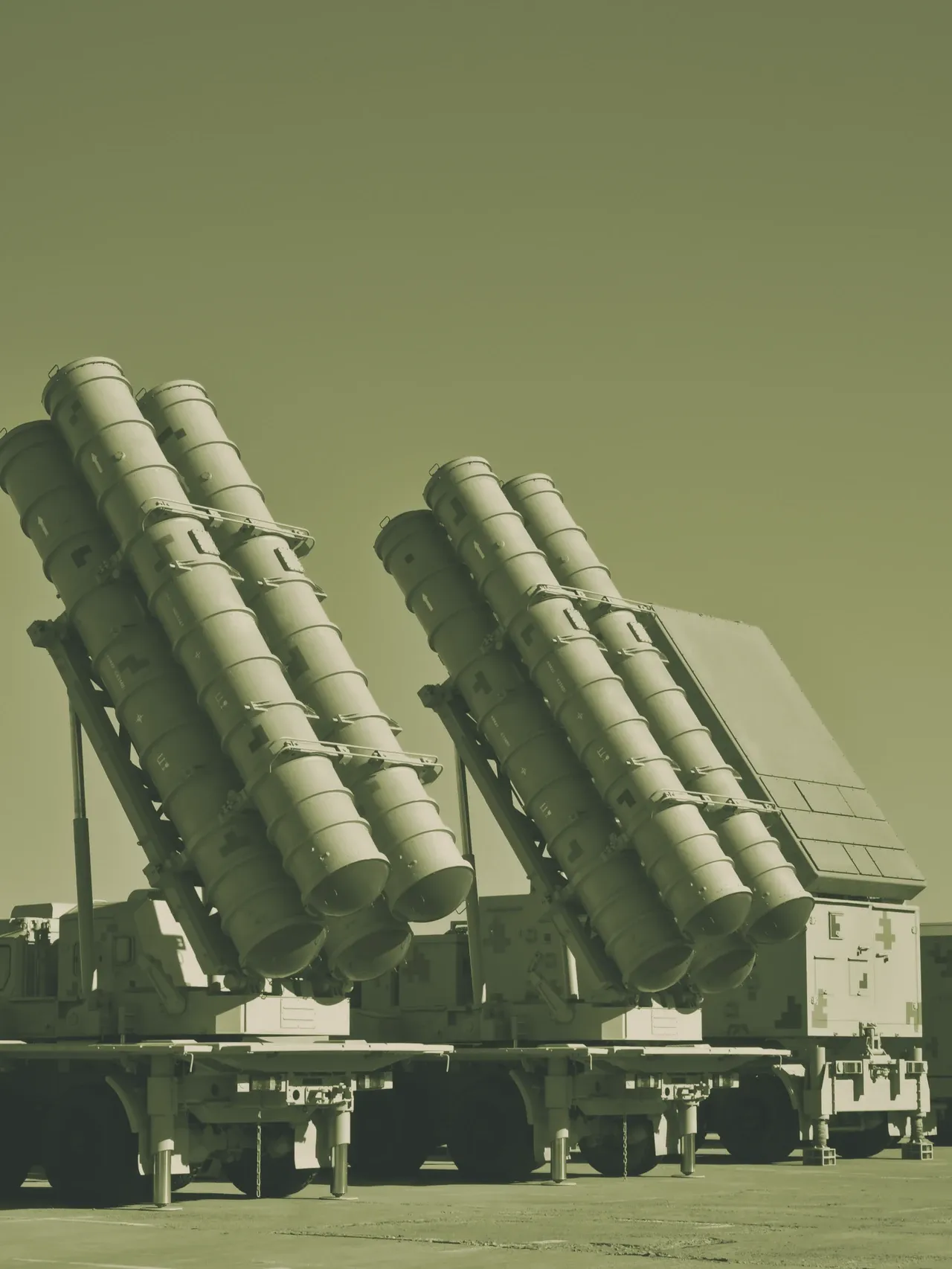
A Chinese medium/long-range surface-to-air missile system designed as a lower-cost complement to the HQ-9, exported as the FK-3 and notably operated by Serbia — the first European customer for a Chinese strategic air-defense system.
Overview
The HQ-22 (Hongqi-22, export designation FK-3) is a medium/long-range, road-mobile surface-to-air missile system fielded by the People’s Liberation Army Air Force (PLAAF) and exported to Serbia. Developed as a more economical partner to the high-end HQ-9B, it fills the layer between medium-range systems and the longest-range area-defense batteries, engaging aircraft, cruise missiles, UAVs and helicopters. Its delivery to Serbia in 2022 via PLAAF Y-20 transports made it the first Chinese strategic SAM to enter service on the European continent, a shift that carries both air-defense and geopolitical weight.
Development
The HQ-22 was developed by CASIC as a successor to the earlier HQ-12/KS-1 family, with a focus on balancing capability and cost. Initial operational capability with the PLAAF is estimated at around 2017, according to the Mitchell Institute for Aerospace Studies. The export variant, FK-3, was first delivered to Serbia in April 2022, with China’s Y-20 transport aircraft flying the system directly to Belgrade in a move that both showcased the PLAAF’s strategic-airlift reach and cemented Sino-Serbian defense cooperation, as reported by Defense News. Serbia reportedly received approximately three batteries and around 300 missiles by early 2023.
Design & capabilities
The HQ-22 is a vertical-launch system that employs semi-active radar homing, with multiple open-source accounts also pointing to an inertial mid-course guidance with track-via-missile (TVM) capability, as detailed by Missilery.info. Its H-200 multifunction PESA engagement radar works alongside a JSG-100 acquisition radar to detect and track targets. The Mitchell Institute cites a published engagement range of approximately 170 km, though other estimates place the figure closer to 120 km; the altitude ceiling is widely assessed at up to 27 km. The missile family, whose full designations have not been publicly released, is housed in four-round canisters on a wheeled 8×8 transporter-erector-launcher (TEL) that provides a road range of about 800 km at speeds reaching 65 km/h. The system is designed to engage aerodynamic targets — aircraft, UAVs, cruise missiles and helicopters — and the manufacturer claims a limited ballistic-missile capability as well.
Variants
The baseline HQ-22 has a reported improved variant designated HQ-22A, while the export FK-3 is the configuration delivered to Serbia. Little open-source information delineates the differences between these sub-variants.
Combat record / operational use
As of mid-2026 the HQ-22/FK-3 has not seen combat, so no empirical performance data exists. The Serbian FK-3 batteries have, however, been exercised in air-defense and counter-drone scenarios, a development noted by RFE/RL. These drills reflect Serbia’s integration of the system into its larger air-defense architecture, but no live-fire engagements have been publicly recorded.
Advantages
- Lower-cost complement to the HQ-9B, allowing a deeper deployment of medium/long-range SAM coverage.
- Road-mobile 8×8 TEL enables rapid relocation and complicates adversary targeting.
- Places Chinese strategic SAM technology inside a European NATO-adjacent state, giving Beijing a geopolitical and industrial foothold.
- Simplified logistics relative to the more complex HQ-9 family.
Drawbacks / limitations
- No combat record; all performance claims are untested outside training and testing.
- Lower-tier compared with the HQ-9B — shorter published range, likely less advanced radar and missile seekers.
- Key parameters (reaction time, simultaneous engagements, missile designations) are not publicly established, limiting independent assessment.
- PESA-based fire-control radars reflect an older technology baseline relative to contemporary AESA trends.
- The Serbian FK-3 deployment, while symbolically significant, sits within a modest fleet of only a few batteries.
Counterparts
- Patriot PAC-3 (USA)
- S-400 Triumf (Russia)
Outlook
The HQ-22 remains in production and active PLAAF service, though open-source fleet numbers are not available. Serbia’s adoption has demonstrated that the FK-3 can be a viable export product, and China may leverage that reference to pursue additional customers, particularly among states seeking a politically neutral, lower-cost SAM. Until combat data emerges, however, the system’s reputation rests on paper specifications and the strategic signal of its European deployment.
Key specifications
| Spec | Value |
|---|---|
| Type | Medium/long-range vertical-launch SAM |
| Engagement range | ~100–170 km (est.) |
| Engagement altitude | ~up to 27 km (est.) |
| Target set | aircraft, UAV, cruise missiles, helicopters; limited ballistic (claimed) |
| Interceptor(s) | HQ-22 family (designations not fully published) |
| Radar / fire control | H-200 multifunction PESA + JSG-100 acquisition radar |
| Reaction time | not publicly established |
| Simultaneous engagements | not publicly established |
| Mobility | wheeled 8×8 TEL (4 missiles), road range ~800 km, ~65 km/h |
Sources
- Mitchell Institute for Aerospace Studies — “HQ-22.” https://www.mitchellaerospacepower.org/weapons/hq-22/
- Defense News — “China delivers anti-aircraft missiles to Serbia.” https://www.defensenews.com/land/2022/04/11/china-delivers-anti-aircraft-missiles-to-serbia/
- Wikipedia — “HQ-22.” https://en.wikipedia.org/wiki/HQ-22
- RFE/RL — “Serbia Deepens Military Ties With China.” https://www.rferl.org/a/serbia-china-military-cooperation-drones-air-defense-security/33626646.html
- Missilery.info — “Antiaircraft missile system HQ-22 (FK-3).” https://en.missilery.info/missile/hq-22