GRID-REF 37°47′N 122°25′W
DISPATCH 02/26 · 9 Jun 2026
BATTLEPOLICY
Startup to front line. Strategy to consequence.
Lexicon · Russia

Krasukha-4

A Russian mobile broadband radar-jamming system built to blind airborne surveillance radars and disrupt satellite signals — deployed to Syria and Ukraine, and captured intact near Kyiv.
Krasukha-4
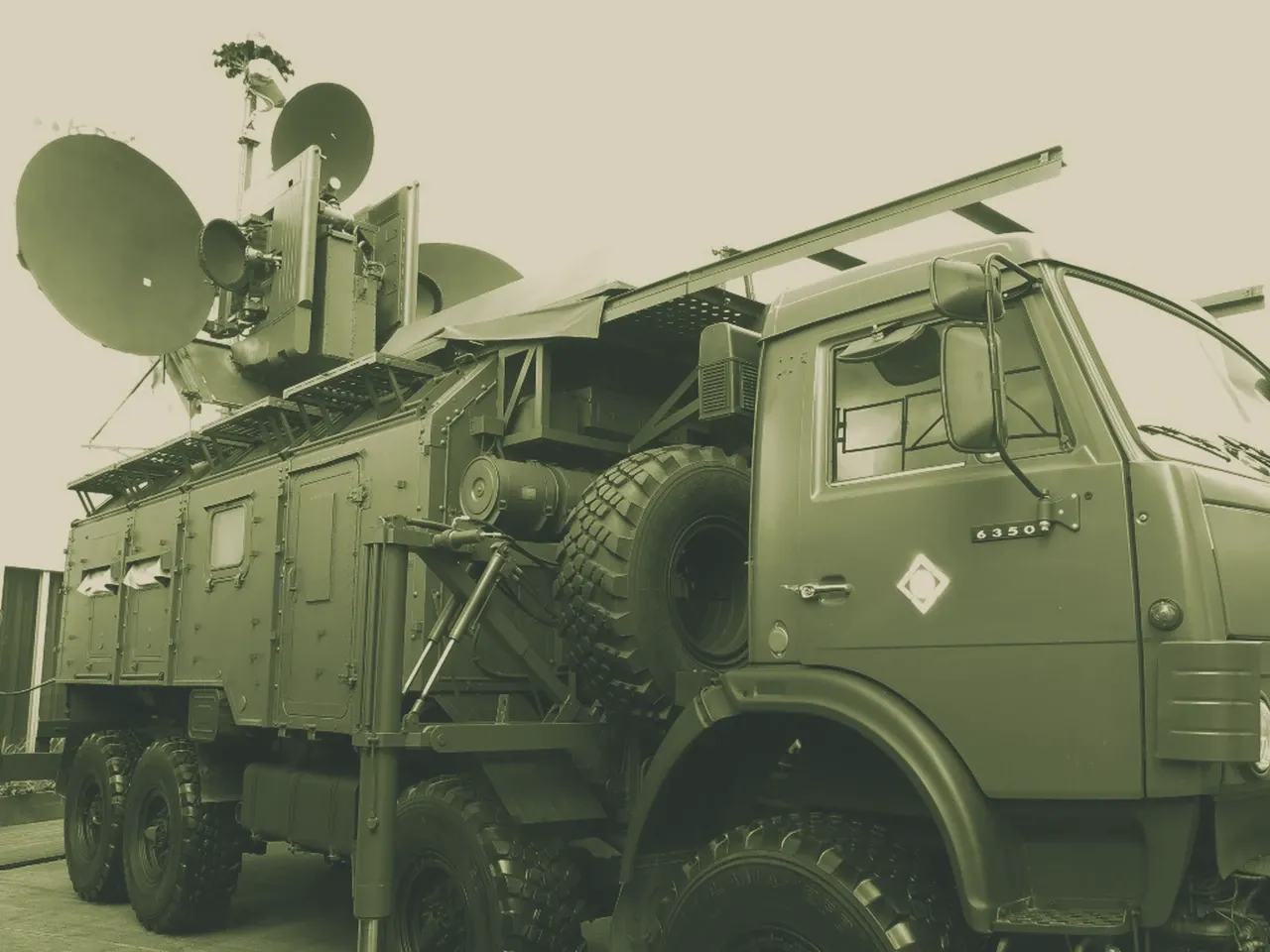
FIG.01 · Russia Image - A Russian Krasukha-4 electronic-warfare vehicle. Photo by Boevaya mashina, CC BY-SA 4.0, via Wikimedia Commons.
A Russian mobile broadband radar-jamming system designed to blind airborne surveillance radars and protect high-value ground assets from reconnaissance and radar-guided munitions.

Overview

Krasukha-4 (1RL257) is a road-mobile, broadband multifunctional electronic-warfare (EW) system fielded by the Russian Armed Forces. According to Army Recognition, its core mission is to jam and suppress airborne early-warning and surveillance radars — notably the E-3 AWACS and E-8 JSTARS — as well as ground-based radars and low-Earth-orbit reconnaissance satellites. A single Krasukha-4 complex is a two-vehicle set: a jammer vehicle with a retractable antenna turret and a separate command-post vehicle, both mounted on KamAZ-6350 8×8 trucks. Because it denies detection and targeting, the system is a key asset in Russia’s layered integrated air-defense and EW shield.

Development

Krasukha-4 was developed by the Bryansk Electromechanical Plant (BEMZ) under the KRET/ Rostec holding and is the larger sister to the earlier 1L269 Krasukha-2. The Russian Ministry of Defence accepted the first systems in November 2013, though some reporting points to initial deliveries as early as 2012, according to Wikipedia’s Krasukha profile. BEMZ presented an export version (1RL257E) at subsequent arms fairs. Production numbers remain classified, but the system has been spotted in the inventories of several EW brigades.

Design & capabilities

The jammer vehicle carries a large rotating antenna turret with two circular antennas and a telescopic mast, while the command vehicle houses the battery’s control and targeting systems. Operating range is a closely held figure; Jamestown cites an effective jamming radius of ~200 km, while some secondary sources claim up to 400–800 km — all estimates. Target frequencies are also classified, but open-source analysis suggests coverage against X-band and Ku-band airborne radars and, potentially, against communications satellites in the X/Ku/Ka bands. Army Recognition describes the technique as a combination of high-power barrage and spot-jamming at radar fundamental frequencies, capable of degrading not only search radars but also the guidance channels of radar-guided missiles. The crew of three operates the system from covered compartments within the vehicles, and the KamAZ-6350 chassis gives the complex sufficient mobility to operate alongside mechanized forces.

Variants

  • Krasukha-2 (1L269): the lighter, earlier member of the family, reported to specialize in jamming airborne fire-control radars and operating at shorter ranges.
  • 1RL257E: export-oriented configuration shown at arms exhibitions, presumed to have downgraded capabilities.

Combat record / operational use

Russia deployed Krasukha-4 to Syria from late 2015, stationing the system at the Khmeimim airbase to shield assets from surveillance drones and aircraft, in what The Conversation described as a real-world test of advanced EW. During that deployment, Western accounts reported that the system disrupted coalition GPS and UAV operations in the vicinity. In Ukraine, Krasukha-4 has been active as a front-line jamming asset, but its most notable operational event occurred in March 2022, when Ukrainian forces captured an intact jammer unit near Kyiv. The War Zone and the Center for Public Integrity both reported that the captured system was subsequently handed to U.S. intelligence, giving NATO engineers a rare physical look at a system that had previously been studied only through signals and overhead imagery. Hacking groups later leaked detailed photographs of the equipment, underscoring the system’s vulnerability to information compromise, detailed by Militarnyi.

Advantages

  • Effective against high-value airborne surveillance radars such as AWACS and JSTARS, forcing stand-off ranges.
  • Broadband capabilities potentially cover radar and some satellite bands, disrupting multiple threat vectors.
  • High mobility (KamAZ 8×8 truck) allows repositioning for survivability and front-line support.
  • Fielded combat experience from both Syria and Ukraine, with demonstrable effect on drone and GPS operations.

Drawbacks / limitations

  • Effective range is heavily disputed; most open-source estimates sit at ~150–300 km, and even that envelope relies on ideal line-of-sight.
  • Large, highly visible antenna turret makes it a priority target for airborne anti-radiation missiles and artillery once located.
  • The capture of an intact system near Kyiv in 2022 revealed sensitive hardware to Western analysts, potentially enabling countermeasure development.
  • Classified frequency-band ranges mean precise capabilities remain unverified in public domain.

Counterparts

  • Starshield (USA) — military SATCOM constellation, not a direct EW counterpart but operates in the same contested electromagnetic spectrum.
  • Yaogan series (China) — ELINT and SAR satellite constellation whose sensors Krasukha-4 might seek to jam.

Outlook

Krasukha-4 remains a prominent symbol of Russia’s layered EW arsenal, but its future effectiveness is tied to how quickly Western forces can exploit the forensic intelligence gained from the captured Ukrainian system. Shifts toward low-probability-of-intercept radars and distributed ISR architectures — including swarms of small drones — will test the system’s ability to isolate and jam a single emanator. Moscow will likely retain the system while pursuing next-generation jammers that can engage more targets across wider bands.

Key specifications

Spec Value
Type / function Mobile broadband multifunctional jamming station
Frequency band(s) / orbit Classified; open sources cite X-band, Ku-band and possible satcom X/Ku/Ka (est.)
Coverage / effective range ~150–300 km jamming radius (est.); claims of 400–800 km unverified
Host platform KamAZ-6350 8×8 truck (two-vehicle complex)
Primary effect High-power barrage/spot jamming of radar fundamental frequencies
Key subsystems Rotating antenna turret with two circular antennas, telescopic mast, separate command-post vehicle, 3-person crew

Sources

  1. Army Recognition — 1RL257 or Krasukha-4 Jamming Station. https://www.armyrecognition.com/military-products/army/electronic-warfare/1rl257-or-krasukha-4-jamming-station
  2. The Conversation — How Syria is becoming a test bed for high-tech weapons of electronic warfare. https://theconversation.com/how-syria-is-becoming-a-test-bed-for-high-tech-weapons-of-electronic-warfare-48779
  3. The War Zone — Ukraine Just Captured Part Of One Of Russia's Most Capable Electronic Warfare Systems. https://www.twz.com/44879/ukraine-just-captured-part-of-one-of-russias-most-capable-electronic-warfare-systems
  4. Militarnyi — Hackers Leak Detailed Photos of Russian EW System 1RL257 Krasukha-4. https://militarnyi.com/en/news/hackers-leak-detailed-photos-of-russian-ew-system-1rl257-krasukha-4/
  5. Jamestown Foundation — Russia's Electronic Warfare Capabilities as a Threat to GPS. https://jamestown.org/russias-electronic-warfare-capabilities-as-a-threat-to-gps/
  6. Center for Public Integrity — What to know about the Russian device reportedly captured in Ukraine. https://publicintegrity.org/national-security/ukraine-in-crisis/what-to-know-about-the-russian-device-reportedly-captured-in-ukraine/
  7. Wikipedia — Krasukha. https://en.wikipedia.org/wiki/Krasukha
FIELD DISPATCH · WEEKLY

BattlePolicy Weekly — free.

Defense tech, startups, and security — weekly. No paywall.

Related
Ukraine · Russia · Policy · Chornobyl · Energoatom · shahed

Russia strikes Ukraine's central spent-fuel store at Chornobyl with a Shahed

A Russian drone hit the receiving building of the Holtec-built dry-cask site that freed Ukraine from shipping its nuclear waste to Russia, metres from where spent fuel sits.

Ukraine · Russia · Policy · Chornobyl · Energoatom · shahed