Lada-class
Russia's troubled Project 677 diesel-electric attack submarine — a mono-hull design intended to replace the Improved Kilo with Kalibr capability and planned air-independent propulsion, but plagued by decades of delays and an absent AIP system.
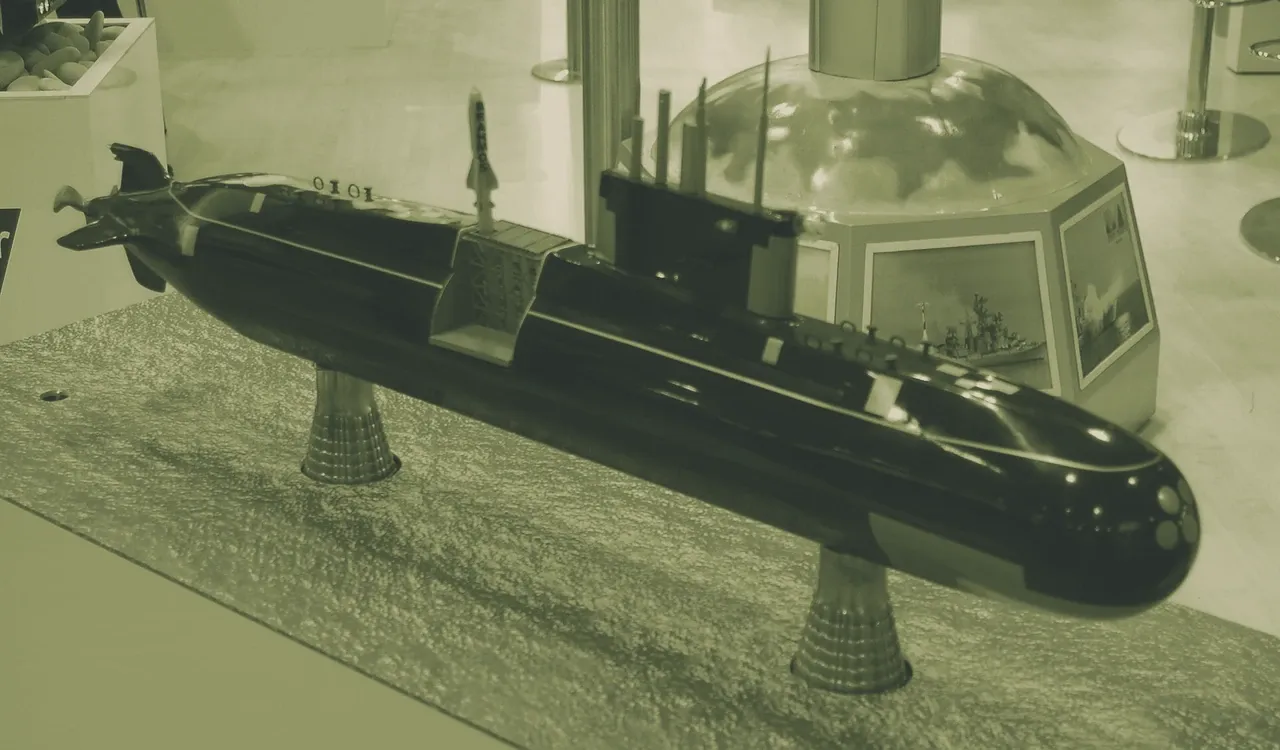
Russia's long-delayed, conventionally powered attack boat — a mono-hull Kalibr-shooter that was supposed to field air-independent propulsion but has yet to do so, leaving it a smaller, quieter, but still conventionally limited alternative to the Improved Kilo.
Overview
The Lada class (Project 677, NATO reporting name St. Petersburg) is a Russian diesel-electric attack submarine designed by the Rubin Central Design Bureau as a successor to the Kilo family. Compared with the twin-hull Improved Kilo, the Lada adopts a single-hull architecture, a smaller crew, and a lighter displacement, aiming for quieter operation and greater automation. The design was conceived to carry a domestically developed air-independent propulsion (AIP) system, but that capability has never been fitted, drastically narrowing the boat’s operational utility and forcing the Russian Navy to continue ordering the older Project 636.3 Improved Kilo. Three hulls have been commissioned after a programme that spans nearly three decades, and further construction proceeds at a slow pace.
Development
The lead boat, Sankt Peterburg (B-585), was laid down at Admiralty Shipyards in St. Petersburg in 1997, launched in 2004, and only commissioned in 2010 after years of trials that effectively kept the vessel in prototype status. According to GlobalSecurity.org, the programme suffered repeated setbacks linked to the immaturity of the planned lithium-ion battery-based AIP plant, forcing the navy to accept the boat as a pure diesel-electric platform. Naval Technology notes that the export version, Project 1650 Amur, was marketed with an optional AIP module but attracted no customers. The first serial unit, Kronshtadt (B-586), was not commissioned until early 2024, and the third boat, Velikiye Luki, followed in December 2025.
Design & capabilities
The Lada is Russia’s first mono-hull combat submarine since the 1940s, a departure from the double-hull tradition of the Kilo, Yasen, and Borei classes. Naval Technology reports a surfaced displacement of approximately 1,765 t and a submerged displacement of roughly 2,650 t — about 25 % less than the Improved Kilo — permitting a crew of only 35 and a hull length of 67 m. The propulsion plant consists of diesel generators driving a single skewed seven-bladed propeller; the AIP module intended to give weeks-long submerged endurance remains absent.
Armament is centered on six 533 mm torpedo tubes that can launch a mixed load of torpedoes, mines, and the Kalibr family of cruise missiles. The Lira sonar suite is the primary sensor, and the boat is sheathed in an anechoic coating. Russian state sources have described the Lada as “ultra-silent,” but open-source assessments treat that claim as unverifiable. Diving depth is estimated at around 300 m, roughly in line with the Kilo lineage.
Combat record / operational use
No Lada-class boat has been deployed in combat. The prototype Sankt Peterburg spent its career as a trials and training platform. Kronshtadt joined the Northern Fleet in early 2024 and is used for crew familiarisation and local patrols, while Velikiye Luki entered the Baltic Fleet in December 2025. Unlike the Improved Kilo, the class has not fired Kalibr missiles in anger and has no recorded operational employment beyond trials.
Advantages
- Smaller and more automated than the Improved Kilo, with a complement of only 35.
- Mono-hull design reduces displacement and simplifies construction.
- Kalibr-capable, offering land-attack and anti-ship strike potential.
- Intended AIP architecture could, if eventually fitted, give multi-week submerged endurance.
Drawbacks / limitations
- AIP still non-existent, leaving submerged endurance no better than earlier diesel-electric boats.
- Programme delays that stretch nearly three decades have kept production to a trickle.
- Unproven in combat and largely absent from the fleet’s operational rotation.
- Limited diving depth (~300 m est.) compared with larger nuclear boats.
Counterparts
- Type 212 (Europe)
- Improved Kilo (Russia)
Outlook
The Russian Navy continues to invest in the Lada, with two further hulls ordered, but the programme’s future hinges on whether a reliable domestic AIP or lithium-ion battery plant can be fielded. Until then, the non-AIP Improved Kilo — itself a proven design that has fired Kalibr in combat — remains the more numerically significant and operationally flexible conventional boat in Russian service. Export interest remains nonexistent, and the Lada is likely to remain a niche capability unless its propulsion gap is closed.
Key specifications
| Spec | Value |
|---|---|
| Type | Diesel-electric attack submarine (SSK) |
| Full-load displacement | ~2,650 t submerged (est.) |
| Length / beam / draft | ~67 m / ~7.2 m / 6.5 m |
| Propulsion | Diesel-electric; single skewed 7-blade propeller; no AIP fitted |
| Max speed (kts) | 10 kts surfaced / 21 kts submerged |
| Range / endurance | ~500 nm at 3 kts submerged; overall endurance not publicly established |
| Complement | 35 |
| Armament | 6 × 533 mm torpedo tubes (torpedoes, mines, Kalibr cruise missiles) |
| Sensors / combat system | Lira sonar suite |
| Aviation facilities | None |
Sources
- Naval Technology — Project 677 Lada Class / Project 1650 Amur Class Submarines. https://www.naval-technology.com/projects/project-677-lada-class-project-1650-amur-class-submarines/
- GlobalSecurity.org — Project 677 Lada class Diesel-Electric Torpedo Submarine. https://www.globalsecurity.org/military/world/russia/677.htm
- Wikipedia — Lada-class submarine. https://en.wikipedia.org/wiki/Lada-class_submarine
- Naval News — Russia Commissions First Serial Lada-class Submarine (Kronshtadt). https://www.navalnews.com/naval-news/2024/02/russia-commissions-first-serial-lada-class-submarine/
- Baird Maritime — Russian Navy’s third Lada-class submarine commissioned (Velikiye Luki). https://www.bairdmaritime.com/security/naval/naval-submersibles/russian-navys-third-lada-class-submarine-commissioned-into-service