GRID-REF 37°47′N 122°25′W
DISPATCH 02/26 · 9 Jun 2026
BATTLEPOLICY
Startup to front line. Strategy to consequence.
Lexicon · Russia

Mi-8 Hip

The most produced twin-turbine transport helicopter in history, the Mi-8 Hip (Mi-17) has been the backbone of Soviet/Russian and allied medium-lift aviation since the 1960s, with over 10,000 built and dozens of military and civil operators worldwide.
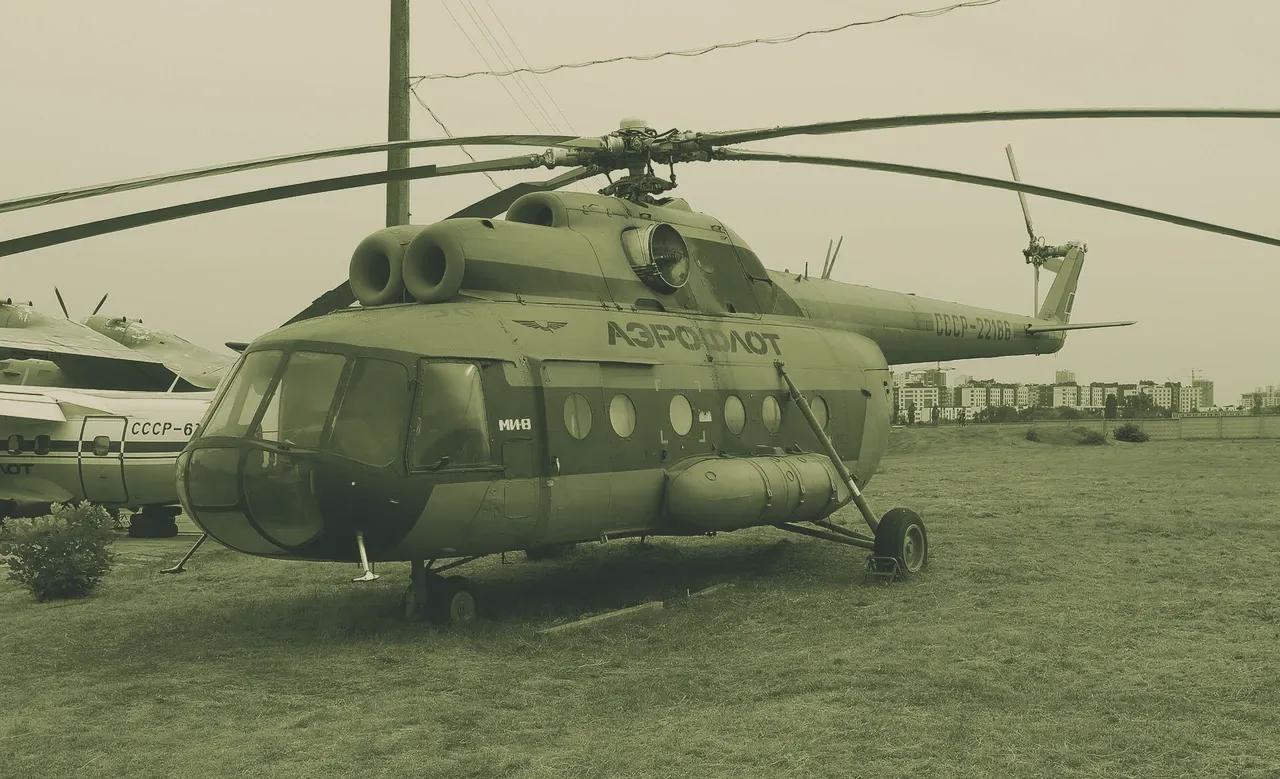
Mi-8 Hip
FIG.01 · Russia Image - Mi-8 Hip. Photo by George Chernilevsky, CC BY 4.0, via Wikimedia Commons.
The most produced twin-turbine transport helicopter in history, the Mi-8 Hip (Mi-17 export family) has served as the backbone of Soviet/Russian and allied medium-lift aviation since the late 1960s, with over 10,000 airframes built and a presence on every continent.

Overview

The Mil Mi-8, known to NATO as the Hip, is a medium twin-engine, single-main-rotor helicopter that has dominated global rotary-wing transport for decades. The export Mi-17 family (NATO reporting name Hip-H) is essentially the high-hot-and-powerful evolution of the baseline Mi-8MT. Together they form a ubiquitous platform: troop/cargo carrier, gunship, armed assault, MEDEVAC, and electronic-warfare special-mission helicopter. According to Airforce Technology, well over 10,000 Mi-8/17s have been built, making it the most produced helicopter in the world, in service with over 50 nations.

Development

Initial design work at the Mil Moscow Helicopter Plant began in the late 1950s, and the first prototype flew on 7 July 1961, as documented by Wikipedia. The early production Mi-8T entered Soviet service later in the decade, powered by two Klimov TV2-117 turboshafts. A significant upgrade arrived with the Mi-8MT (export Mi-17) in the late 1970s, replacing the engines with the more powerful TV3-117 and relocating the tail rotor to the port side for improved efficiency. The type has remained in uninterrupted production at Kazan and Ulan-Ude ever since, continuously modernised with digital cockpits, new engines (VK-2500), and advanced defensive suites.

Design & capabilities

The standard crew consists of a pilot, co-pilot, and flight engineer. The cabin can accommodate 24 fully equipped troops (up to 30 in a pinch) or 12 stretchers with medical attendants, according to Wikipedia. Internal cargo capacity is approximately 4,000 kg, and an external sling can lift up to 5,000 kg. The helicopter measures roughly 18.4 m in length with a 21.3 m five-blade main rotor, and maximum takeoff weight reaches 13,000 kg.

Performance varies by variant: maximum speed ranges between 250 and 280 km/h, cruise speed 225–260 km/h, and combat radius/range is 465–800 km (ferry range up to 960 km with auxiliary tanks). Service ceiling is about 6,000 m. Armed versions carry up to six external hardpoints for gun pods, rockets, anti-tank guided missiles (Shturm or Ataka), and Igla air-to-air missiles, along with door-mounted 7.62 mm PKT or 12.7 mm machine guns. Modernized airframes are fitted with weather radar, forward-looking infrared/electro-optical turrets, and President-S or Vitebsk missile-approach warning and countermeasure suites, as noted by Airforce Technology.

Variants

The Mi-8/17 family is vast; key branches include: - Mi-8T: early production with TV2-117 engines. - Mi-8MT / Mi-17: re-engined with TV3-117, tail rotor on port side; the backbone of the export fleet. - Mi-17V-5 / Mi-8MTV-5: upgraded cockpit, additional armour, and loading ramp. - Mi-8AMTSh (Mi-171Sh) “Terminator”: armed assault variant with weapons wings, ATGM capability, and defensive aids. - Mi-171A2: modernised with composite rotors, VK-2500 engines, and glass cockpit.

Combat record / operational use

The Mi-8 has been a combat fixture since the Soviet–Afghan War (1979–1989), where it served as the primary troop transport and gunship. It saw extensive use in the Chechen wars, the Syrian Civil War, and the Russo-Ukrainian War, as detailed by Wikipedia. In Ukraine, both sides operate the type for air assault, resupply, and medical evacuation, and substantial numbers have been lost to ground fire and drones. Its ability to fly in high, hot, and dusty environments has made it indispensable in conflict zones ranging from the mountains of Afghanistan to the deserts of the Middle East and the plains of Africa.

Advantages

  • Largest installed base of any helicopter, ensuring operator familiarity and parts availability.
  • Versatile multirole design: transport, medical, gunship, electronic warfare, and search and rescue with a single basic airframe.
  • Good hot-and-high performance with the TV3-117/VK-2500 powerplant.
  • Can lift a squad-sized element (24–30 troops) or up to 5 tonnes externally.
  • Rugged, forgiving of rough-field operations and austere maintenance conditions.

Drawbacks / limitations

  • Large radar and visual signature; an easy target for man-portable air-defense systems (MANPADS) and drone strikes.
  • Older airframes lack modern glass cockpits and integrated defensive aids.
  • High fuel consumption limits range unless auxiliary tanks are fitted.
  • Cruise speed is lower than Western medium-lift peers (UH-60M).
  • The armed variants’ weapons suite is less integrated than purpose-built attack helicopters.

Counterparts

Outlook

With over 10,000 built and continuous production since the 1960s, the Mi-8/17 is unlikely to be replaced wholesale. Modernised variants such as the Mi-171A2 and the armed Mi-8AMTSh-VN continue to be ordered by the Russian military and export customers, while existing fleets undergo upgrade programmes. The helicopter will remain the world’s dominant medium-lift rotary-wing platform for decades, though its survivability in contested environments is increasingly challenged by proliferating air-defence and loitering-munition threats.

Key specifications

Spec Value
Crew 3 (pilot, co-pilot, flight engineer)
Length / wingspan ~18.4 m fuselage / 21.3 m rotor diameter
Max speed ~250–280 km/h
Service ceiling ~6,000 m
Combat radius / range 465–800 km (range); ferry ~960 km with auxiliary tanks
Payload Internal cargo ~4,000 kg / external sling ~5,000 kg; or 24–30 troops / 12 stretchers
Hardpoints Up to 6 external racks (armed variants)
Radar / sensors Weather radar; FLIR/EO turrets; President-S/Vitebsk missile-warning suites (modern variants)
Powerplant 2 × Klimov TV3-117/VK-2500 turboshaft, ~2,200–2,500 shp each (variant-dependent)
Armament Door-mounted 7.62 mm PKT / 12.7 mm; UPK-23 23 mm gun pods; S-5/S-8 rockets; ATGM (Shturm/Ataka); Igla AAM (gunship variants)

Sources

  1. Airforce Technology — Mi-8 / Mi-17 Hip Multimission Helicopter. https://www.airforce-technology.com/projects/mi8-17-hip/
  2. Wikipedia — Mil Mi-8. https://en.wikipedia.org/wiki/Mil_Mi-8
  3. Wikipedia — Mil Mi-17. https://en.wikipedia.org/wiki/Mil_Mi-17
  4. SKYbrary — Mi-8. https://skybrary.aero/aircraft/mi8
  5. Czech Ministry of Defence — Mi-17 (Hip-H) technical specs. https://www.mo.gov.cz/scripts/detail.php?id=6292
FIELD DISPATCH · WEEKLY

BattlePolicy Weekly — free.

Defense tech, startups, and security — weekly. No paywall.

Related
Ukraine · Russia · Policy · Chornobyl · Energoatom · shahed

Russia strikes Ukraine's central spent-fuel store at Chornobyl with a Shahed

A Russian drone hit the receiving building of the Holtec-built dry-cask site that freed Ukraine from shipping its nuclear waste to Russia, metres from where spent fuel sits.

Ukraine · Russia · Policy · Chornobyl · Energoatom · shahed