GRID-REF 37°47′N 122°25′W
DISPATCH 02/26 · 11 Jun 2026
BATTLEPOLICY
Startup to front line. Strategy to consequence.
Lexicon · USA

MQ-25 Stingray

The U.S. Navy's first operational carrier-based unmanned system—a dedicated aerial tanker designed to free Super Hornets from buddy-tanking and extend the reach of the carrier air wing.
MQ-25 Stingray
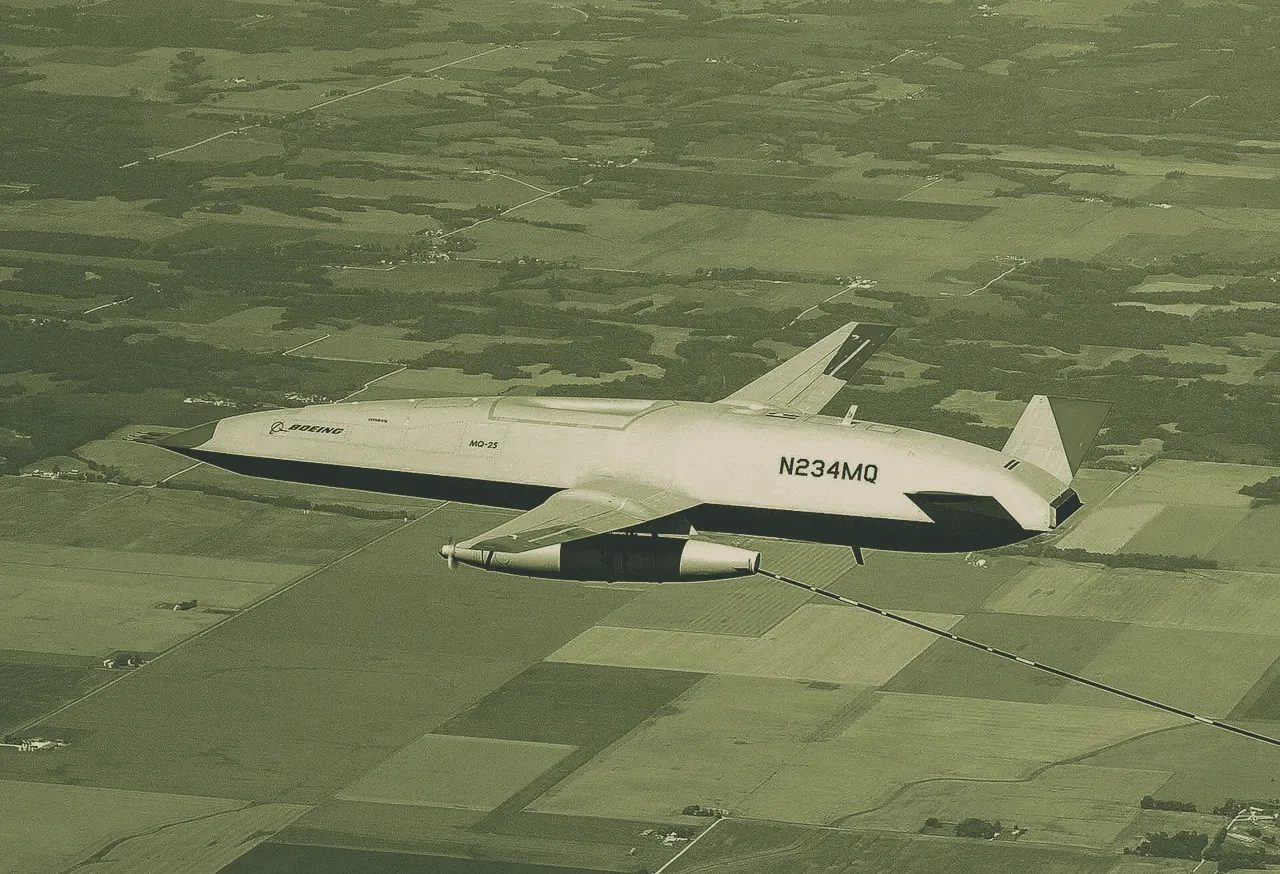
FIG.01 · USA Image - A Boeing MQ-25 Stingray during trials. Photo by United States Navy photo courtesy of Boeing, Public domain, via Wikimedia Commons.jpg).
The U.S. Navy's first carrier-based unmanned aircraft—a dedicated aerial refueling tanker meant to relieve Super Hornets of the buddy-tanking burden and extend the strike range of the carrier air wing in contested environments.

Overview

The MQ-25A Stingray is a fixed-wing, autonomous unmanned aerial refueling tanker developed by Boeing for the U.S. Navy. It is purpose-built to operate from aircraft carriers, using probe-and-drogue refueling pods already in fleet service to offload fuel to F/A-18E/F Super Hornets, F-35Cs, and E-2D Advanced Hawkeyes at a planned 500 nautical miles from the carrier. As the first dedicated unmanned tanker in the Navy’s inventory, it aims to reclaim strike-fighter sorties currently consumed by crewed buddy-tanking, a capability gap that has grown quantifiably urgent as the Navy designs operations in the Pacific. The Stingray also carries a secondary intelligence, surveillance, and reconnaissance (ISR) mission, though its tanker role dominates the program of record.

Development

The MQ-25 traces its lineage to the cancelled Unmanned Carrier-Launched Airborne Surveillance and Strike (UCLASS) program, which sought a carrier-based stealthy strike and surveillance drone. Facing capability and cost hurdles, the Navy reoriented the effort in 2016 into the more focused Carrier-Based Aerial Refueling System (CBARS)—a simpler tanker-first design that would fill the immediate buddy-tanking gap faster and cheaper. Boeing, Lockheed Martin, Raytheon, and General Atomics all submitted proposals; Boeing was awarded the $805 million engineering and manufacturing development (EMD) contract in August 2018, as detailed by Naval Technology.

Boeing’s T1 demonstrator flew in 2019 and, on 7 June 2021, became the first unmanned aircraft in history to refuel another aircraft in flight when it passed fuel to an F/A-18F Super Hornet, according to the official Boeing program page. The production-representative engineering development model (EDM) did not fly until 25 April 2026, after delays pushed the milestone from late 2025, but the two-hour autonomous sortie at MidAmerica Airport in Mascoutah, Illinois, demonstrated taxi, takeoff, flight, landing, and responsive ground-control station command, as reported by Boeing and DefenseScoop. On 19 May 2026, the Navy granted Milestone C approval, clearing the aircraft for low-rate initial production (LRIP), a decision noted by Seapower Magazine.

Initial operational capability (IOC) has slipped five years from the original 2024 target and is now set for fiscal year 2029, per the FY2027 budget submission, as reported by USNI News.

Design & capabilities

The MQ-25A is a mid-wing, blended-fuselage aircraft with folding wings for carrier stowage, a single Rolls-Royce AE 3007N turbofan, and a payload centered on the Cobham ARS aerial refueling store—the same probe-and-drogue pod used by F/A-18 buddy tankers. This commonality reduces receiver-aircraft integration risk because the system is already cleared for Super Hornets, E-2Ds, and F-35Cs. The primary mission is to offload approximately 14,000–16,000 pounds of fuel to receivers at a distance of 500 nautical miles from the carrier, a design target that the Navy has consistently cited as the performance floor. Its autonomous control architecture permits fully autonomous taxi, takeoff, flight, and arrested landing, with Air Vehicle Pilots (AVPs) exercising human-on-the-loop oversight from a ground control station; this was demonstrated end-to-end during the April 2026 first flight, as described by Breaking Defense.

The airframe itself measures 51 ft in length with a 75 ft wingspan (31.3 ft folded) and carries an empty weight of roughly 14,110 lb against a maximum takeoff weight of about 44,533 lb. Endurance per sortie is not publicly stated, but the T1 demonstrator accumulated some 30 hours of cumulative flight time across test sorties, according to Naval Technology.

Combat record / operational use

The MQ-25 has not been deployed operationally. Its most significant accomplishment to date remains the 2021 test campaign, when the T1 demonstrator refueled an F/A-18F Su, an E-2D, and later an F-35C, proving that the core tanking mission is technically viable from an unmanned platform, as highlighted by Boeing. Carrier qualification flights are planned for later in 2026 at NAS Patuxent River before any at-sea deployment, and the Navy expects the first operational squadron to reach the fleet no earlier than 2029.

Advantages

  • Solves a quantifiable carrier air wing deficit: Super Hornets consumed roughly 20–25% of available strike sorties performing buddy-tanking, a burden the MQ-25 eliminates, effectively adding strike capacity without increasing the number of airframes.
  • Uses proven refueling hardware (Cobham ARS probe-and-drogue pods) already integrated with the Navy’s fighters, minimizing integration risk.
  • A 500-nmi refueling radius at 14,000–16,000 lb offload materially extends the carrier strike group’s combat envelope in a Pacific anti-access/area-denial environment.
  • Autonomy stack demonstrated from taxi to arrested landing; positions the platform as the foundational architecture for future carrier-based unmanned systems.

Drawbacks / limitations

  • Five-year IOC delay means Super Hornets must continue buddy-tanking through the late 2020s, pressing an already stretched fleet.
  • At roughly $209 million per aircraft (GAO total-program estimate), the unit cost is high for a single-role tanker; the Navy has not published a direct cost-comparison versus the buddy-tanking alternative.
  • The tanker-only design sacrifices the strike and electronic warfare flexibility of the earlier UCLASS concept, limiting the platform’s near-term mission set.
  • Procurement ramp-up is slow—the FY2027 budget request funds only three aircraft—so an operational MQ-25 detachment will reach the carrier deck gradually.

Counterparts

Outlook

The MQ-25 is the bridge between crewed carrier aviation and a future with autonomous uncrewed combat aircraft on the flight deck. The FY2029 IOC date means it will arrive when Chinese anti-ship ballistic missiles are already a mature threat, and there is already debate about whether the 500-nmi refueling range is sufficient in a high-end conflict that pushes carriers farther from shore. Navy leadership nonetheless treats the Stingray as a necessary enabler for subsequent penetrating unmanned systems, with follow-on concepts funded in the FY2027 budget request. Production, if held to the program of record of 76 aircraft, will sustain Boeing’s MidAmerica facility and Rolls-Royce’s AE 3007 line into the 2030s.

Key specifications

Spec Value
Type Carrier-based autonomous aerial refueling tanker
Endurance Not publicly stated per sortie; T1 demonstrator logged ~30 hr cumulative test time
Range / fuel offload 14,000–16,000 lb fuel offload at 500 nmi from carrier
Cruise / max speed Not publicly stated (MTOW ~44,533 lb, AE 3007N turbofan)
Payload Cobham ARS aerial refueling store; secondary ISR sensors
Datalink / control Autonomous via ground-station human-on-the-loop; Boeing proprietary datalink
Autonomy level High: autonomous taxi, takeoff, flight, landing, and ground-control response demonstrated
Dimensions / MTOW Length 51 ft, wingspan 75 ft (extended) / 31.3 ft (folded), height 9.8 ft; MTOW ~44,533 lb
Launch & recovery Conventional catapult launch and arrested landing (CATOBAR)

Sources

  1. Wikipedia — Boeing MQ-25 Stingray — https://en.wikipedia.org/wiki/Boeing_MQ-25_Stingray
  2. Naval Technology — MQ-25 Stingray Unmanned Aerial Refuelling Aircraft, US — https://www.naval-technology.com/projects/mq-25-stingray-unmanned-aerial-refuelling-aircraft/
  3. Breaking Defense — Navy’s MQ-25 Stingray gets green light for low-rate initial production — https://breakingdefense.com/2026/05/navys-mq-25-stingray-gets-green-light-for-low-rate-initial-production/
  4. Boeing Media Room — Boeing, U.S. Navy Achieve Successful MQ-25A Test Flight — https://boeing.mediaroom.com/2026-04-27-Boeing,-U-S-Navy-Achieve-Successful-MQ-25A-Test-Flight
  5. DefenseScoop — Navy conducts first test flight of MQ-25 tanker drone — https://defensescoop.com/2026/04/27/navy-conducts-first-test-flight-mq-25-tanker-drone-boeing/
  6. USNI News — MQ-25A Stingray certified to enter low-rate initial production — https://news.usni.org/2026/05/19/mq-25a-stingray-certified-to-enter-low-rate-initial-production
  7. National Interest — Boeing’s MQ-25A Stingray drone just finished its first test flight — https://nationalinterest.org/blog/buzz/boeings-mq-25a-stingray-drone-just-finished-its-first-test-flight-ps-042926
  8. The Aviationist — U.S. Navy clears MQ-25 Stingray uncrewed tanker for production — https://theaviationist.com/2026/05/20/u-s-navy-clears-mq-25-stingray-uncrewed-tanker-for-production/
  9. Boeing — MQ-25 Stingray program page — https://www.boeing.com/defense/autonomous-and-unmanned-systems/mq-25-stingray
  10. Seapower Magazine — Navy’s MQ-25A Stingray secures Milestone C approval — https://seapowermagazine.org/navys-mq-25a-stingray-secures-milestone-c-approval/
FIELD DISPATCH · WEEKLY

BattlePolicy Weekly — free.

Defense tech, startups, and security — weekly. No paywall.

Related
USA · missiles · loitering-munition · vtol · autonomous · ai-guided · man-portable · AndurilPro

Anduril Bolt-M

Anduril's man-portable VTOL loitering munition — AI-guided, returnable if no strike, and the U.S. Marine Corps' first squad-level autonomous organic precision fires system, ordered under the $249M OPF-L program.

USA · missiles · loitering-munition · vtol · autonomous · ai-guided · man-portable · Anduril
USA · Air · fighter · multirole · aesa · semi-stealth · indigenous · 4-5-generation · asia-pacificPro

KF-21 Boramae

South Korea's indigenous 4.5-generation twin-engine fighter—a semi-stealth, AESA-equipped multirole platform designed to replace legacy ROKAF jets and compete for export orders among nations that cannot obtain the F-35.

USA · Air · fighter · multirole · aesa · semi-stealth · indigenous · 4-5-generation · asia-pacific
USA · missiles · mid-range-capability · tomahawk · sm-6 · mdtf · inf-treaty · ground-launched · strategic-firesPro

Typhon (Mid-Range Capability)

The US Army’s containerized mid-range launcher that puts Tomahawk and SM-6 on land — restoring a 500–2,000+ km strike band after the INF Treaty, and the centerpiece of Army Pacific deterrence and an export saga that collapsed in Europe.

USA · missiles · mid-range-capability · tomahawk · sm-6 · mdtf · inf-treaty · ground-launched · strategic-fires