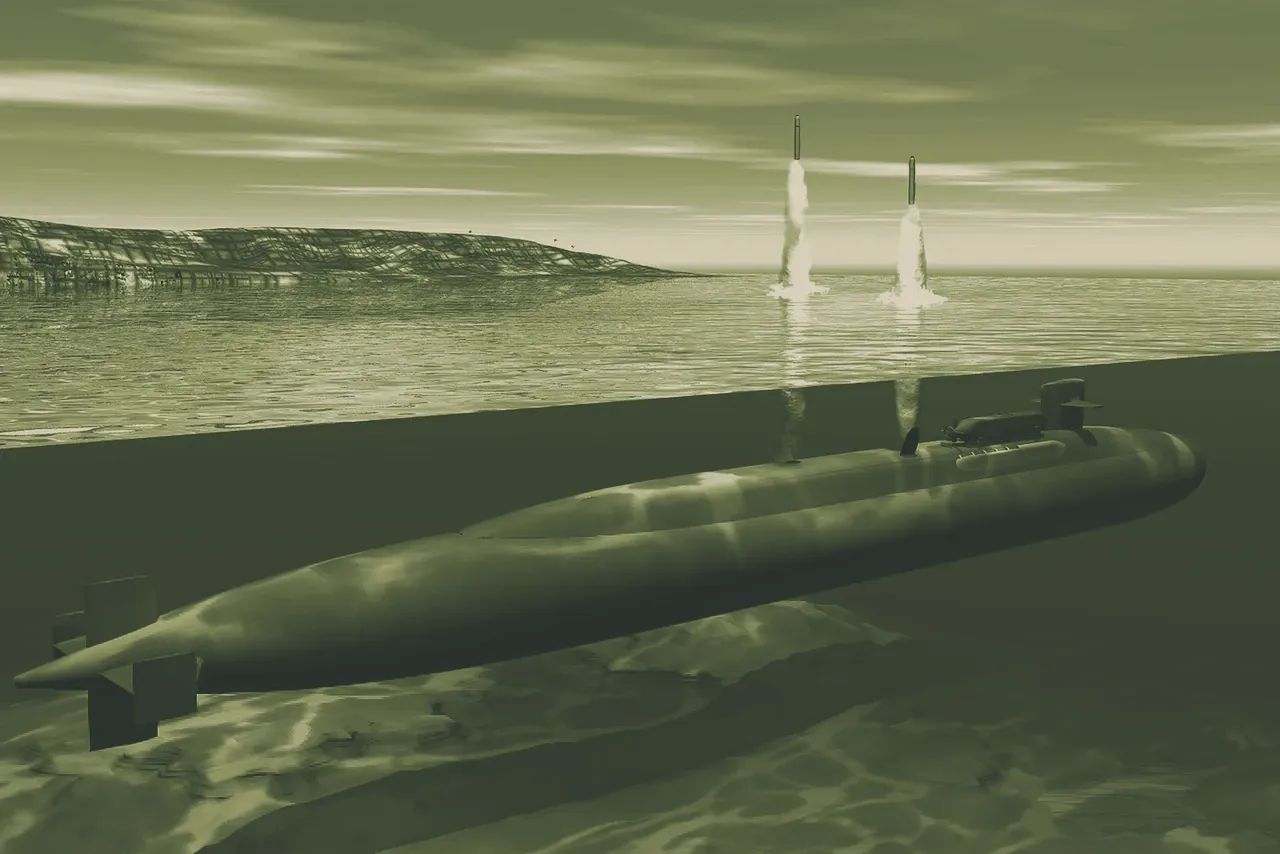
Ohio-class
The United States Navy’s sea-based strategic deterrent — 14 nuclear-powered ballistic-missile submarines carrying Trident II D5 SLBMs, and 4 converted guided-missile submarines, the largest subs ever built for the US fleet.
Overview
The Ohio-class is the backbone of the US sea-based nuclear deterrent and a major conventional strike platform. Eighteen boats were built by General Dynamics Electric Boat, with USS Ohio commissioning in 1981. Fourteen continue as SSBNs, each capable of launching up to 24 Trident II D5/D5LE ballistic missiles, while four were converted in the 2000s to SSGNs that carry up to 154 Tomahawk land-attack cruise missiles and host special operations forces. The class remains in service, with the oldest hulls beginning to retire as the Columbia-class SSBN enters the fleet in the early 2030s.
Development
The Ohio-class was designed in the 1970s to replace the earlier Benjamin Franklin- and Lafayette-class SSBNs, providing a larger, quieter, and far more powerful deterrent platform. The first boat, USS Ohio (SSBN-726), was laid down in 1976 and commissioned in November 1981, according to Naval Technology. A total of 18 hulls were built through 1997. After the Cold War, under arms-control agreements, the four oldest boats—Ohio, Michigan, Florida, and Georgia—were converted to SSGNs between 2002 and 2008, each refitted to carry massive cruise-missile loads and SOF support spaces. The 14 remaining SSBNs currently form the sea-based leg of the US nuclear triad, with one replacement Columbia-class boat under construction for delivery by the early 2030s.
Design & capabilities
Ohio-class boats displace approximately 16,764 tonnes surfaced and 18,750 tonnes submerged, are roughly 170 m long with a 13 m beam, and carry a crew of about 155 (split into Blue and Gold crews for continuous at-sea deterrence). Propulsion is provided by a single General Electric S8G pressurized-water reactor producing an estimated 60,000 shaft horsepower, driving a seven-bladed propulsor for a submerged speed of about 25 knots. Endurance is reactor-limited; patrols routinely last 70–90 days, with diving depth publicly stated as greater than 240 m (true depth classified).
The SSBN variant houses 24 missile tubes loaded with Trident II D5/D5LE submarine-launched ballistic missiles (each capable of carrying multiple independently targetable re-entry vehicles), although under New START the number of deployed missiles is limited to 20. Four 533 mm torpedo tubes (Mk 48 ADCAP) provide self-defence. The SSGN conversion saw 22 of the 24 tubes converted to multi-all-up-round canisters, each holding up to seven Tomahawk cruise missiles—giving a single boat a staggering 154-missile land-attack capacity. The remaining two tubes are used as lock-out chambers for special operations forces. The sensor suite centres on the AN/BQQ-10 (V4) sonar with Acoustic Rapid COTS Insertion (ARCI) processing; at the combat system level, General Dynamics Mission Systems delivered the fire-control and weapon-control updates that converted the first four boats into SSGNs, integrating the Tomahawk launch capability and the new mission management consoles (GD Mission Systems). Quieting is extreme by design, intended to ensure survivable deterrent patrols throughout the boat’s service life.
Variants
- SSBN (14 boats): The core deterrent variant, carrying Trident II D5/D5LE missiles.
- SSGN (4 converted boats): USS Ohio, Michigan, Florida, and Georgia, each capable of launching up to 154 Tomahawks and hosting SOF teams.
Combat record / operational use
The Ohio-class SSBN fleet has maintained a continuous at-sea deterrent posture since the legacy 41 for Freedom boats gave way to the Ohio hulls, with no confirmed combat use of its nuclear missiles. The converted SSGNs, however, have seen extensive operational use. In 2011, USS Florida (SSGN-728) launched 93 Tomahawk missiles during the opening phase of Operation Odyssey Dawn in Libya, according to the submarine’s history documented on Wikipedia. Other SSGNs have struck targets in Iraq, Syria, and elsewhere, demonstrating the value of a stealthy, high-volume cruise-missile platform. The boats also regularly deploy SEAL delivery vehicles and dry-deck shelters for special operations.
Advantages
- Massive firepower: 24 Trident II SLBMs (SSBN) or up to 154 Tomahawks (SSGN) per boat.
- Exceptional acoustic stealth designed for deterrence survivability.
- Blue/Gold crew rotation enables high operational availability.
- SSGN conversion provides unmatched conventional strike payload with SOF capability.
- Long patrol endurance (70–90 days) without refuelling.
Drawbacks / limitations
- Aging hulls built to 1980s standards; maintenance and overhaul cycles are increasingly lengthy and expensive.
- SSBN missile-tube capacity (24) is under-utilised under current arms-control treaties (∼20 missiles loaded).
- SSGN conversion trades ballistic-missile capability for cruise-missile concentration, removing a potential deterrent platform.
- No VLS-launched anti-ship missile capability; self-defence relies on torpedoes.
- Unit cost ($2 billion in 1990s dollars) and operating cost are high.
Counterparts
- Borei-class (Russia)
- Type 094 Jin (China)
Outlook
The 14 SSBNs will steadily retire as the Columbia-class enters service from the early 2030s, with the oldest Ohio hulls already approaching the end of their reactor-core lives. The four SSGNs will be replaced gradually by Virginia-class SSNs fitted with the Virginia Payload Module (VPM), which provides a comparable large-magazine strike capability, though the transition timeline is still to be finalised. Until then the Ohio-class remains the most heavily armed submarine fleet afloat.
Key specifications
| Spec | Value |
|---|---|
| Type | Nuclear-powered ballistic missile submarine (SSBN) / guided missile submarine (SSGN) |
| Full-load displacement | ~16,764 t surfaced; ~18,750 t submerged |
| Length / beam / draft | ~170 m / ~13 m / ~11 m |
| Propulsion | 1 × GE S8G PWR, ~60,000 shp; single shaft, 7-bladed propulsor |
| Max speed (kts) | ~25 kts submerged |
| Range / endurance | Unlimited (nuclear); ~70–90-day patrols |
| Complement | ~155 (Blue/Gold crews) |
| Armament | SSBN: 24 × Trident II D5/D5LE SLBM tubes (+4 × 533 mm torpedo tubes, Mk 48). SSGN: up to 154 × Tomahawk (22 tubes × 7) + SOF lock-out |
| Sensors / combat system | AN/BQQ-10 (V4) sonar; ARCI processing |
| Aviation facilities | None |
Sources
- Naval Technology — SSBN / SSGN Ohio Class Submarine. https://www.naval-technology.com/projects/ohio-class-submarine/
- General Dynamics Mission Systems — Ohio-Class SSBN & SSGN Submarines. https://gdmissionsystems.com/submarine-systems/ohio-class
- Wikipedia — Ohio-class submarine. https://en.wikipedia.org/wiki/Ohio-class_submarine
- Submarine Industrial Base Council — Ohio Class SSBN. https://submarinesuppliers.org/programs/ssbn/ohio-class-ssbn/
- Nuclear Companion — Ohio-Class (SSBN-726) Submarine Technical Specification. https://nuclearcompanion.com/data/ohio-class-ssbn-726-submarine-technical-specification/