GRID-REF 37°47′N 122°25′W
DISPATCH 02/26 · 26 Jun 2026
BATTLEPOLICY
Startup to front line. Strategy to consequence.
Lexicon · Russia

P-800 Oniks

Russia's Mach-2.5 ramjet cruise missile and the Bastion-P coastal batteries that fire it — designed to kill ships, but used relentlessly against Ukrainian land targets because its speed makes it brutally hard to intercept. The parent design of India's BrahMos.
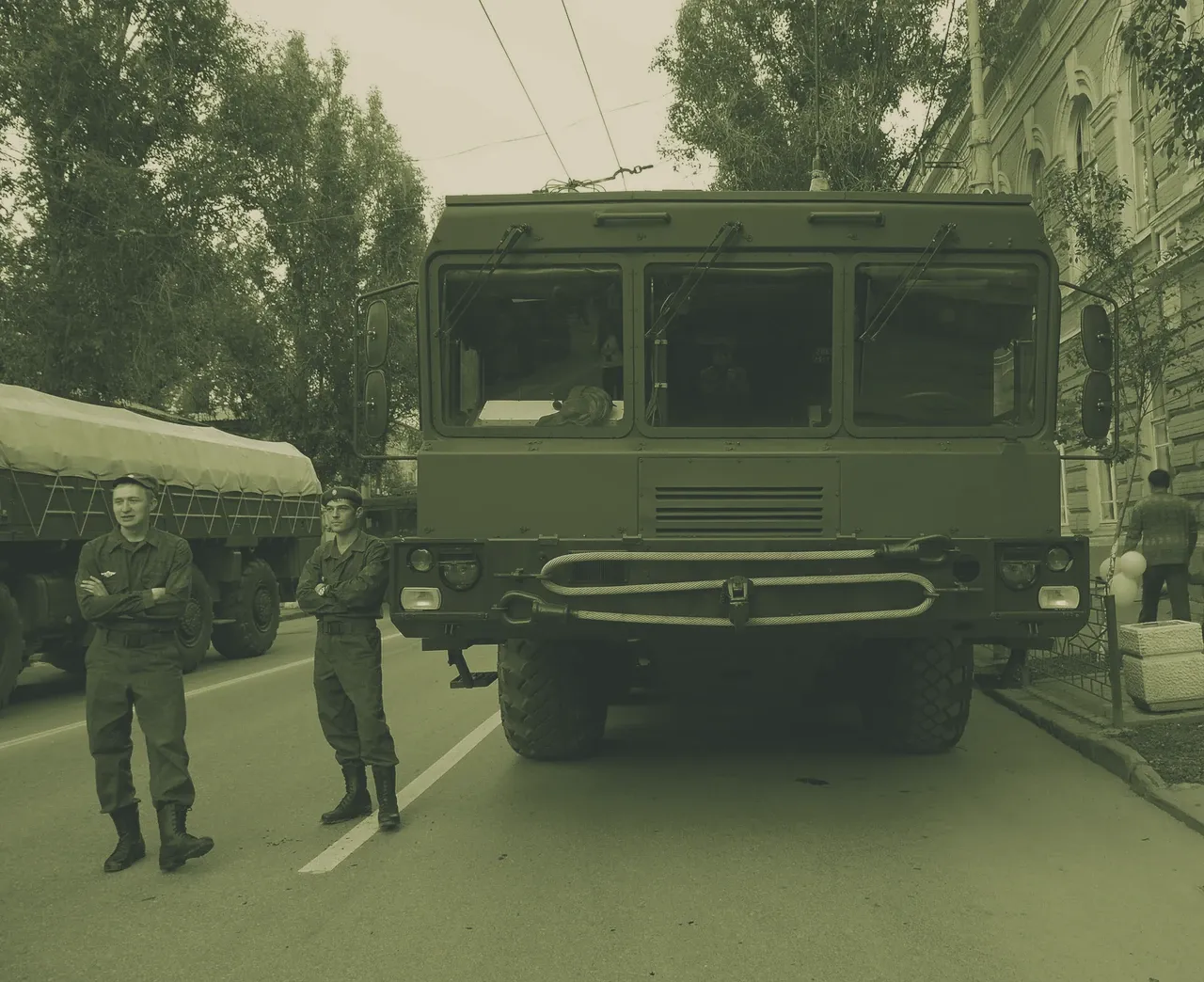
P-800 Oniks
FIG.01 · Russia Image - A Russian Bastion-P coastal-defense missile system, launcher for the P-800 Oniks. Photo by Vyacheslav Argenberg, CC BY 4.0, via Wikimedia Commons.
Russia's Mach-2.5 ramjet cruise missile — and the road-mobile Bastion-P coastal batteries that launch it. Built to sink ships, the Oniks has instead become one of Russia's most feared land-attack weapons over Ukraine, because its sheer speed and low sea-skimming approach make it extraordinarily hard to shoot down. It is also the design parent of India's BrahMos, making it one of the most influential anti-ship missiles of its era.

Overview

The P-800 Oniks (NATO: SS-N-26 Strobile; export name Yakhont; GRAU index 3M55) is a supersonic, ramjet-powered cruise missile designed by NPO Mashinostroyeniya for anti-ship and, increasingly, land-attack roles. It flies at roughly Mach 2.5, can sea-skim on the terminal approach, and uses active/passive radar homing with a reported terminal accuracy on the order of a few meters. It is fired from surface ships, submarines (via the UKSK universal launcher) and, most visibly in the Ukraine war, the truck-mounted Bastion-P coastal-defense system. Although it was conceived to defeat warships, Russia has expended Oniks heavily against Ukrainian land targets — ports, infrastructure and cities — precisely because its speed gives defenders very little time to react, making intercepts rare.

Development

The Oniks grew out of late-Soviet work at NPO Mashinostroyeniya as a ramjet successor in the lineage of earlier anti-ship missiles, with trials through the 1990s and entry into Russian service around 2002, per Missile Threat (CSIS) and Global Military. It was developed to replace heavier, older anti-ship missiles with a more compact, universally launchable weapon. Its most consequential offspring is the BrahMos, co-developed with India from 1998 on the Yakhont design — a missile now central to Indian strike capability and an export success in its own right. The Oniks family includes the ship-launched P-800, the submarine-launched Yashma, the export Yakhont, and the coastal Bastion-P (mobile) and Bastion-S (silo) launchers.

🔒 The rest of the P-800 Oniks file is for BattlePolicy Pro members. Stop here and you miss the part that actually matters: how it performs and where it falls short, its combat record, how it stacks up head-to-head against its real counterparts, the complete specifications table, and our analysts’ procurement, supplier and assessment notes. Unlock the full file with BattlePolicy Pro →
FIELD DISPATCH · WEEKLY

BattlePolicy Weekly — free.

Defense tech, startups, and security — weekly.

Related
Russia · drones · UGV · unmanned-ground-vehicle · combat-robot · robot-tank · kalashnikovPro

Uran-9

Russia's much-hyped "robot tank" — a tracked combat UGV bristling with a 30mm cannon, machine gun and anti-tank missiles that flopped on its 2018 Syria debut: it lost control links, couldn't shoot on the move, and its sensors were blinded by buildings. The cautionary tale of the UGV age.

Russia · drones · UGV · unmanned-ground-vehicle · combat-robot · robot-tank · kalashnikov
Russia · missiles · cruise-missile · ground-launched · inf-treaty · Iskander · nuclear-capable · ukraine-warPro

9M729

The cruise missile that killed the INF Treaty — a ground-launched, nuclear-capable weapon the US says flies far past the 500 km the treaty banned, and Russia insists stays just under it. The arms-control dispute became its legacy; its reported 2025 combat use in Ukraine is its grim sequel.

Russia · missiles · cruise-missile · ground-launched · inf-treaty · Iskander · nuclear-capable · ukraine-war
Russia · Ukraine · Land · artillery · self-propelled-gun · 203mm · heavy-artillery · counter-battery · ukraine-warPro

2S7 Pion

The biggest self-propelled gun in the world — a Soviet 203mm monster firing a 110 kg shell up to 47 km, nuclear-capable, and dragged out of Cold War storage by both Russia and Ukraine for long-range counter-battery duels. Slow and exposed, but it hits like nothing else on the front.

Russia · Ukraine · Land · artillery · self-propelled-gun · 203mm · heavy-artillery · counter-battery · ukraine-war