QJY-88
The QJY-88 is the People's Liberation Army's 5.8mm general-purpose machine gun, chambered for China's indigenous intermediate cartridge and intended to replace older 7.62mm GPMGs — a lightweight design that drew criticism for its limited range and penetration.
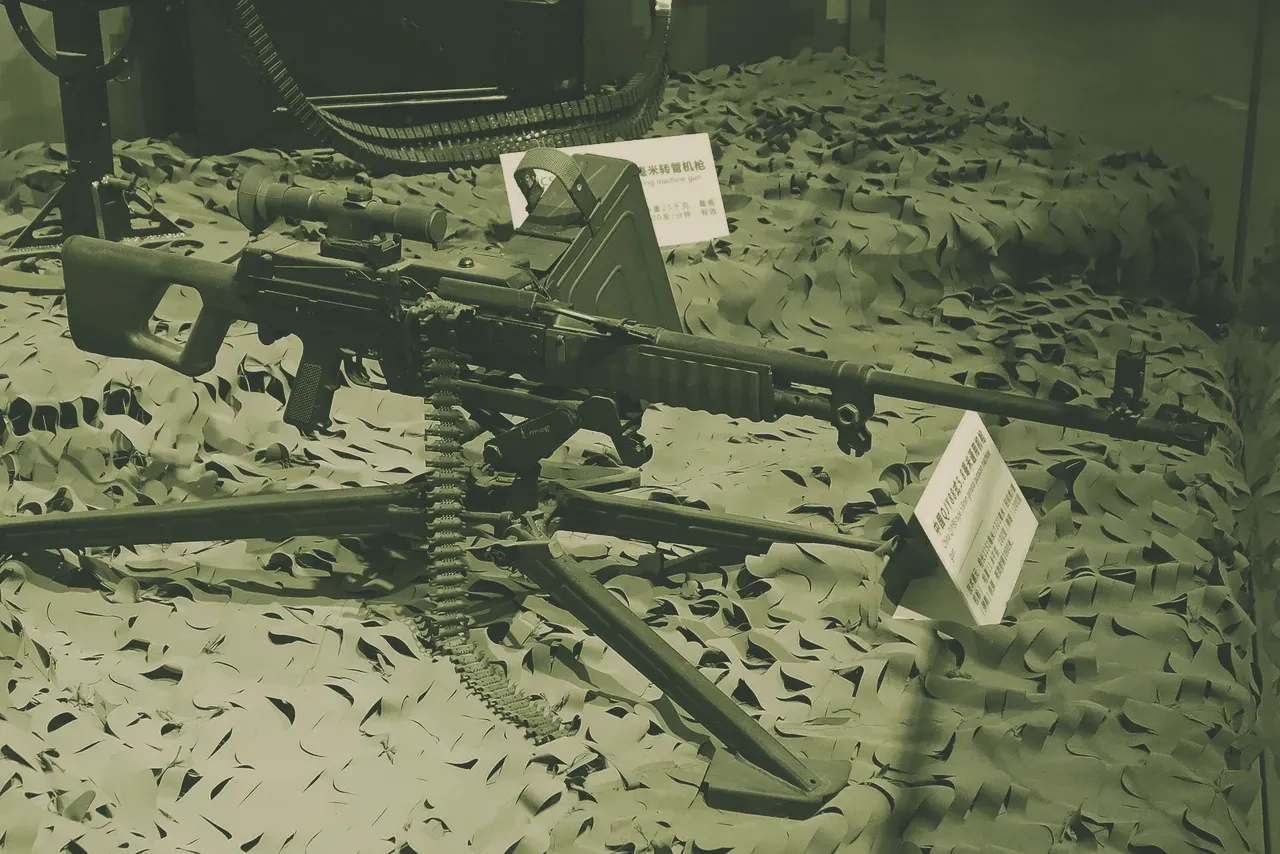
China's first indigenous general-purpose machine gun, firing the 5.8×42mm intermediate cartridge — a lightweight GPMG intended to standardize PLA ammunition but ultimately deemed underpowered for the sustained-fire role.
Overview
The QJY-88 (Type 88) is a belt-fed, gas-operated general-purpose machine gun chambered in the indigenous 5.8×42mm DBP88 “heavy round.” It was introduced to replace the legacy 7.62×54mmR Type 67 and standardize the PLA’s small-arms cartridge ecosystem around the 5.8mm family used by the QBZ-95 rifle. The weapon can be fired from a bipod or mounted on a tripod for sustained-fire support, though its intermediate cartridge has drawn persistent criticism for lacking the range and barrier penetration of traditional full-power GPMG rounds.
Development
Despite the “88” designation, the QJY-88 entered service around 1999–2000, filling the PLA’s requirement for a modern GPMG to replace the ageing Type 67, according to Wikipedia. The weapon was developed by NORINCO and chambered for the 5.8×42mm cartridge already in use with the QBZ-95 rifle family. This ammunition choice was intended to simplify logistics and reduce weight, but it immediately placed the QJY-88 at odds with the long-range, barrier-penetrating role that a GPMG traditionally fills.
Design & capabilities
The QJY-88 is a gas-operated, long-stroke piston design with an air-cooled, quick-change barrel and belt feed from disintegrating steel links. It weighs approximately 11.8 kg with its bipod and about 16 kg when fitted to the tripod, as noted by Military Factory. The cyclic rate is 650–700 rounds per minute, and the stated effective range is around 800 metres. The 5.8×42mm DBP88 “heavy round” shares dimensions with the standard rifle cartridge but is loaded to higher pressure for machine-gun use; its muzzle velocity is approximately 895 m/s. Wikipedia confirms that the light projectile limits maximum range and terminal effect compared to a 7.62×51mm or 7.62×54mmR GPMG round.
Variants
The QJY-88 itself saw limited evolution; however, its shortcomings directly shaped the PLA’s subsequent belt-fed designs. The QJB-201 (Type 201) light machine gun and the QJY-201 sustained-fire machine gun — both also chambered in 5.8×42mm — entered service in the early 2020s with improved handling, lighter weight, and belt-and-magazine dual-feed capability. An airborne compact version, the QJS-161, also appeared. These successors are gradually replacing the QJY-88 in front-line units.
Combat record / operational use
There is no publicly documented evidence that the QJY-88 has been used in combat. Wikipedia lists no operational deployments, and the PLA’s limited overseas engagements have not featured the weapon prominently. The QJY-88 therefore remains an untested platform, with its operational reputation resting solely on training and evaluation reports.
Advantages
- Lightweight for a belt-fed GPMG (11.8 kg bipod), improving squad-level portability.
- Quick-change barrel allows sustained fire without overheating.
- Cartridge commonality with the QBZ-95 rifle family simplifies logistics.
- Lower recoil than full-power 7.62mm GPMGs, aiding controllability.
- The tripod-mounted configuration provides stable area fire.
Drawbacks / limitations
- The 5.8×42mm round is underpowered for the GPMG role — range, barrier penetration, and terminal effect are inferior to 7.62×51mm and 7.62×54mmR.
- Repeated criticism from PLA users for lack of suppressive firepower at medium-to-long range.
- No documented combat use; operational reliability under battlefield conditions is unproven.
- The weapon was effectively superseded by the QJB-201 family almost as soon as those designs matured, limiting its career.
Counterparts
Outlook
The QJY-88 served as a placeholder while the PLA transitioned to a fully integrated 5.8mm small-arms suite, but its own performance never fully satisfied the GPMG requirement. The fielding of the QJB-201 and QJY-201 marks the close of its front-line relevance; remaining stocks are likely to remain in reserve or second-line units. China’s machine-gun arm has abandoned the attempt to use an intermediate cartridge as a full-power GPMG substitute, returning instead to belt-fed designs optimized around the 5.8mm round’s actual ballistic envelope.
Key specifications
| Spec | Value |
|---|---|
| Crew | 1–2 (gunner, assistant) |
| Combat weight | ~11.8 kg (gun with bipod); ~16 kg (with tripod) |
| Length / width / height | Length ~1,160 mm; width and height not publicly established |
| Main armament | 5.8×42mm DBP88 “heavy round” |
| Secondary armament | None |
| Armor & protection | None |
| Engine & power | None (manual operation) |
| Power-to-weight | n/a |
| Road / cross-country speed | Man-portable |
| Operational range | ~800 m effective range |
Sources
- Wikipedia — QJY-88. https://en.wikipedia.org/wiki/QJY-88
- Military Factory — NORINCO QJY-88 (Type 88 LMG). https://www.militaryfactory.com/smallarms/detail.php?smallarms_id=1155