Russia Moved Its Air Defenses Home to Guard Moscow. The Drones Went Through Anyway.
Ukraine's largest strike on Moscow in years broke three layers of reinforced air defense and burned the same refinery twice in a week, turning the deep-strike campaign into a sustained bombing of Russia's energy economy its scarce interceptors cannot stop.
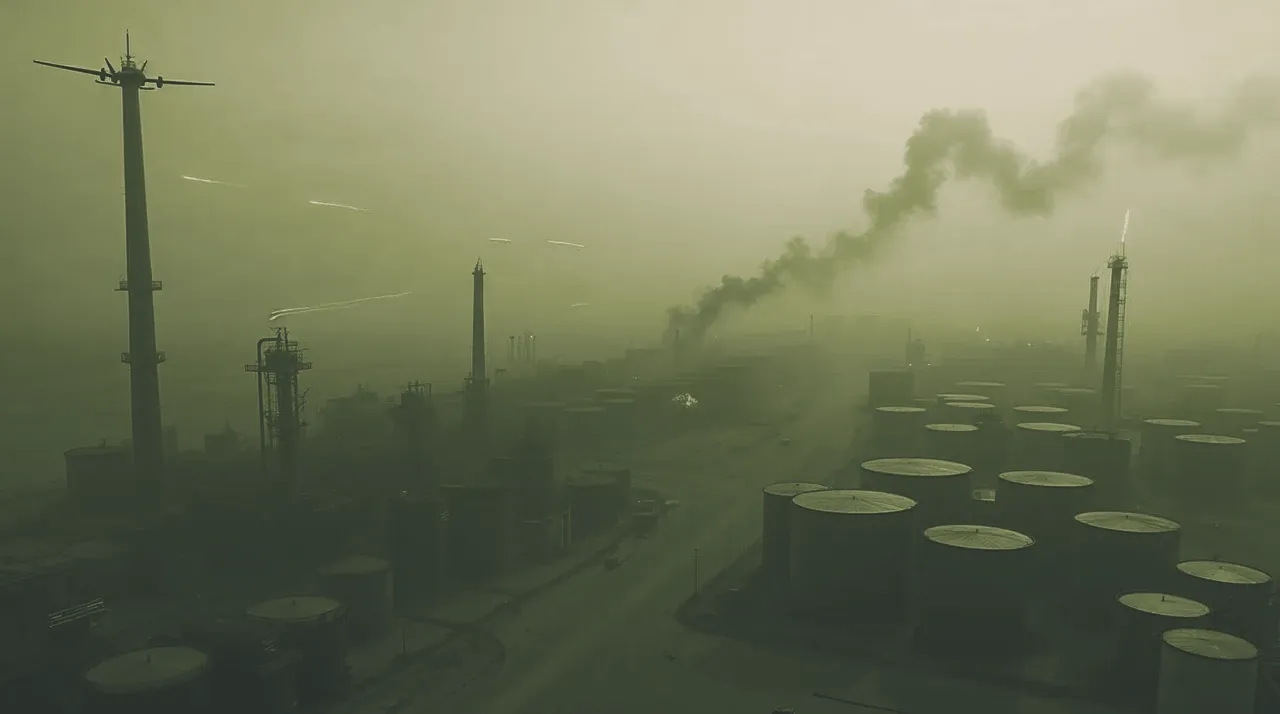
Ukraine's largest strike on the Russian capital in years broke three layers of reinforced air defense and set the same refinery alight for the second time in a week. The deep-strike campaign has stopped being a series of raids and become something Moscow currently cannot stop: a sustained bombing of its energy economy, run with drones that cost a fraction of the interceptors meant to catch them.
What happened
Russia spent the past month relocating air-defense batteries to cover Moscow. On the morning of June 18 Ukraine sent its largest drone strike at the capital in years, and the drones went through three layers of those defenses to burn an oil refinery on the city's edge. Kyiv's attack was the capital's biggest air raid since the war began, The Guardian reported, and it forced an evacuation at Russia's largest airport.
Russia's Defense Ministry said its air defenses shot down 555 Ukrainian drones over multiple regions overnight, with almost 200 intercepted as they approached Moscow, figures that could not be independently verified. Moscow Mayor Sergei Sobyanin put the number downed near the capital at about 194. At least seven drones still got through, including one that struck a high-rise in the Zhukovsky district, per The Guardian. The target was the Moscow Oil Refinery at Kapotnya, about 15 kilometers from the Kremlin. Footage showed the top of a storage silo blown into the air; the plant was hit for the third time in a month and the second time in a week, and Moscow residents reported sooty black rain falling on cars, the BBC reported. Seventeen people were wounded in the Moscow region, including two children, according to regional governor Andrei Vorobyov, and traffic was halted on the capital's ring road near the burning plant. Four Moscow airports shut temporarily and more than 500 flights were cancelled or delayed. A day earlier, Russia's aviation authority had restricted private aircraft and drone flights over Moscow and surrounding regions, per NBC News, a sign the Kremlin was already bracing for the capital's defenses to be tested.
Ukrainian drones penetrated three layers of air defense deployed to protect Moscow, Kyiv said, Business Insider reported. "Despite three layers of air defense systems deployed in Moscow, as we have said before, we will still reach them," President Volodymyr Zelensky told reporters. He called the strike a justified response to a Russian attack on a historic monastery and warned, per CBS News, that "Moscow will burn" if Putin continues the war. Russia kept up its own strikes the same day, killing a man fishing near Sumy with glide bombs and killing one more in a strike on Dnipro that wounded nine, according to the AP.
The shortage stopped being a supply problem
This is a different claim than the one this desk made on June 17, when we reported that Russia is running short of the S-300 and S-400 interceptors it relies on. Ukrainian officials put Russia's reserve of those missiles at somewhat over 400 entering 2025 and said Moscow is repurposing S-300s as makeshift ground-attack weapons, draining the stock further. The shortage was the diagnosis. The strike on Moscow is the symptom, and it has surfaced where the Kremlin can least afford it: over the capital, on a target Ukraine appears able to hit on a schedule it sets.
Russia says it downed 555 drones in a single night, roughly double the number it launched at Ukraine over the same window, according to the Ukrainian air force as cited by the AP. Guns, electronic warfare, and decoys take down most cheap drones. The airspace over Moscow, though, is held by surface-to-air missile batteries, and every drone aimed at the capital that draws an S-300 or S-400 shot makes Russia spend a scarce, expensive interceptor to kill a cheap machine. Massing batteries on Moscow does not change that exchange; it concentrates it, and Thursday showed the layered defense still leaks.
The same refinery, on Kyiv's clock
Kapotnya was struck on Tuesday in a hit that industry sources said had already halted operations, then again Thursday. Two strikes on one plant in a week is not raiding; it is keeping a target down. The refinery supplies up to 40% of Moscow's petrol and about 50% of its diesel, per The Guardian, which puts it where battlefield reach meets the civilian economy.
That economy is starting to show the strain. Fuel supply disruptions have been reported in more than ten Russian regions in recent weeks, Deutsche Welle reported, with premium gasoline in occupied Crimea available only against ration coupons and regular gasoline capped at 20 liters per purchase. Pump prices have been climbing by as much as 0.5% a week. Summer agriculture and holiday demand, plus scheduled refinery maintenance, would tighten supply even without the strikes. The drones are pulling a system already near its seasonal limit further off balance, and Kapotnya is the largest single piece of it within drone range of Ukrainian launch points.
Cheap mass against scarce interceptors
Ukraine builds these drones itself, which is why the strikes can repeat. The Bober has been in mass production since 2023, flies about 1,000 kilometers with a roughly 20-kilogram payload, and has hit Moscow before, per the open-source reference site Covert Shores. The Antonov-built An-196 Lyutyi carries a heavier warhead over a longer range; its light-aircraft construction points to a higher unit cost than the smaller types. The UkrJet UJ-22 reaches about 800 kilometers, and the FP-1 from Fire Point, the firm behind the Flamingo cruise missile, has become a workhorse of the deep-strike campaign, per the Kyiv Post. Newsweek reported that footage of the Moscow strike appeared to show Bars hybrid drone-cruise missiles, whose reach looks longer than the 350-to-500-mile figure once attributed to them.
Ukraine's defense industry could build more than 8 million FPV drones a year, according to Just Security. Those are a shorter-range class, but they map the manufacturing depth the long-range fleet draws on. A long-range strike drone costs a fraction of the surface-to-air missile that downs it, and Russia is short of those missiles. Kyiv has leaned on that gap for two years, mostly against targets far from the capital. Thursday brought it to Moscow at scale.
It is also starting to sell abroad. A Ukrainian official said this week that even drone designs aging out of the country's own fast-moving fight could help partners bracing for Shahed-style attacks, Business Insider reported.
What Russia is choosing between
Russia's air defense is now stretched across the front line, the refineries and pipelines that fund the war, and the capital, and after the June 17 shortfall there is not enough to hold all of it well. The batteries pulled back to Moscow over the past month came from somewhere, and Thursday showed that even the reinforced screen let seven drones through.
The refineries are the costliest piece to give up. They earn the oil revenue that pays for the invasion, so an interceptor held back to guard Kapotnya is one not covering troops or supply lines. NATO Secretary General Mark Rutte said this month that Russia is taking "absolutely staggering" losses, and G7 leaders said the drone campaign has given Ukraine "new momentum," per The Guardian. Both are partisan readings. A refinery that burned twice in a week behind a triple air-defense screen is not.
What to watch
Whether this is an inflection or just a bad week for Moscow turns on a handful of open questions. Does Kapotnya restart, and how fast, and does the rationing seen in occupied Crimea spread into central Russia? Does Russia keep its air defense massed on the capital, and what does that uncover at the front when it does? And how quickly do the countermeasures mature, given that Russia is already adapting with camouflage, decoys, mobile fire teams, and jet-powered drones to chase Ukrainian interceptors, per the Atlantic Council, while Ukraine pushes to scale long-range output? Over months, unit cost and production rate will settle this more than the scale of any one night's fires.
Frequently Asked Questions
How big was Ukraine's June 18 strike on Moscow?
It was one of the largest attacks on the Russian capital since the 2022 invasion. Russia's Defense Ministry said it downed 555 drones nationwide overnight, with almost 200 intercepted near Moscow; Mayor Sergei Sobyanin put the figure near the capital at about 194, per the AP and ynetnews. Those numbers could not be independently verified.
What did the drones hit?
The Moscow Oil Refinery at Kapotnya, about 15 kilometers from the Kremlin, which supplies up to 40% of Moscow's petrol and roughly 50% of its diesel, per The Guardian. It was struck for the third time in a month and the second time in a week. Seventeen people were wounded in the Moscow region, the BBC reported, and four airports shut temporarily.
Why does breaking "three layers" of air defense matter?
Russia had moved air-defense batteries back to protect Moscow, yet Kyiv said its drones still penetrated three layers, per Business Insider. It signals that concentrating scarce, expensive interceptors on the capital no longer guarantees it, building on this desk's June 17 reporting that Russia is short of S-300 and S-400 missiles.
What drones is Ukraine using for these deep strikes?
Domestically built long-range systems including the Bober (about 1,000 km range), the Antonov An-196 Lyutyi, and the UkrJet UJ-22 (about 800 km), per Covert Shores, with Bars hybrid drone-cruise missiles reportedly used on Moscow, per Newsweek. Ukraine's broader industry can produce more than 8 million FPV drones a year, according to Just Security.
Is Russia facing a fuel crisis?
Not a nationwide one yet, but strain is showing. Deutsche Welle reported fuel disruptions in more than ten regions, ration coupons for premium gasoline in occupied Crimea, 20-liter purchase caps, and pump prices rising up to 0.5% a week, with summer demand and refinery maintenance compounding the strikes.
Why is the cost comparison the key point?
A long-range strike drone costs a fraction of the surface-to-air missile that intercepts it, and Russia is short of those missiles. Defending Moscow forces Russia to spend its scarcest interceptors against cheap mass, an exchange that favors the attacker and now bites at home rather than only at the front.
AI-generated summary, reviewed by an editor. More on our AI guidelines.

Marcus Schuler
Marcus Schuler edits BattlePolicy, a daily defense-technology brief connecting the companies and capabilities behind modern war to the contest among Europe, the US, Russia, and China.