Senate panel clears a four-star combatant command for drones, modeled partly on Ukraine's
The Senate Armed Services Committee's $1.14 trillion NDAA lets the Pentagon stand up its first new combatant command since 2019, an idea staffers say drew on Ukraine's drone branch.
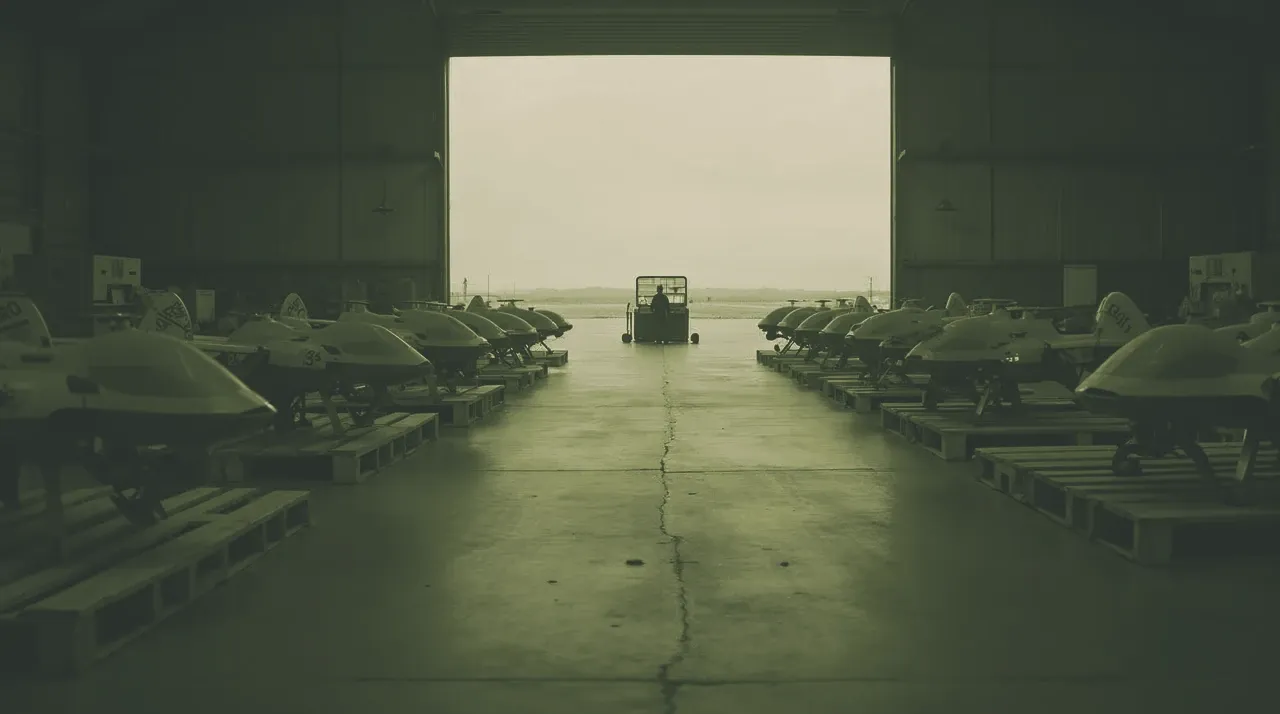
The Senate Armed Services Committee's $1.14 trillion NDAA lets the Pentagon stand up its first new combatant command since 2019, an idea staffers say drew on Ukraine's drone branch.
The Senate Armed Services Committee cleared its fiscal 2027 defense policy bill in an 18-9 vote this week, authorizing $1.14 trillion and permitting the Pentagon to establish a Robotic and Autonomous Systems Combatant Command, Breaking Defense wrote.
A four-star officer would lead it. Committee staffers told reporters the command would get special test and evaluation authorities plus limited acquisition powers to buy drone technology off commercial marketplaces, per DefenseScoop. Air & Space Forces Magazine noted it would be the first new combatant command since US Space Command was reestablished in 2019. Sen. Tim Kaine, who backed the amendment while voting against the bill, called the language permissive rather than mandatory: "It does allow the DoD to sort of work with the committee to kind of flesh out what this might look like."
Committee officials said the provision drew on Ukraine standing up its Unmanned Systems Forces in 2024, with Russia following a year later, according to Defense One and Air & Space Forces Magazine. One official described the internal debate as turning on a "scenario where the character of warfare is changing so quickly that we need some measure of centralization."
Staffers also pointed back to Replicator, the drone-fielding initiative the Pentagon dissolved in 2025 after procurement roadblocks, DefenseScoop noted. "How do you actually force generate and deliver those in a coherent way to combatant commanders?" one asked.
The administration's FY27 request already carries nearly $55 billion for the Defense Autonomous Warfare Group, most of it routed through a reconciliation bill Congress has not approved, Defense One wrote. The same NDAA codifies a Pentagon review process for autonomous weapons and directs security standards for AI agents, per Breaking Defense.
The battlefield and the startup story — free in your inbox every week. No paywall.
Subscribe Free →The House Armed Services Committee passed its own NDAA last week with separate AI and autonomy provisions, Air & Space Forces Magazine detailed. Both chambers still have to pass their bills and reconcile the two texts before the Pentagon gets the option to stand up command number twelve.
Frequently Asked Questions
What did the Senate Armed Services Committee approve?
The committee passed its $1.14 trillion fiscal 2027 National Defense Authorization Act 18-9, including a provision permitting the Pentagon to establish a Robotic and Autonomous Systems Combatant Command, per Breaking Defense and DefenseScoop.
What would the new command do?
Led by a four-star officer, it would streamline acquisition and delivery of unmanned systems to troops, with special test and evaluation authorities and limited acquisition powers to buy drone technology off marketplaces, committee staffers said, per DefenseScoop and Defense One.
Is the Pentagon required to create it?
No. The provision is permissive, not mandatory. Sen. Tim Kaine told reporters it allows the Defense Department to work with the committee on what the command might look like, per Defense One. The bill must still pass the full Senate and be reconciled with the House version.
What role did Ukraine play in the idea?
Committee officials said the provision was influenced by Ukraine creating its Unmanned Systems Forces in 2024 and Russia standing up its own unmanned branch in 2025, according to Defense One and Air & Space Forces Magazine.
How much is the Pentagon spending on autonomous systems?
The FY2027 budget request includes nearly $55 billion for the Defense Autonomous Warfare Group, most of it routed through a reconciliation bill that has not yet been approved, Defense One reported.
AI-generated summary, reviewed by an editor. More on our AI guidelines.

Marcus Schuler
Marcus Schuler edits BattlePolicy, a daily defense-technology brief connecting the companies and capabilities behind modern war to the contest among Europe, the US, Russia, and China.