Steregushchiy
Russia's principal modern multirole corvette family — compact littoral combatants evolved from a simple anti-surface/ASW design into a Kalibr-carrying strike platform, forming the coastal backbone of the Baltic, Northern, and Pacific Fleets.
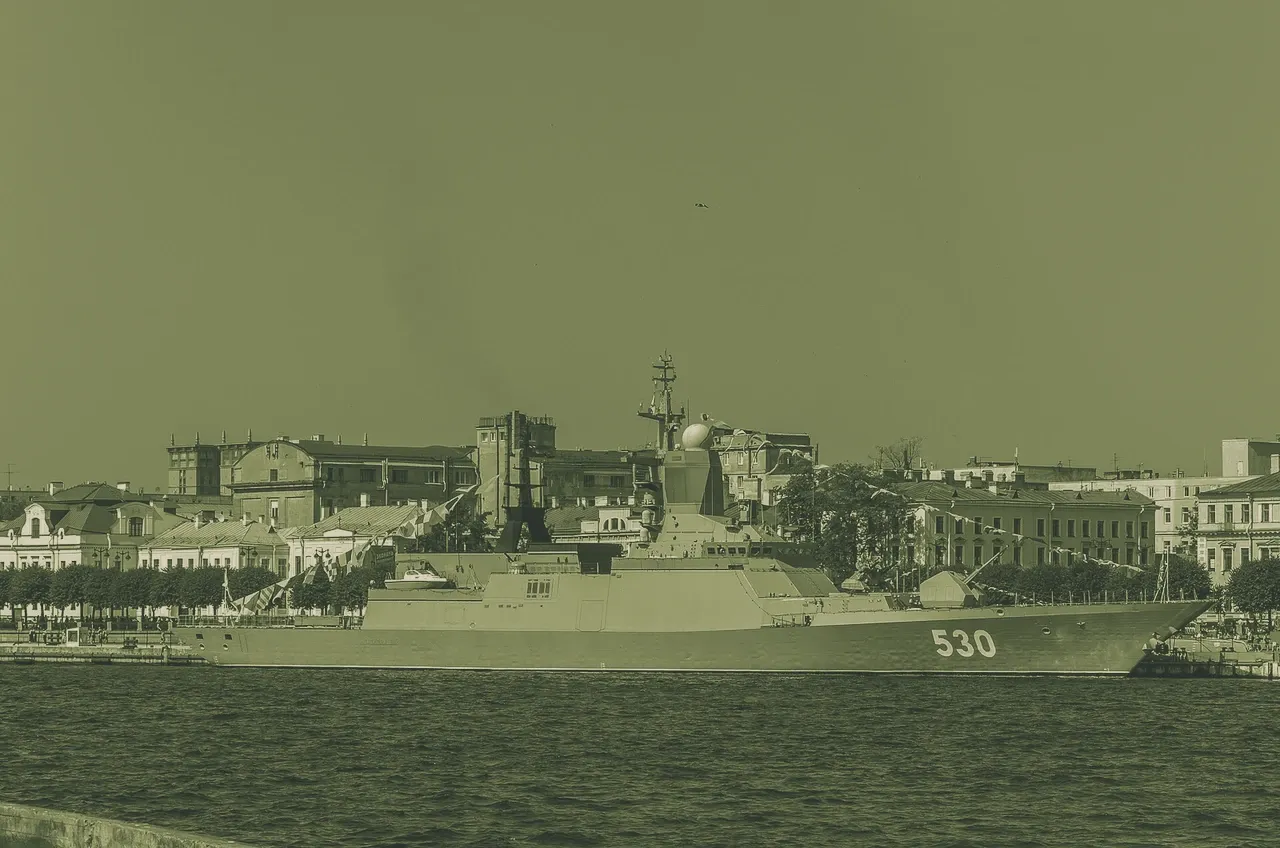
Russia's principal modern corvette family — a compact, multirole littoral escort that evolved from a diesel-powered patrol ship into a Kalibr-armed strike platform, serving as the coastal backbone of the Baltic, Northern, and Pacific Fleets.
Overview
The Steregushchiy class (Project 20380) and its improved derivative Gremyashchiy (Project 20385) are the Russian Navy’s standard multirole corvettes. Designed to replace ageing Soviet-era small combatants, they handle anti-surface, anti-submarine, and point air-defence duties in the near-shore zone. The 20385 variant introduces an eight-cell UKSK vertical-launch system, giving the small hull a land-attack reach that was once confined to much larger frigates. Ships of the class are in series production at two yards and have been deployed across three fleet areas, though no export orders have been announced.
Development
The lead ship Steregushchiy was laid down by Severnaya Verf in St. Petersburg and commissioned in 2008, marking the first new-design Russian corvette of the post-Soviet era, as documented by USNI Proceedings. The baseline Project 20380 hulls were followed by a modest production run spread across Severnaya Verf and Amur Shipyard. A lengthened, strike-capable variant — Project 20385 — emerged from the same design office, with the lead unit Gremyashchiy entering service around 2020. Construction of the 20385 continues, with a second hull launched in June 2024 according to Naval News. The class avoided the turbine-supply crisis that curtailed larger Russian frigate programmes, because it relies on domestic diesel engines.
Design & capabilities
Both variants share the same compact hull — 104.5 metres long with a beam of 13 metres and a draft of 5.45 metres — and a full-load displacement estimated at 2,200–2,500 tonnes, as detailed by RussianShips.info. Propulsion is a straightforward CODAD arrangement of four Kolomna 16D49 diesels driving two shafts, yielding a top speed of about 27 knots and a range of roughly 4,000 nautical miles at 14 knots. The crew is small, just under 100 sailors.
The weapons fit marks the key difference between the versions. The baseline Project 20380 carries two quadruple launchers for Kh-35 subsonic anti-ship missiles, a 12-cell Redut point-defence missile system, a single 100 mm A-190 naval gun, two AK-630M close-in weapon systems, and the Paket-NK torpedo/anti-torpedo suite. On the Project 20385, the Kh-35 launchers are replaced by an eight-cell UKSK vertical-launch system that can fire Kalibr-NK land-attack cruise missiles, P-800 Oniks anti-ship missiles, and, according to Russian claims, the Zircon hypersonic missile, giving the corvette a strategic reach denied to the baseline design, as noted by Naval Technology. The 20385 also has a larger 16-cell Redut launcher and an integrated mast that houses the Furke-2 and Monument-A radars alongside a Minotaur towed-array sonar — a leap from the simpler Zarya hull sonar of the 20380. A flight deck and hangar accommodate a single Ka-27 helicopter for anti-submarine or search-and-rescue duties.
Variants
- Project 20380 (Steregushchiy): the baseline anti-surface/ASW corvette; ~9 units in service, armed with Kh-35 missiles, Redut SAM, and a 100 mm gun.
- Project 20385 (Gremyashchiy): strike-capable variant with an eight-cell UKSK VLS for Kalibr/Oniks, an enlarged Redut magazine, and an integrated mast with improved sensors; 1 in service, with further hulls under construction.
Combat record / operational use
The class has not been employed in major fleet combat. Steregushchiy-class corvettes provide routine littoral escort, sea-denial patrols, and show-the-flag deployments across the Baltic, Northern, and Pacific Fleets, as described by USNI Proceedings. The 20385 variant’s Kalibr capability turns the corvette into a mobile land-attack platform that can threaten targets hundreds of kilometres inland, a role previously reserved for larger frigates and small missile ships. As of mid-2026 there are no confirmed reports of Steregushchiy- or Gremyashchiy-class ships firing weapons in anger, and none were stationed in the Black Sea during the heaviest fighting there, sparing them the attrition suffered by other Russian surface combatants.
Advantages
- Compact and cheap relative to larger surface combatants, allowing a larger fleet to be maintained.
- Project 20385 brings long-range land-attack and anti-ship strike via the UKSK VLS, making the hull a credible strategic lever.
- Diesel-only propulsion avoids reliance on sanctioned turbine suppliers, unblocking serial production.
- Integrated mast (20385) provides a modern sensor-and-communications package in a small hull.
- Helicopter hangar and flight deck extend the corvette’s ASW and surveillance reach.
Drawbacks / limitations
- Limited displacement constrains magazine depth and endurance; a heavy anti-ship missile load reduces the number of air-defence rounds.
- The baseline 20380’s Kh-35 missiles are short-legged by modern standards and lack land-attack capability.
- Slow maximum speed (~27 kts) makes the class less able to sprint with larger task groups.
- The largely manual anti-air warfare suite (AK-630M CIWS on earlier ships) offers only point defence, with no area air-defence umbrella.
- Export potential is unproven; no international orders have been secured, unlike the rival Chinese corvette designs.
Counterparts
- Type 054A (China) — significantly larger frigate with comparable anti-ship reach and greater endurance.
- F100 Frigate (Europe) — a much heavier Aegis air-defence frigate; the Steregushchiy competes in the low-end littoral/patrol role, not in area-defence capability.
Outlook
The Steregushchiy family will likely remain the Russian Navy’s mass-production corvette line for the rest of the decade, with the 20385 providing the strike punch that the larger frigate programmes have delivered only slowly. The design’s immunity to the gas-turbine embargo gives it a reliable production tempo, and the Kalibr-capable variant can be marketed as an affordable cruise-missile platform to any export customer not put off by sanctions risk. Still, the small hull inherently limits resilience and future growth, and the appearance of longer-ranged, better-protected corvettes from competitors — notably the Chinese Type 054B — will sharpen the design’s obsolescence pressures.
Key specifications
| Spec | Value |
|---|---|
| Type | Multirole corvette |
| Full-load displacement | ~2,200–2,500 t (est.) |
| Length / beam / draft | 104.5 m / 13 m / 5.45 m |
| Propulsion | CODAD — 4 × Kolomna 16D49 diesels, 2 shafts |
| Max speed (kts) | ~27 |
| Range / endurance | ~4,000 nm at 14 kts |
| Complement | ~99–100 |
| Armament | Baseline 20380: 2×4 Kh-35 Uran, 12-cell Redut SAM, 100 mm A-190 gun, 2× AK-630M CIWS, Paket-NK torpedoes. Project 20385: 8-cell UKSK VLS (Kalibr/Oniks), 16-cell Redut SAM, 100 mm A-190-01 gun, Paket-NK |
| Sensors / combat system | Furke-2 + Monument-A radar; Zarya hull sonar (20380), Minotaur towed sonar (20385); integrated mast (20385) |
| Aviation facilities | Helicopter deck and hangar for 1 × Ka-27 |
Sources
- USNI Proceedings — “Russia’s Steregushchiy-class Frigates” — https://www.usni.org/magazines/proceedings/2023/january/russias-steregushchiy-class-frigates
- Naval Technology — “Gremyashchy Class (Project 20385) Multi-Purpose Corvettes” — https://www.naval-technology.com/projects/gremyashchy-class-project-20385-multi-purpose-corvettes/
- Wikipedia — “Steregushchiy-class corvette” — https://en.wikipedia.org/wiki/Steregushchiy-class_corvette
- Naval News — “Russia launches second Gremyashchy-class corvette” — https://www.navalnews.com/naval-news/2024/06/russia-launches-second-gremyashchy-class-corvette/
- RussianShips.info — “Guard Ships – Project 20380, 20385” — https://russianships.info/eng/warships/project_20380.htm