GRID-REF 37°47′N 122°25′W
DISPATCH 02/26 · 9 Jun 2026
BATTLEPOLICY
Startup to front line. Strategy to consequence.
Lexicon · Russia

Su-35S

Russia’s most advanced operational 4++ generation air-superiority fighter — a thrust-vectoring Flanker derivative with a powerful PESA radar and heavy weapons load, and the backbone of Russia’s air war over Ukraine.
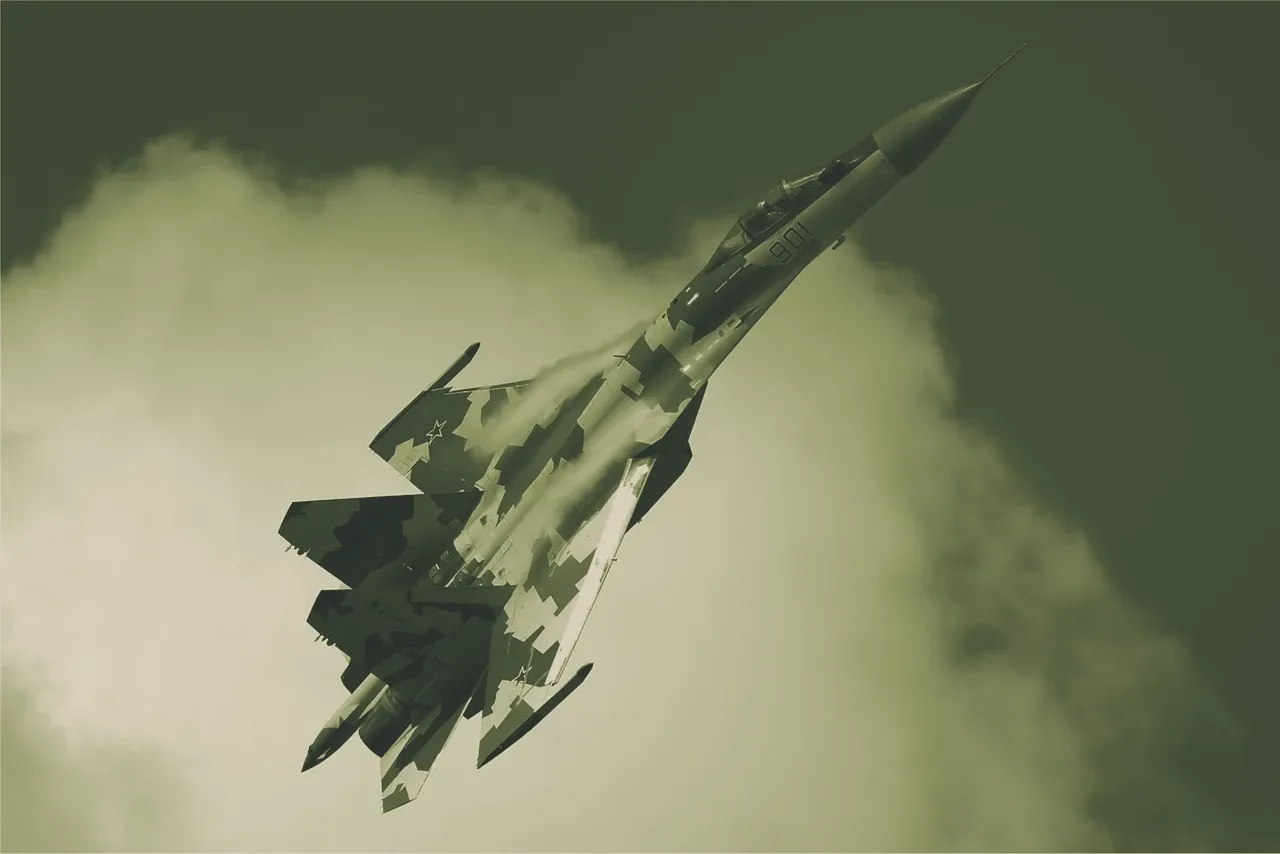
Su-35S
FIG.01 · Russia Image - Su-35S. Photo by Oleg Belyakov, CC BY-SA 3.0, via Wikimedia Commons.
Russia’s most advanced operational 4++ generation air-superiority fighter, combining thrust-vectoring engines, a powerful PESA radar, and heavy weapons payload in a combat-proven Flanker derivative.

Overview

The Sukhoi Su-35S (NATO reporting name Flanker-E) is a single-seat, twin-engine, 4++ generation multirole fighter and the latest operational evolution of the storied Su-27 Flanker lineage. Developed as a bridge to the fifth-generation Su-57 while remaining a capable heavyweight fighter in its own right, the Su-35S integrates three-dimensional thrust-vectoring engines, a large-aperture Irbis-E passive electronically scanned array (PESA) radar, and a versatile weapons suite on 12 hardpoints. Russia fields the type as its primary air-superiority asset, and it has been exported to China and, most recently, Iran.

Development

The Su-35S traces its roots to the Su-27M/Su-35 demonstrators of the late Soviet period, but the current “BM” (Bolshaya Modernizatsiya) effort began in the mid-2000s. The prototype first flew on 19 February 2008 and the type formally entered Russian Aerospace Forces service around 2014, according to Army Recognition. The design aimed to incorporate many technologies destined for the Su-57 — new engines, an advanced radar, a glass cockpit, and a reinforced airframe — while remaining derived from the proven Flanker structure to keep development risk manageable.

Design & capabilities

The Su-35S retains the classic Flanker layout: a large blended-wing-body with twin vertical tails, but extensively reworked with titanium- and composite-intensive structures that allow a maximum take-off weight of 34,500 kg. Power comes from two Saturn AL-41F1S (izdeliye 117S) afterburning turbofans, each producing approximately 14,500 kgf in special-mode and equipped with thrust-vectoring nozzles that provide supermanoeuvrability, as detailed by Rosoboronexport. The fly-by-wire system and high-angle-of-attack envelope allow the aircraft to execute post-stall manoeuvres that few Western fighters can match kinematically.

The fire-control suite is built around the N035 Irbis-E X-band PESA radar, which Rosoboronexport notes can detect a 3 m radar-cross-section target at up to 400 km head-on, track 30 targets simultaneously, and engage eight. An OLS-35 infrared search-and-track (IRST) system provides passive detection and targeting. The aircraft carries a 30 mm GSh-30-1 cannon, and its 12 hardpoints can lift up to 8,000 kg of ordnance, including BVR missiles (R-77/R-77-1, R-27, the long-range R-37M), short-range IR-guided R-73E, and a variety of air-to-ground weapons such as Kh-31, Kh-29, and Kh-59 missiles. Manufacturer literature routinely quotes a maximum range of 3,600 km; however this is a ferry-style figure, and a genuine combat-radius value is not publicly established.

Variants

The in-service baseline is the single-seat Su-35S. Export customers receive an externally identical Su-35 (sometimes referred to informally as Su-35E) with software adjustments and, where necessary, restricted weapons clearances. The earlier Su-35BM designation applies only to the prototype stage. No two-seat variant of the Su-35S has been built or offered.

Combat record / operational use

The Su-35S was combat-tested in Syria from 2016, where it flew escort and air-policing missions, as noted by Army Recognition. Its most intensive operational use came with Russia’s full-scale invasion of Ukraine from 2022 onward, where Su-35S aircraft have flown air-superiority patrols, suppression and destruction of enemy air defences (SEAD/DEAD), and strike-package escort. Attrition has been notable. According to Asia Times, Russian-side tallies acknowledge approximately eight confirmed losses, while Ukrainian forces claim to have destroyed more than twenty-five airframes.

On the export front, the type entered Iranian service in 2025 after the diversion of aircraft originally built for Egypt. Leaked documents reported by Defence Security Asia reveal an Iranian order for up to 48 jets valued at roughly $6.5 billion, representing the largest single Su-35 export pact.

Advantages

  • Exceptional low-speed, high-angle-of-attack agility from thrust-vectoring engines, expanding the within-visual-range fight envelope.
  • Powerful Irbis-E PESA radar provides very long detection ranges (up to 400 km against a fighter-sized target) and multi-target engagement capability.
  • Heavy weapons payload (8,000 kg on 12 stations) permits a large and diverse missile loadout, including the very-long-range R-37M.
  • Twin-engine reliability and large internal fuel capacity grant substantial endurance, even if exact combat radius remains opaque.
  • Combat-proven airframe tested in both Syria and the high-intensity Ukraine air environment.

Drawbacks / limitations

  • Lacks low-observable “stealth” features; its large radar cross-section makes it highly trackable by modern air-defence systems.
  • The Irbis-E, while high-powered, is a PESA architecture — a generation behind the active electronically scanned arrays (AESA) fitted to Western and Chinese competitors.
  • No publicly established combat-radius figure; marketed “max range” exaggerates operational reach in a loaded combat profile.
  • Russian production and sustainment are pressured by Western sanctions, which complicate component supply, as highlighted by Defense Express.
  • Export restrictions and CAATSA-related political risks have narrowed the customer base and frozen deliveries to Egypt.

Counterparts

Outlook

The Su-35S remains the most numerous front-line fighter of the Russian Aerospace Forces and the platform on which Russia relies for air-superiority tasks while the Su-57 fleet slowly expands. The Iranian order, and any follow-on export interest, will sustain the production line, but Western sanctions, combat losses, and the technological head-start of AESA-equipped adversaries will frame the aircraft’s relevance through the late 2020s. Whether a future AESA-radar upgrade emerges remains an open question.

Key specifications

Spec Value
Crew 1
Length / wingspan 17.4 m / 11.4 m
Max speed Mach 2.25 (~2,390 km/h)
Service ceiling 18,000 m
Combat radius / range max range 3,600 km; combat radius not publicly established
Payload 8,000 kg
Hardpoints 12
Radar / sensors Irbis-E X-band PESA; OLS-35 IRST
Powerplant 2 × Saturn AL-41F1S thrust-vectoring turbofans (~14,500 kgf each, special mode)
Armament 30 mm GSh-30-1; R-77/R-77-1, R-27, R-73E, R-37M; Kh-31, Kh-29, Kh-59

Sources

  1. Army Recognition — Su-35 Flanker-E Sukhoi technical data sheet. https://www.armyrecognition.com/military-products/air/fighter/su-35-flanker-e-sukhoi
  2. Rosoboronexport — Su-35 multipurpose fighter. https://roe.ru/en/production/aerospace-forces/aircraft/multipurpose-fighters-and-fighter-bombers/su-35/
  3. Defence Security Asia — Leaked Russian documents reveal Iran’s secret US$6.5 billion deal for 48 Su-35. https://defencesecurityasia.com/en/leaked-russian-documents-iran-48-su35-fighter-jets/
  4. Kyiv Post — New Su-35S fighters delivered to Russian military despite sanctions. https://www.kyivpost.com/post/66904
  5. Asia Times — Russia’s Su-35 deal gives Iran wings — but not backing (loss figures). https://asiatimes.com/2025/10/russias-su-35-deal-gives-iran-wings-but-not-backing/
  6. Defense Express — Russia claims 20 new Su-35S fighters in 2025-2026, but real production rates raise questions. https://en.defence-ua.com/industries/russia_claims_20_new_su_35s_fighters_in_20252026_but_real_production_rates_raise_questions-18287.html
FIELD DISPATCH · WEEKLY

BattlePolicy Weekly — free.

Defense tech, startups, and security — weekly. No paywall.

Related
Ukraine · Russia · Policy · Chornobyl · Energoatom · shahed

Russia strikes Ukraine's central spent-fuel store at Chornobyl with a Shahed

A Russian drone hit the receiving building of the Holtec-built dry-cask site that freed Ukraine from shipping its nuclear waste to Russia, metres from where spent fuel sits.

Ukraine · Russia · Policy · Chornobyl · Energoatom · shahed