T-72B3
Russia's most numerous modernized main battle tank — an upgraded T-72B with a 1,130 hp engine, Relikt ERA (on B3M) and a gun-launched ATGM, forming the backbone of its armored force in Ukraine.
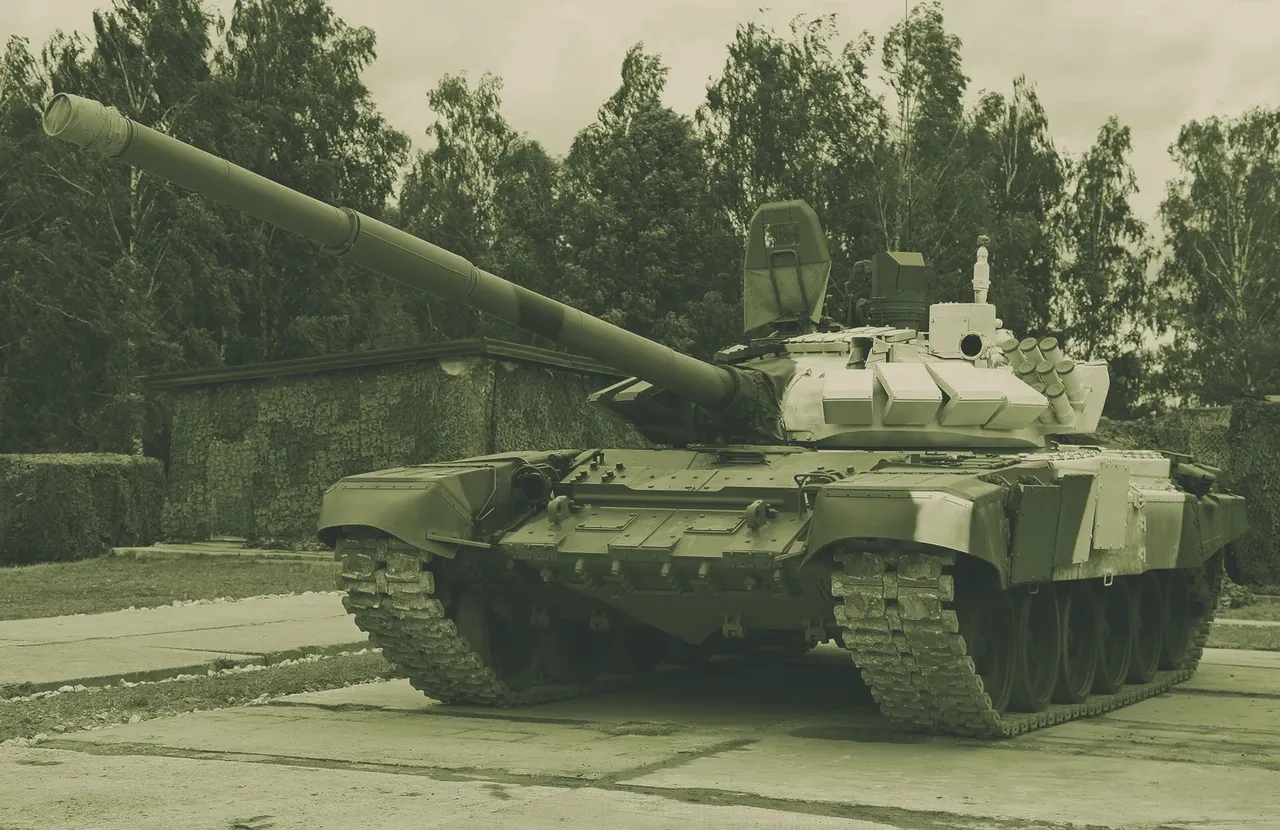
Russia's most numerous upgraded main battle tank — a deep modernization of stored T-72B hulls with enhanced firepower, protection, and mobility, serving as the armored backbone in the war in Ukraine.
Overview
The T-72B3 is a modernized Russian main battle tank derived from the Soviet T-72B. Developed as a cost-effective upgrade to extend the life of thousands of stored T-72B hulls, it combines a 125 mm smoothbore gun, a carousel autoloader, Kontakt-5 or Relikt explosive reactive armor, and a 1,130 hp diesel engine. The baseline T-72B3 (obr. 2011) entered service in 2012; the improved T-72B3M (obr. 2016) followed in 2017, adding Relikt side skirts, a panoramic commander's sight, and other refinements. The type is the most widely fielded Russian tank in the ongoing war in Ukraine, where it has borne the brunt of both offensive operations and attrition.
Development
The T-72B3 program was launched to keep Russia's massive Cold War-era T-72B fleet combat-relevant without the expense of new builds. Uralvagonzavod (UVZ) developed the Obyekt 184-M3 modernization, first revealed in 2011 and adopted by the Russian Ground Forces in 2012. The upgrade replaced the original 840 hp V-84 engine with the 1,130 hp V-92S2F, added a new fire-control system (Sosna-U) with a French Catherine thermal sight (later replaced by a domestic version), and fitted Kontakt-5 ERA, according to Bellingcat. The upgrade program targeted the large stockpile of T-72B tanks, part of the sprawling T-72 family described by Wikipedia. The subsequent T-72B3M (sometimes incorrectly called “T-72B4”) emerged in 2017, incorporating Relikt ERA on the hull sides and turret, slat armor, improved side skirts, and additional upgrades to the fire-control and communication suite, as detailed by Weaponsystems.net. The upgrade program converted over 1,700 hulls at an estimated cost of about 52 million rubles per tank in 2013.
Design & capabilities
The T-72B3 retains the T-72 family’s low-silhouette three-man crew (commander, gunner, driver) and a carousel autoloader feeding a 125 mm 2A46M-5 smoothbore gun. The gun can fire armour-piercing fin-stabilised discarding-sabot (APFSDS) rounds (including the modern Svinets-1/-2), high-explosive anti-tank (HEAT) and high-explosive fragmentation (HE-FRAG) projectiles, and the tube-launched 9M119 Refleks (AT-11 Sniper) guided missile with a range of up to 5 km. The autoloader holds 22 rounds in the carousel, with an additional 17 rounds stored in the hull.
Protection on the baseline B3 features Kontakt-5 explosive reactive armour on the turret front and glacis plate, while the B3M adds Relikt ERA on the hull sides, turret sides, and additional slat (cage) armour at the rear. Both variants carry the 902 Tucha smoke grenade launcher system. No active protection system (APS) is fitted as standard. The powerpack is the ChTZ V-92S2F V12 diesel producing 1,130 hp, shared with the T-90M, as confirmed by Army Recognition. This gives the 46.5-tonne tank a power-to-weight ratio of about 24.3 hp/t, a top road speed of 60–65 km/h, and an operational range of approximately 500 km. The upgraded chassis and slightly improved suspension maintain the tank’s cross-country mobility, albeit with the inherent limitation of the carousel autoloader’s vulnerability.
Variants
- T-72B3 (obr. 2011): baseline modernization with Kontakt-5 ERA, Sosna-U sight, and 1,130 hp engine.
- T-72B3M (obr. 2016): upgraded variant with Relikt ERA on hull/turret sides, side skirts, improved commander’s sight (PK PAN), communications suite, and additional slat armour; sometimes incorrectly referred to as “T-72B4.”
Both variants are externally similar, with the B3M distinguished by the Relikt side panels and the panoramic commander’s sight.
Combat record / operational use
The T-72B3 first saw combat in the Donbas region of Ukraine in 2015, where Russian-backed separatists employed the type. It became the most heavily employed Russian MBT in the full-scale invasion of Ukraine from 2022, equipping both front-line units and newly mobilized formations. Open-source intelligence has documented widespread losses; the Oryx visually confirmed loss database records a floor of approximately 1,529 T-72-series losses (all variants) by mid-2025, the majority of which are assessed to be B3/B3M models. The tank has been subject to a variety of anti-armour threats, including top-attack munitions, guided artillery, and FPV drones, which often exploit the unprotected turret roof and the ammunition carousel’s propensity for catastrophic detonation.
Advantages
- Low procurement and upgrade cost; enables mass fielding of a credible tank force from storage.
- 125 mm gun with ATGM capability provides effective stand-off against modern armour.
- Improved mobility with the 1,130 hp engine, matching newer Russian designs.
- Relikt ERA (on B3M) increases protection against tandem-warhead threats.
- Widespread availability of spare parts and ammunition within the Russian logistics system.
Drawbacks / limitations
- No hard-kill active protection system; vulnerable to top-attack missiles and drones.
- The carousel autoloader stores ammunition in the crew compartment, leading to catastrophic cook-offs when penetrated.
- Lack of sustained thermal-sight superiority over latest Western systems after the Catherine replacement.
- Relatively light base armour (45–50 mm RHA equivalent on hull sides) requires ERA to survive modern threats.
- Upgraded hulls still carry the legacy T-72 drivetrain and torsion-bar suspension, limiting crew comfort and long-term reliability.
Counterparts
- M1A2 Abrams (USA)
- Leopard 2 (Europe)
- Type 99A (China)
Outlook
The T-72B3 will remain the quantitative backbone of the Russian tank fleet for the foreseeable future, as production of new T-90M and potential T-14 Armata tanks cannot replace the B3’s mass numbers. Ongoing losses in Ukraine may accelerate further modifications—such as add-on anti-drone cages and improved electronic warfare—but the fundamental design’s vulnerability to modern precision fires is unlikely to be fully resolved. Moscow’s ability to sustain the fleet will depend on continued refurbishment of stored T-72B hulls and domestic production of critical components.
Key specifications
| Spec | Value |
|---|---|
| Crew | 3 (commander, gunner, driver) |
| Combat weight | ~46.5 t |
| Length / width / height | 9.53 m (gun forward) / 6.86 m (hull) · 3.6 m · 2.26 m |
| Main armament | 125 mm 2A46M-5 smoothbore (autoloader) |
| Secondary armament | 7.62 mm PKTM coaxial; 12.7 mm NSVT/Kord AA |
| Armor & protection | Composite laminate + Kontakt-5 ERA (B3) / Relikt ERA (B3M); slat armor; smoke grenades |
| Engine & power | V-92S2F V12 diesel, 1,130 hp (830 kW) |
| Power-to-weight | ~24.3 hp/t |
| Road / cross-country speed | 60–65 km/h (road) / ~35–40 km/h (cross-country) |
| Operational range | 500 km |
Sources
- Weaponsystems.net — T-72B3 (Main Battle Tank) — https://weaponsystems.net/system/1410-T-72B3
- Bellingcat — Tankspotting: How to Identify the T-72B3 — https://www.bellingcat.com/resources/2015/05/28/tankspotting-how-to-identify-the-t-72b3/
- Wikipedia — T-72 operators and variants — https://en.wikipedia.org/wiki/T-72_operators_and_variants
- Oryx — Attack On Europe: Documenting Russian Equipment Losses — https://www.oryxspioenkop.com/2022/02/attack-on-europe-documenting-equipment.html
- Army Recognition — T-90M Model 2017 Proryv-3 — https://armyrecognition.com/military-products/army/main-battle-tanks/main-battle-tanks/t-90m-model-2017-mbt-main-battle-tank-technical-data-sheet