Type 96B
The Type 96B is the latest evolution of China’s most numerous main battle tank — a heavily upgraded 2.5-generation design that melds a third-generation turret with a second-generation chassis, first seen at the 2016 Tank Biathlon.
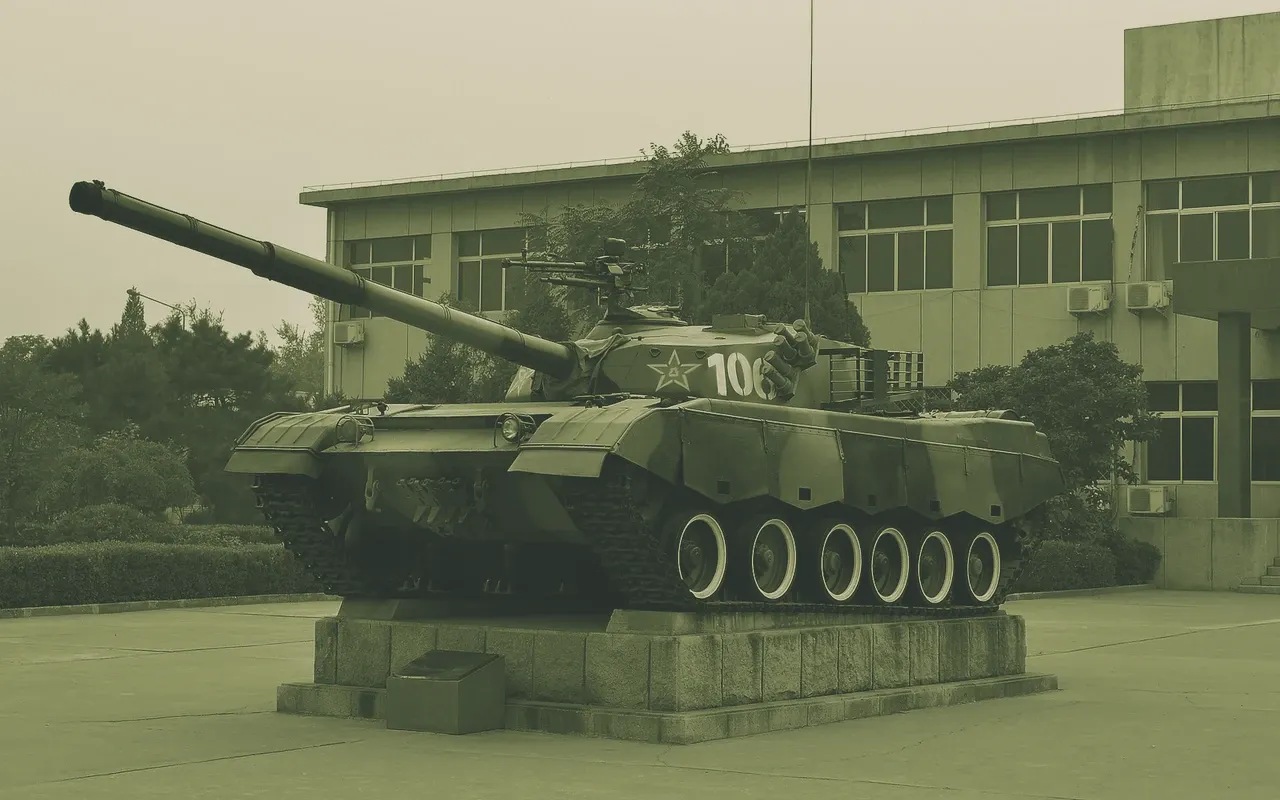
China’s latest iteration of its most numerous main battle tank — a heavily upgraded “2.5-generation” design that mates a third-generation turret to a second-generation chassis, first revealed to the world at the 2016 Tank Biathlon.
Overview
The Type 96B (PLA designation ZTZ-96B) represents the most modern standard of the People’s Liberation Army’s mass-warfare tank fleet. It is a deep modernization of the Type 96/96A family, which itself evolved from the late-Cold War Type 85-IIM/88C line. The 96B retains the carousel-autoloader, 3-crew layout and 125 mm smoothbore of its predecessors but adds a substantially uprated engine, improved protection and digital fire-control enhancements. Precise fleet numbers are not publicly established, but the broader Type 96/96A family numbers around 2,000–2,500 vehicles, according to a mid-2016 inventory breakdown, making it the backbone of Chinese heavy armor.
Development
The Type 96 base vehicle entered PLA service in the late 1990s as the first Chinese tank to carry a 125 mm smoothbore. The Type 96A followed in the mid-2000s with a strengthened turret and an 800 hp engine. The Type 96B appeared abruptly in 2016, when Chinese crews brought heavily modified tanks to the International Army Games Tank Biathlon in Alabino, Russia. According to GlobalSecurity, the precise extent of the 96B upgrade program remains disputed: some analysts view the Biathlon vehicles as a limited-run performance demonstrator, while others contend that a meaningful portion of the 96A fleet has been or will be brought to the 96B standard. In either case, the upgrades — particularly the new powerpack — were a direct response to the 96A’s underpowered showing in earlier biathlon events.
Design & capabilities
The 96B adaptation centers on three improvements often described by the unofficial adage “thicker turret, bigger engine, more digital.” Armored Warfare and other observers note the uprated 8-cylinder 150HB turbo-diesel, which replaces the 800 hp unit of the 96A. Power output is frequently estimated at 1,000–1,200 hp (~735–895 kW), though exact figures are not publicly confirmed. The increased power-to-weight ratio (roughly 24–29 hp/t, est.) raises road speed to around 65 km/h, with some sources citing up to 70 km/h. The suspension was also retuned, and the drivetrain made more reliable, which was a direct priority after the 2016 Biathlon road-wheel incident.
Armor is upgraded through a combination of welded steel, composite arrays, and a reportedly thicker frontal turret module. Chinese-sourced estimates sometimes attribute 700–750 mm RHA equivalent to the turret front, but these figures remain unverified in independent open-source analysis. The HandWiki Type 96 entry summarizes the trade-off inherent in the family: a third-generation turret on a lighter, second-generation hull, keeping weight to an estimated 41.5–43 tonnes. Fire-control and digital systems received a generational refresh, and the tank retains its ability to fire laser-guided anti-tank guided missiles through the 125 mm tube, a hallmark of the Type 96/99 lineage noted in the U.S. Department of Defense’s 2024 China Military Power Report. There is no confirmed hard-kill active protection system on the standard 96B.
Variants
The Type 96B itself is a derivative of the Type 96 and Type 96A. The baseline Type 96 (ZTZ-96) entered service in 1997; the up-armored Type 96A followed in the mid-2000s. Whether the 96B exists as a discrete, fleet-wide variant or a limited competition-tuned build remains an open question. No further sub-variants are publicly established.
Combat record / operational use
The Type 96B has no battlefield combat record. Its sole operational showcase is the 2016 Tank Biathlon, where Chinese crews raced a set of specially prepared 96Bs against Russian T-72B3M, Belarusian T-72B, and other tanks. As Tank and AFV News reported at the time, one 96B shed a road wheel mid-race; the crew finished the event in a replacement vehicle and incurred a time penalty, but the team still placed second behind Russia. Observers noted, per Topwar’s analysis, that the 96B’s tuning appeared optimized as much for biathlon-oriented mobility as for combat conditions. The PLA has never employed the 96B in expeditionary or peacekeeping roles, and none have been exported.
Advantages
- Mass-fleet backbone: the broader Type 96 family provides the PLA with thousands of reasonably modern MBTs at a lower unit cost than the heavier Type 99A.
- Favorable power-to-weight upgrade gives the 96B substantially better tactical mobility than the 96A.
- Shares the 125 mm smoothbore and gun-launched ATGM ecosystem of the higher-end Type 99A, simplifying logistics and ammunition commonality.
- Low silhouette and relatively light weight (~42 t) ease strategic transport and operations on lighter bridges and softer terrain.
Drawbacks / limitations
- Second-generation hull architecture limits the amount of armor that can be added, leaving it less protected than true third-generation 55+-tonne MBTs.
- No confirmed hard-kill APS; survivability against modern top-attack weapons and loitering munitions is unproven.
- Fleet size of the specific 96B standard remains uncertain — the majority of the 2,000-strong Type 96/96A fleet may still be in the older configuration.
- Entirely untested in combat; all performance assessments rest on exercises, biathlon appearances, and PLA claims.
- The carousel autoloader’s location in the crew compartment presents the same survivability questions that have been exposed in Russian tanks in Ukraine.
Counterparts
- T-90M Proryv (Russia)
- M1A2 Abrams (USA)
Outlook
The Type 96B sits at the intersection of necessity and limitation for the PLA. It offers a meaningful leap over the older 96A at a fraction of the cost of a new-build Type 99A, but its second-generation hull constraints mean further armor upgrades will be marginal. As the DoD’s 2024 report on Chinese military power underscores, China still operates the world's largest tank fleet — well over 5,000 vehicles — and the Type 96/96A/96B family will continue to form its quantitative spine while elite units receive the heavier Type 99A and the lighter Type 15 for specialized roles. Whether the 96B-spec upgrades are rolled out across hundreds of hulls or remain a limited biathlon-derived package is likely to turn on PLA threat assessments and budget competition from the next-generation programs now underway.
Key specifications
| Spec | Value |
|---|---|
| Crew | 3 |
| Combat weight | ~41.5–43 t (est.) |
| Length / width / height | ~6.3 m hull · ~3.3 m · ~2.3 m (precise 96B dimensions not publicly established) |
| Main armament | 125 mm smoothbore (Type 96/88C-family) with carousel autoloader; gun-launched ATGM through tube |
| Secondary armament | 7.62 mm coaxial; 12.7 mm anti-aircraft heavy machine gun |
| Armor & protection | Welded steel + composite; reportedly thicker frontal turret armor; no confirmed hard-kill APS |
| Engine & power | 8-cyl 150HB turbo-diesel, ~1,000–1,200 hp (est., disputed) |
| Power-to-weight | ~24–29 hp/t (est.) |
| Road / cross-country speed | ~65 km/h (up to 70 km/h claimed) (est.) |
| Operational range | ~400 km road; ~600 km with external tanks (est.) |
Sources
- GlobalSecurity.org — Type 96B / ZTZ-96 — https://www.globalsecurity.org/military/world/china/type-96b.htm
- Armored Warfare — In Development: Type 96B — https://armoredwarfare.com/en/news/general/development-type-96b
- Tank and AFV News — Chinese tank loses roadwheel at Tank Biathlon — https://tankandafvnews.com/2016/08/17/chinese-tank-loses-roadwheel-at-tank-biathlon/
- Topwar — Tank “Type 96B”: scores and competitions — https://en.topwar.ru/99327-tank-tip-96b-ocenki-i-sorevnovaniya.html
- HandWiki — Engineering: Type 96 tank — https://handwiki.org/wiki/Engineering:Type_96_tank
- U.S. Department of Defense — Military and Security Developments Involving the People’s Republic of China 2024 — https://media.defense.gov/2024/dec/18/2003615520/-1/-1/0/military-and-security-developments-involving-the-peoples-republic-of-china-2024.pdf