Ukraine priced its weapons by battlefield results, and the West can't copy the receipt
Ukrainian units have ordered more than 500,000 drones and robots by spending combat points earned for verified kills, recon and evacuations. It is the first arms market priced by battlefield results, and the West's contract model cannot run it.
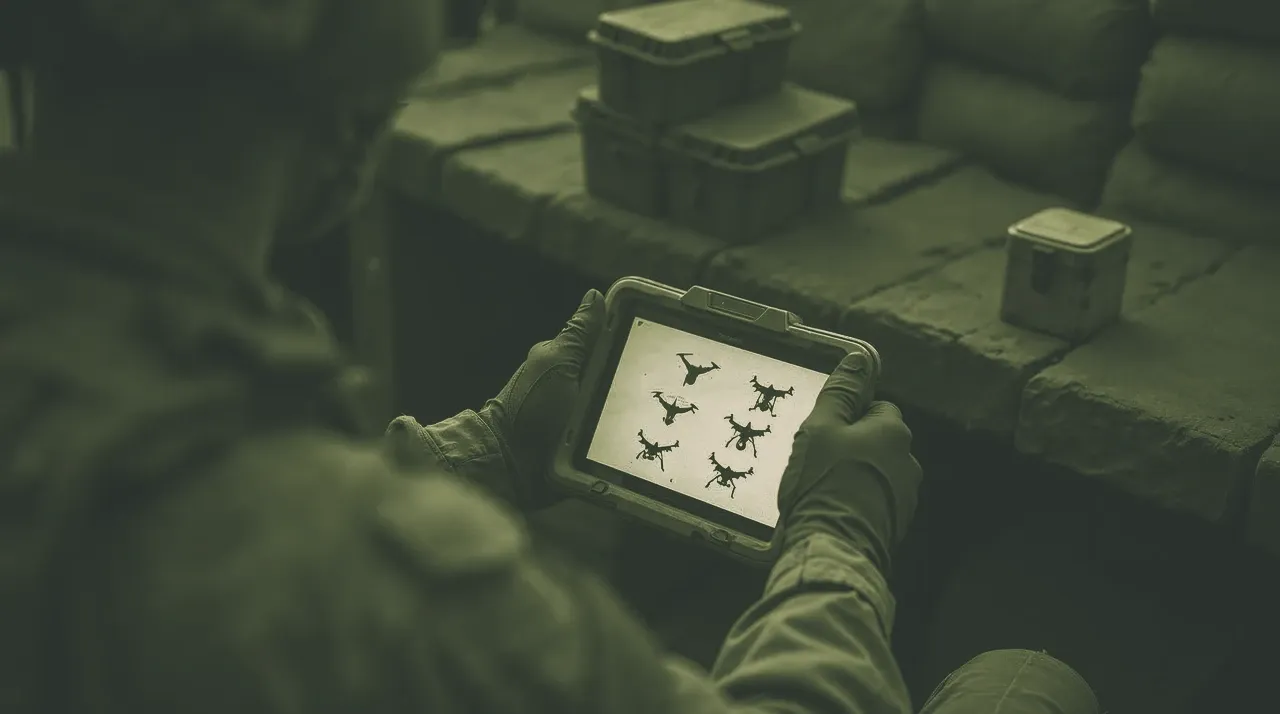
Ukrainian units have ordered more than 500,000 drones and robots by spending points they earned for verified kills, reconnaissance and evacuations. It is the first arms market priced by battlefield performance, and the contract-and-prime model the West runs on cannot reproduce it.
No other military prices its weapons the way Ukraine now does. Defense Minister Mykhailo Fedorov said on June 24 that more than 400 combat units have ordered over 500,000 drones, ground robots and electronic-warfare systems through the army's Brave1 Market, paying not in cash appropriated by a ministry but in combat points banked for hitting Russian forces and running other missions. The headline number matters less than the mechanism that produced it, which is that a weapon's price is now a unit's own combat record.
The process is deliberately plain. A unit completes a mission, receives points, and selects hardware off a marketplace stocked with more than 800 Ukrainian-made products, Fedorov told Ukrainian outlets including Ukrinform and Interfax-Ukraine. The orders have run to roughly UAH 33 billion, about $735 million, in under a year, according to the Defense Ministry and Euromaidan Press. No requirement document moves through a program office, no prime contractor assembles the bill of materials; the unit picks the drone it wants, and the state pays the maker.
Six points for a soldier, fifty for a launcher
The currency has an exchange rate, and it is published. Reported point values run from roughly six points for a Russian soldier killed to as many as fifty for a mobile rocket launcher, Euromaidan Press reported, with the schedule widened in 2026 to reward reconnaissance, logistics and evacuation rather than only confirmed kills. Every claim is settled against video uploaded to the military, so a unit's balance is an audited ledger of what it has actually done at the front. Top performers climb a public leaderboard and reach the newest hardware first, with the Birds of Madiar unit topping the rankings.
Settlement is where the scheme stops resembling a loyalty program and starts working like procurement. Units order directly from manufacturers, while a state agency called DOT-Chain Defence handles contracting, payment and delivery oversight in a fully digital process. The Defense Ministry says the average time from placing an order to receiving an in-stock item is nine days. Western programs measure a fielded capability in years and a contract modification in months, so the nine-day clock is less a faster version of the same process than a different category of speed.
The points feed a second loop the public rarely sees. When the General Staff compiles its centralized drone-buying lists, it does so by technical specification only, with no brand names, ranking which products units should receive on combat data drawn from five digital systems: ePoints, DOT-Chain, Brave1 Market, the DELTA battlefield-awareness platform and Mission Control. Demand, in the ministry's words, is generated automatically from battlefield data, which it argues removes the human discretion where corruption and lobbying usually live. Brave1 Market is the retail counter; the combat data accumulating beneath it is the wholesale tier that sets the larger orders.
The points are steering the targeting
A market priced by results also reshapes the behavior it records. By adjusting the reward schedule, Ukraine's command can move thousands of crews toward whatever it most needs destroyed, because the points convert into the gear those crews want. Business Insider reported that raising the value of harder targets has pushed units toward rear-area infrastructure, barracks and trucks more than 100 kilometers from the front, rather than the infantry and armor immediately in front of them.
The people inside the system describe it as a steering wheel. Kateryna Stepanenko of the Institute for the Study of War told Business Insider the incentive updates have pushed units along the entire line to pursue targets that are more challenging to reach, and that the effect is visible. Dmytro Zhluktenko, a lessons-learned analyst with the 413th Unmanned Systems Regiment, put it more bluntly: the system "really creates the incentive for more strategically viable targets" set by the general staff, and lets his unit buy the specific drone its operators trust rather than accept what the rear assigns. That matters because drones now account for more than 80 percent of strikes on Russian targets, Zelenskyy said in January, having overtaken artillery as Ukraine's main battlefield killer.
This is the wedge most Western analysis misses. To Ukraine's general staff the marketplace doubles as a fire-control input: the same ledger that buys a unit its next batch of first-person-view drones also reports, in near real time, which systems are working on which stretch of front and where to point the force next.
Ninety-five percent Ukrainian, and that is the market signal
The industrial consequence is already measurable. Ukrainian-made systems now account for 95 percent of all drones the Defense Procurement Agency buys for the front, the Defense Ministry said on June 22, and unmanned-systems spending overran ammunition spending for the first time last year. Through DOT-Chain Defence, units received roughly 485,000 drones and other equipment worth UAH 31.4 billion, about $700 million, in less than five months of 2026.
For manufacturers, the marketplace is a demand signal of a clarity the Western defense market never produces. Scott Boston, a land-warfare analyst at RAND, said the platform sends a "marketplace signal" that tells industry what front-line soldiers actually want and what is unnecessary, letting makers forecast demand and scale the systems that earn orders. A company does not lobby a program office; it ships a drone that crews spend their hard-won points on, or it does not. Ukraine's units have long worked directly with weapons makers, testing and co-developing gear instead of waiting for a central authority to decide, and Business Insider has reported that this decentralization is a core reason Kyiv fields new weapons so fast.
Washington has noticed. Euromaidan Press reported that the United States recently stood up a near-identical Amazon-style marketplace for military drones, explicitly modeled on Brave1 Market and DOT-Chain Defence. The storefront, though, is the part that copies easily.
Why the West cannot run this market
The points economy rests on conditions a NATO ministry does not have, and mostly should not want in peacetime. It needs a live, high-volume stream of verified combat results to price against, and absent a war there is nothing to settle claims on, so the exchange rate has no meaning. It needs a tolerance for letting small units buy weapons directly, outside the certification, export-control review and audit trail that Western law builds around public money. And it runs on wartime tempo, the nine-day clock that holds only because the alternative is losing ground.
The same week's headlines set the contrast. The U.S. government handed Lockheed Martin a seven-year, sole-source contract worth up to $35.3 billion to quadruple THAAD interceptor output, the prime-and-program model at its largest scale. France and Germany walked away from their FCAS fighter program after years of industrial disputes, Mezha reported, and a Ukrainian commander recently said NATO's slow, committee-led approach to building naval drones makes him uneasy. Money is not the problem in any of these cases. The delay is the price of doing procurement the lawful, peacetime, prime-contractor way that most of NATO is bound to.
The lesson for Western capitals is therefore narrower than "build an app." What transfers is the data layer underneath: a disciplined feedback loop that prices weapons by measured performance and lets that signal drive what gets bought and scaled. The points and the public leaderboard are wartime Ukraine's particular implementation of that idea. Its customers in the West have never managed to operationalize the simpler principle beneath it, that the front should set the requirement.
What to watch
The risks are the obvious ones for any market priced by self-reported results. A points economy invites gaming, double-counting and fraud, which is why the video-verification and the DELTA cross-check matter, and why their integrity is the thing to watch as the volume climbs past 800,000 claimed targets this year, a figure Fedorov cited on June 22. Quality control is the second pressure point: a marketplace that rewards whatever crews like risks fragmenting the fleet into too many incompatible types. And the whole edifice assumes a tempo that peace would remove.
The forward indicator is already visible. Days after the 500,000-order milestone, Fedorov announced Ukraine's first open competitive tender for middle-strike drones, a sign the points marketplace is now feeding, not replacing, larger centralized buys. The question for 2026 is whether Ukraine can keep the retail speed of the marketplace while bolting on the scale of a conventional tender, and whether anyone in NATO is studying the ledger underneath rather than the storefront on top.
What is Brave1 Market?
It is Ukraine's military marketplace, holding more than 800 domestically made drones, ground robots and electronic-warfare systems. Units order from it directly, paying with combat points rather than cash, and the state agency DOT-Chain Defence handles payment and delivery. Defense Minister Mykhailo Fedorov said on June 24 that units have ordered more than 500,000 systems through it.
How do units earn the points?
Through the ePoints program, units bank points for verified actions uploaded as video: destroying Russian equipment, killing enemy troops, and increasingly reconnaissance, logistics and evacuation missions. Reported values run from roughly six points for a soldier to about fifty for a mobile rocket launcher, according to Euromaidan Press. Better-performing units climb a public leaderboard and reach new hardware first.
How is this different from how the US or NATO buys weapons?
Western procurement runs on multi-year programs of record, prime contractors and certification, with timelines measured in years. Ukraine's Defense Ministry says its average order-to-delivery time for an in-stock item is nine days. The same week, the US awarded Lockheed Martin a seven-year contract worth up to $35.3 billion for THAAD interceptors, the conventional model at full scale.
Does the points system change what soldiers attack?
Yes. By raising the points awarded for harder targets, Ukraine's command steers units toward rear-area infrastructure, barracks and trucks more than 100 kilometers from the front, analysts at the Institute for the Study of War and RAND told Business Insider. The reward schedule functions as a fire-control input, not just an incentive.
Can the West copy it?
Partly. The storefront is easy to clone, and Washington has reportedly built a near-identical marketplace. The harder part is the data layer underneath, which depends on a live stream of verified combat results, a willingness to let units buy directly outside normal audit and export rules, and wartime tempo. Those conditions do not exist in a peacetime ministry.
What are the risks?
A market priced by self-reported results invites gaming, double-counting and fraud, which is why video verification and cross-checks against the DELTA system matter as claimed targets pass 800,000 this year. A marketplace that rewards whatever crews prefer also risks fragmenting the fleet into too many incompatible drone types, and the nine-day tempo assumes a war footing.

Marcus Schuler
Marcus Schuler edits BattlePolicy, a daily defense-technology brief connecting the companies and capabilities behind modern war to the contest among Europe, the US, Russia, and China.