Virginia-class
The US Navy’s premier nuclear-powered fast-attack submarine, blending advanced quieting, a large Tomahawk strike payload, and special-operations support; the platform at the center of the AUKUS submarine pathway.
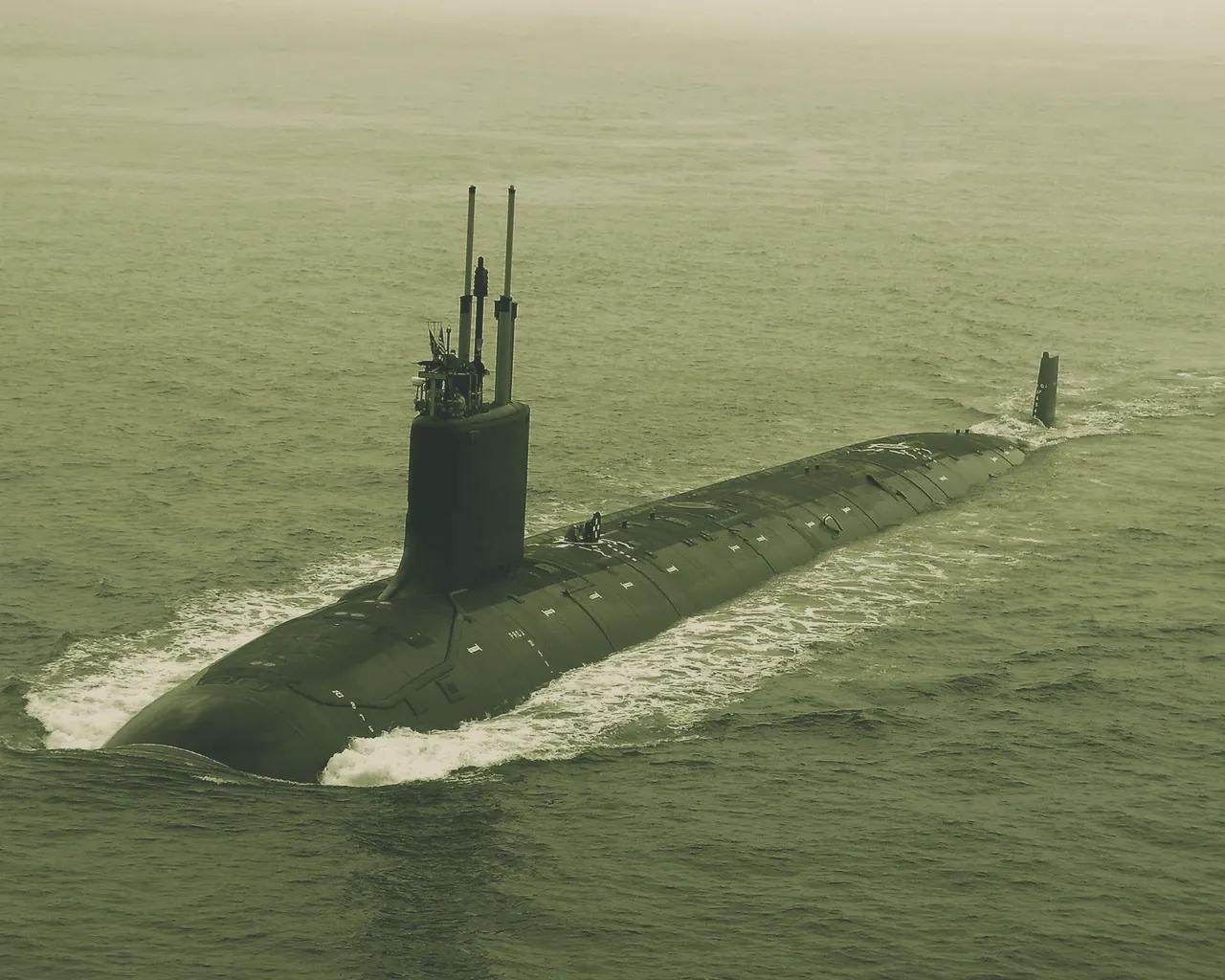
The United States Navy’s front-line nuclear fast-attack submarine, in serial production since 2004, combining advanced quieting, a growing Tomahawk land-attack punch, and a lock-out chamber for special forces — the boat that will underpin Australia’s nuclear-powered submarine force under AUKUS.
Overview
The Virginia class (SSN-774) is the United States Navy’s premier nuclear-powered attack submarine, designed for multi-mission dominance across open-ocean and littoral environments. Built by a teaming arrangement between General Dynamics Electric Boat and HII Newport News, each boat integrates long-endurance ASW, anti-surface warfare, land-attack, intelligence-surveillance-reconnaissance, and special-operations support. Approximately 24 hulls have been commissioned, and serial production continues through Block V and beyond. The class is equally the cornerstone of the AUKUS Pillar I agreement, under which Australia will acquire its first nuclear-powered submarines from the early 2030s.
Development
The Virginia class originated as the New Attack Submarine (NSSN) in the 1990s, conceived as a more affordable, more versatile successor to the Seawolf class. The lead boat, USS Virginia (SSN-774), was commissioned in 2004, as detailed in the US Navy’s Attack Submarines fact file. Production evolved through successive blocks that introduced modular construction, improved sensors, and reduced lifecycle maintenance costs. The defining shift arrived with Block V, which introduces the Virginia Payload Module (VPM) — an 84-foot hull insert that quadruples the boat’s Tomahawk capacity. Construction of the first Block V boat reached a key milestone in December 2025, with delivery expected early next decade, according to Naval Today.
Design & capabilities
The Virginia class is powered by an S9G pressurized-water reactor driving a single pump-jet propulsor, providing unlimited submerged endurance and a life-of-ship core that requires no refueling. The US Navy pegs its top speed at over 25 knots, while patrol length is bounded by crew and stores (typically around 90 days). Four 533 mm torpedo tubes launch Mk 48 ADCAP heavyweight torpedoes, and the boat carries a variety of Tomahawk land-attack cruise missiles: Blocks I–IV use 12 vertical launch system cells or two Virginia Payload Tubes, and Block V’s VPM adds four large-diameter midship tubes (each holding seven missiles) to bring the total strike load to as many as ~40 Tomahawks. According to General Dynamics, the class also features photonics masts that replace optical periscopes, a comprehensive AN/BQQ-10 sonar suite, and a lock-out chamber that enables special-operations forces to deploy and recover while submerged. Extensive anechoic coatings and isolated machinery make the Virginia among the quietest submarines ever built, although exact acoustic signatures are classified. The boat’s published test depth exceeds 240 m, with the true maximum depth undisclosed.
Variants
- Block I (4 boats): baseline design, commissioned 2004–2008.
- Block II (6 boats): refined modular construction to accelerate build rates.
- Block III (8 boats): introduced the Large Aperture Bow sonar and replaced 12 individual vertical launch cells with two six-shot Virginia Payload Tubes, reducing build costs and increasing payload flexibility.
- Block IV (10 boats): designed to require fewer major maintenance availabilities, extending the operational tempo.
- Block V (starting with SSN-802): incorporates the Virginia Payload Module — four large-diameter vertical tubes that together can carry up to 28 additional Tomahawks, raising the boat’s total to ~40. This block is central to the US Navy’s long-range strike surge requirement.
- Future Blocks VI and VII are planned, with Block VI expected to introduce a new acoustically superior hull form and an electric-drive propulsion system, although detailed timelines remain fluid.
Further detail on the block evolution can be found in the Naval Technology project profile.
Combat record / operational use
Virginia-class submarines have conducted repeated combat operations. USS Virginia reportedly fired Tomahawk cruise missiles during Operation Odyssey Dawn in 2011, helping enforce the no-fly zone over Libya. Subsequent boats have carried out covert intelligence-gathering missions, anti-submarine patrols in contested waters, and strike missions in the Middle East, often operating with the Lockheed Martin Deep Siren and other special-operations payloads. Naval Technology notes that the class has proven highly deployable, with boats spending a cumulative tens of thousands of days underway, and that their ability to transit rapidly from open-ocean to littoral zones has shaped US undersea warfare doctrine. The class has not been used in direct combat against a near-peer submarine, and no Virginia boat has been lost in service.
Advantages
- Multi-mission flexibility: ASW, anti-surface warfare, strike, ISR, and special operations in a single hull.
- Exceptional quieting and sensor suite give it a significant acoustic advantage over most potential adversaries.
- The Block V VPM dramatically increases the cruise-missile strike capacity (up to ~40 Tomahawks), allowing a single boat to shape the land-battle space.
- Life-of-the-ship nuclear core eliminates refueling outages, maximizing the operational fraction of each hull’s 33-year service life.
- Photonic masts and a lock-out chamber expand the boat’s utility in high-denial environments without sacrificing stealth.
Drawbacks / limitations
- High unit cost — approximately $3.4–3.5 billion for a Block V boat, as noted by Army Recognition — constrains procurement rates and places enormous strain on the US shipbuilding budget.
- Despite efforts to improve production, the industrial base has struggled to meet the sustainment target of two boats per year, slowing fleet recapitalization.
- Maximum submerged speed of 25+ knots, while sufficient, trails some Russian SSN/SSGN designs that may exceed 30 knots, potentially complicating hostile-submarine tracking.
- Diving depth is limited to >240 m in public documents; true operating depth, while classified, is shallower than that of some Russian deep-diving SSN/SSGNs, which are estimated to reach ~450–600 m.
- As with all nuclear-powered boats, the very high-end maintenance and refit infrastructure required limits forward-basing flexibility in a conflict.
Counterparts
- Yasen-class (Russia)
- Type 093 Shang (China)
Outlook
The Virginia class will remain the backbone of the US Navy’s undersea attack fleet well into the 2040s. Block V boats, with their massive VPM-strike capacity, are entering construction, and the planned Block VI evolution is expected to introduce an electric-drive, acoustically optimized hull that may close the capability gap with any future adversary designs. Production, however, remains heavily constrained by the small US nuclear-submarine industrial base, and the simultaneous requirement to build the Columbia-class SSBN and to deliver boats to Australia under AUKUS will test that base for at least a decade. Despite those pressures, the Virginia class is unlikely to face a direct replacement until the mid-century, and its combination of quieting, payload, and forward-deployed availability means it will continue to be the US Navy’s most potent conventional-warfare submarine for the foreseeable future.
Key specifications
| Spec | Value |
|---|---|
| Type | Nuclear fast-attack submarine (SSN) |
| Full-load displacement | ~7,800 t submerged (Blocks I–IV); ~10,200 t (Block V) |
| Length / beam / draft | ~115 m / ~10.3 m (Block V ~140 m with VPM) / not publicly established |
| Propulsion | 1 × S9G PWR (~40,000 shp), pump-jet, single shaft; life-of-ship core |
| Max speed (kts) | 25+ kts submerged |
| Range / endurance | unlimited range (nuclear); ~90 days (stores/crew limited) |
| Complement | 132 |
| Armament | 4 × 533 mm torpedo tubes (Mk 48 ADCAP); Tomahawk: 12 VLS (Blocks I–II) / 2 × 6 Virginia Payload Tubes (Blocks III–IV); Block V VPM adds 4 midship tubes (up to ~28 missiles), total up to ~40 Tomahawks |
| Sensors / combat system | AN/BQQ-10 sonar suite; photonics masts (no optical periscope) |
| Aviation facilities | not applicable |
Sources
- United States Navy — Attack Submarines – SSN fact file. https://www.navy.mil/resources/fact-files/display-factfiles/article/2169558/attack-submarines-ssn/
- General Dynamics Mission Systems — Virginia-Class Fast Attack Submarines (SSN). https://gdmissionsystems.com/submarine-systems/virginia-class
- Submarine Industrial Base Council — Virginia Class SSN. https://submarinesuppliers.org/programs/ssn-ssgn/virginia-class/
- Naval Today — Construction milestone reached for US Navy’s first Block V Virginia-class submarine. https://www.navaltoday.com/2025/12/18/construction-milestone-reached-for-us-navys-first-block-v-virginia-class-submarine/
- Army Recognition — Virginia-class SSN-774. https://www.armyrecognition.com/military-products/navy/submarines/attack-submarines/virginia-class-ssn-774
- Naval Technology — NSSN Virginia-Class Attack Submarine. https://www.naval-technology.com/projects/nssn/