Z-19
China's purpose-built scout-attack helicopter — a light, Z-9-derived tandem-seat rotorcraft with mast-mounted radar that acts as the eyes and fangs partner to the heavier Z-10 in PLA Army Aviation.
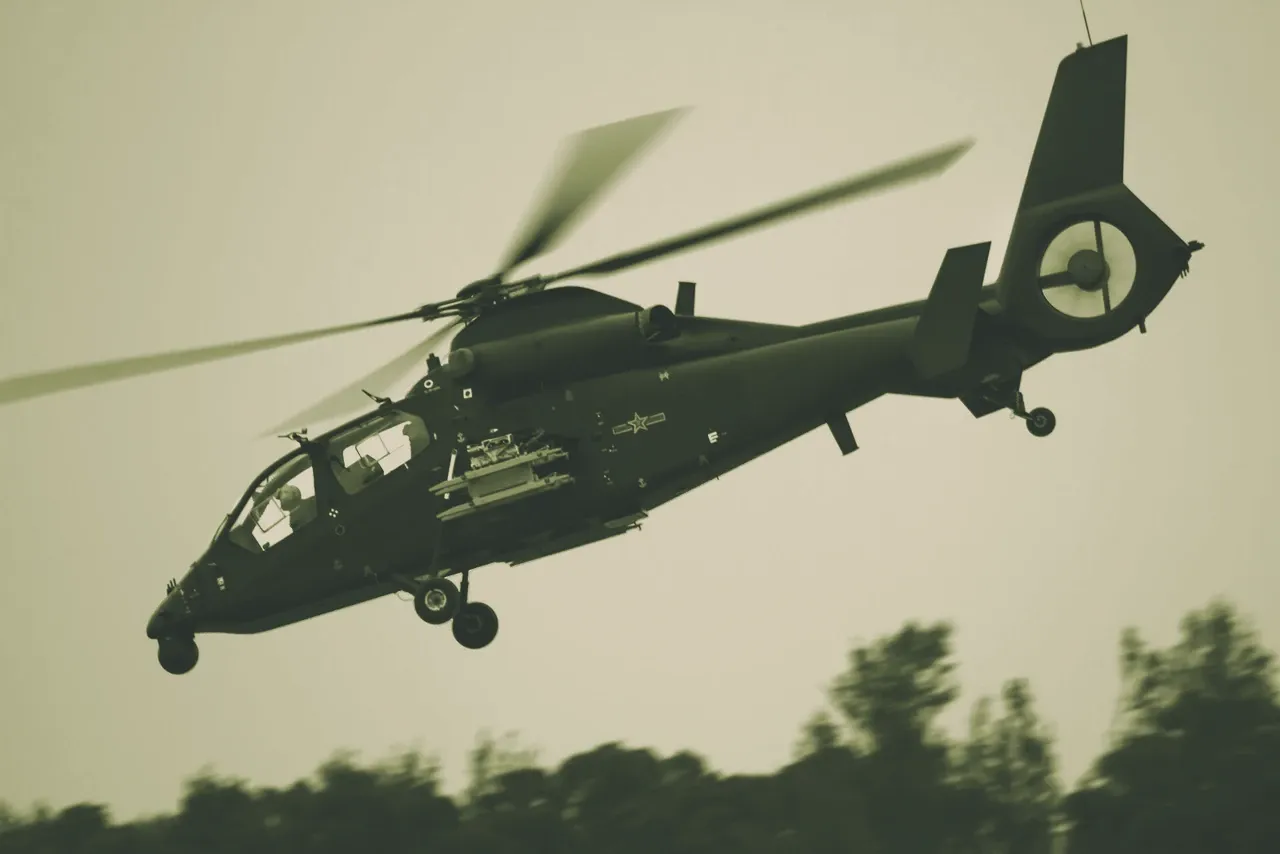
The Harbin Z-19 “Black Whirlwind” is China’s dedicated scout-attack helicopter — a light, tandem-seat rotorcraft derived from the Z-9/Dauphin, paired with the Z-10 in PLA Army Aviation for armed reconnaissance and hunter-killer missions.
Overview
The Z-19 (industrial designation WZ-19; export Z-19E) fills the light scout/attack niche in China’s rotary-wing fleet. It was developed to partner with the heavier CAIC Z-10, flying ahead to find and designate targets while carrying enough armament to engage light armor and helicopters itself. The airframe is visually distinctive: a narrow tandem cockpit married to a fenestron-shrouded tail rotor and IR-suppressed engine exhausts, all intended to reduce signature. No foreign sales have been confirmed, but the type has been offered for export as the Z-19E.
Development
The Harbin Aircraft Manufacturing Corporation (HAMC), an AVIC subsidiary, used the license-built Z-9 (Eurocopter AS365 Dauphin) as the structural parent for a dedicated scout-attack helicopter. According to Wikipedia, the Z-19 first flew in 2011 and entered PLA Army Aviation service in 2012. The program suffered an early loss when a prototype crashed in 2010. Chief designer Wu Ximing led the adaptation, which retained the Z-9’s powerplant and dynamic components while introducing a stepped tandem cockpit, a chin turret, and provisions for a mast-mounted millimeter-wave fire-control radar.
Design & capabilities
The Z-19 is a light helicopter with a maximum takeoff weight of 4,250 kg, as noted by Army Recognition. It is flown by a crew of two in tandem, with the gunner in the front seat and the pilot behind. The fenestron tail rotor and IR-suppressed exhausts are signature-reduction measures.
Instead of an integral cannon, the Z-19 can be fitted with a 23 mm gun pod under the fuselage; its primary firepower comes from two stub-wing pylons that can carry up to eight anti-tank guided missiles (HJ-8 or HJ-10 class) or TY-90 air-to-air missiles. The helicopter can also mount rocket pods for area suppression. Sensor fit includes a chin-mounted FLIR/TV/laser-rangefinder turret and a helmet-mounted sight. Airforce Technology reports that later-production and export-intended aircraft add a mast-mounted millimeter-wave fire-control radar above the four-blade main rotor, giving the Z-19 an Apache-Longbow-like scout capability.
Power is supplied by two WZ-8 turboshaft engines, each producing around 700 kW (estimates vary). Maximum speed is approximately 280 km/h, hover ceiling about 6,000 m, and endurance around four hours, yielding a combat range of roughly 700 km.
Variants
- Z-19 / WZ-19: baseline PLA scout-attack configuration, with or without the mast-mounted radar.
- Z-19E: export-marketed version, showcased at air shows, incorporating the mast radar and additional weapon options. No confirmed foreign sale has been reported as of 2026.
Combat record / operational use
The Z-19 has no publicly confirmed combat record. In PLA service it operates alongside the Z-10, flying reconnaissance and light-attack sorties during exercises and border patrols. Military Factory describes it as a “light scout/attack helicopter” that has not been exported, and open-source imagery shows Z-19s deployed in high-altitude regions and maritime exercises but never in a shooting war.
Advantages
- Mast-mounted millimeter-wave radar on later airframes gives the crew the ability to scan terrain-masked targets while remaining hidden — a high-end feature for a light helicopter.
- Fenestron tail rotor and IR-suppressed exhausts lower the acoustic and infrared signature, improving survivability against MANPADS.
- Very light airframe (MTOW 4,250 kg) permits high-altitude operations; sources claim a service ceiling around 6,000 m.
- TY-90 air-to-air missile provision gives a credible self-defense capability against other helicopters and low-slow UAVs.
- Can share logistics with the widespread Z-9 fleet, easing maintenance and parts supply.
Drawbacks / limitations
- No integral cannon — the 23 mm gun pod blocks a pylon and is a less effective solution than a dedicated chin gun.
- Only two hardpoints limit the simultaneous carriage of mixed weapons (e.g., ATGMs and air-to-air missiles) without sacrificing rockets.
- The WZ-8 engines are considered adequate but not powerful; hot-and-high payload-carry margins are probably slim compared to Western engines in the same weight class.
- China’s armament for light helicopters still relies on older HJ-8 variants; integration of newer missiles like the HJ-10 is not yet publicly confirmed in volume.
- No combat experience means real-world survivability and sensor effectiveness under fire remain unvalidated.
Counterparts
- AH-64 Apache (USA) — the heavy attack helicopter that set the template for mast-mounted radar and hunter-killer operations, sharing the scout/attack pairing concept with the Z-19’s role as a light scout partner.
- Ka-52 Alligator (Russia) — a coaxial attack/reconnaissance helicopter that also carries a mast radar and has been heavily combat-tested, representing the Russian approach to armed reconnaissance.
- Z-10 (China) — the heavy attack helicopter that the Z-19 scouts for in PLA service; the two types form a contemporary hunter-killer pair.
Outlook
The Z-19 is firmly embedded in PLA Army Aviation as the light half of the country’s attack-helicopter force. Production is estimated at over 180 airframes, and there is no indication of a replacement program. Upgrades will likely focus on enhanced datalinks and greater drone-teaming integration, allowing a manned Z-19 to control a wingman unmanned platform — a capability already being flight-tested on the Z-10. Export interest may yet materialize, but for now the Black Whirlwind remains a purely Chinese asset.
Key specifications
| Spec | Value |
|---|---|
| Crew | 2 (tandem) |
| Length / wingspan | 12.0 m / 11.93 m (main-rotor diameter) |
| Max speed | ~280 km/h |
| Service ceiling | ~6,000 m |
| Combat radius / range | ~700 km (range) |
| Payload | Not publicly established |
| Hardpoints | 2 stub-wing pylons |
| Radar / sensors | Chin turret (FLIR/TV/laser); mast-mounted mmW fire-control radar (later/export airframes); helmet-mounted sight |
| Powerplant | 2 × WZ-8 turboshaft (~700 kW each, est.) |
| Armament | Up to 8 ATGM (HJ-8/HJ-10 class) or TY-90 AAM; 23 mm gun pods; rocket pods |
Sources
- Wikipedia — Harbin Z-19. https://en.wikipedia.org/wiki/Harbin_Z-19
- Military Factory — Harbin Z-19 (Black Whirlwind) (WZ-19). https://www.militaryfactory.com/aircraft/detail.php?aircraft_id=992
- Army Recognition — WZ-19 Z-19 Harbin technical data sheet. https://www.armyrecognition.com/military-products/air/helicopters/attack-helicopters/wz-19-z-19-harbin
- Airforce Technology — Harbin Z-19 Light Attack Helicopter. https://www.airforce-technology.com/projects/harbin-z-19-light-attack-helicopter/