Anduril joins Elbit's bid for the Army's next howitzer
Elbit America has pulled Anduril onto its SIGMA bid for the U.S. Army's self-propelled howitzer contest, a sign the program could turn on autonomy and networking as much as on the cannon.
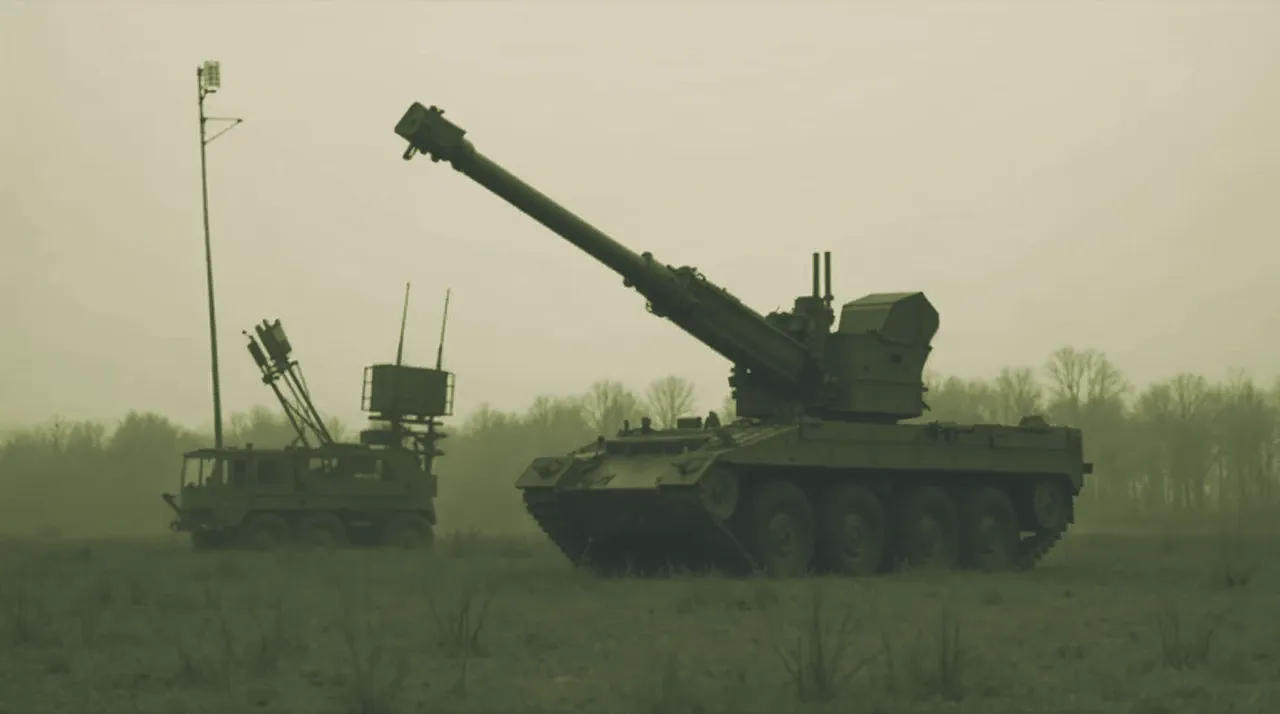
Elbit America has pulled Anduril onto its SIGMA bid for the U.S. Army's self-propelled howitzer contest, a sign the program could turn on autonomy and networking as much as on the cannon.
Elbit Systems of America said on June 2 that it had added Anduril Industries to its bid for the U.S. Army's self-propelled howitzer competition, according to Defense Daily, which detailed the teaming agreement the day Elbit announced it. The arrangement puts autonomy software near the center of a program the Army has been weighing on the strength of its cannon. Elbit said it would use Anduril to link its SIGMA wheeled howitzer to Army command networks, and that later variants would run Anduril's Lattice software, which Elbit said would add autonomy and improve mobility and lethality.
That framing is a choice by Elbit. The contest will be decided largely on range, armor, rate of fire, and price, and Elbit is the bidder casting the networking and autonomy layer above the gun as just as decisive.
A 500-gun decision the Army wants to close this summer
The competition ranks among the Army's larger near-term ground-combat decisions. The service issued a request for information in September 2025 and set final prototype proposals for March 2026, with a prototype contract targeted for July 2026, Breaking Defense wrote. Israel Defense and the Ukrainian outlet Militarnyi have noted that the Army wants up to 500 systems, with production starting around fiscal 2028 and fielding by 2030.
The program followed a cancellation. The Army dropped its in-house Extended Range Cannon Artillery effort, which had aimed to stretch the tracked M109 Paladin to 70 kilometers, and turned in 2024 to evaluating existing self-propelled howitzers, according to Breaking Defense. The service has since asked Congress to support an end to Paladin production. Breaking Defense noted that the new wheeled gun would reach Stryker Brigade Combat Teams first, replacing towed M777s, before moving to other units.
The requirements the Army published in October 2025 were demanding, Breaking Defense detailed: massed lethal effects to 58 kilometers, precision fires to 70 kilometers, a minimum range of 4 kilometers, storage for more than three precision rounds, and a sustained rate of six rounds per minute unguided and three guided. The gun also has to be built domestically, carry armor, and fire U.S. ammunition. That combination rewards a familiar profile, a foreign-proven design assembled in the United States.
The bidders fit that profile. Reported competitors include BAE Systems, which builds the current M109A7; Hanwha of South Korea with the K9; Rheinmetall of Germany with the wheeled RCH 155; a Leonardo DRS and KNDS team; and General Dynamics, along with Elbit America. Most of those guns began as non-U.S. designs and meet the domestic-production rule by being assembled on American soil.
The gun Anduril is plugging into
Elbit's entry, the SIGMA Next Generation, is a 155mm, 52-caliber wheeled howitzer that the company calls the only American-made mobile tactical cannon, built in Charleston, South Carolina. Army Recognition describes it on a 10-by-10 Oshkosh chassis at about 36 tons, with a 40-round onboard magazine and a firing rate close to eight rounds per minute. The same report put standard range beyond 40 kilometers, with extended-range projectiles cited as high as 80 kilometers depending on the round.
The crew figure is the one that matters here. Army Recognition noted that SIGMA uses a fully automated, remotely operated turret that fires through 360 degrees without repositioning, run by a crew of three inside an armored cabin. Elbit says the gun's software computes firing solutions in real time and can fire within about 60 seconds of stopping, then relocate before counter-battery fire lands. The system started as the Israel Defense Forces' Roem, with operational firing in June 2024 and first Israeli deliveries finished in December 2025. Elbit has sold a SIGMA variant abroad as well, including a $106 million Asia-Pacific contract.
The battlefield and the startup story — free in your inbox every week. No paywall.
Subscribe Free →Lattice, Anduril's software for fusing sensors, command systems, and weapons into one targeting picture, is what Elbit said it would integrate, first to connect SIGMA into Army command networks and later, on future variants, to unlock what Elbit called "autonomy, while further enhancing mobility and lethality," according to Defense Daily. Anduril has spent years selling Lattice as a control layer for other firms' platforms, and on SIGMA it would let the gun pull targets from drones, radars, and command nodes across a brigade instead of firing only on what its own crew can see. Elbit cast the deal as combining its own work as a systems integrator with Anduril's autonomy and networking.
Why the Army's requirements read like Ukraine
The case for that software layer comes out of the artillery war in Ukraine, where tube artillery has remained a leading cause of casualties on both sides. The Army's October 2025 requirements, which stress long range and rapid displacement, read as a response to a war in which static guns are located quickly by reconnaissance drones and counter-battery radar, per Breaking Defense's account. Elbit's pitch for SIGMA leans on the same logic, citing a first round within about 60 seconds of halting and a move before return fire arrives.
Automation points the same way. A three-person crew firing from an armored cabin, the layout Army Recognition describes for SIGMA, puts fewer soldiers at risk when a position is found and lets one vehicle do work that once needed a larger team. Rheinmetall's wheeled RCH 155, another entry in the competition, is among the automated wheeled guns European governments have bought since 2022, including orders for Ukraine.
Artillery in Ukraine has also been a contest of industrial depth, with Western 155mm output climbing from a low base while Russia sustained a heavy rate of fire, and software does not change how many shells a factory makes. Networking that lets fewer guns hit more targets with fewer wasted rounds addresses only part of a magazine-depth gap that the United States and Europe have spent two years trying to close by building new ammunition plants.
Anduril's play: a software seat in a 500-gun program
Anduril's role in the bid is the software, carried in through Elbit's integration of Lattice. The company built its valuation on drones and autonomous systems, and has pushed to make Lattice a control layer that established hardware programs adopt. By joining Elbit's bid rather than fielding its own howitzer, it takes a position in a program of up to 500 systems without building the platform, supplying the networking and autonomy piece the Army says it wants.
If the Army weighs an open, software-defined fire-control and autonomy layer heavily in its evaluation, the entrants built on more closed architectures have more to demonstrate, and that pressure runs across the field. BAE, Hanwha, Rheinmetall, and the DRS-KNDS team all bring proven guns, and Elbit and Anduril are trying to make the deciding question which of those guns connects cleanly to the networked targeting the Army wants by 2030.
The partnership also marks a shift for the newer defense companies. Anduril built its public identity on the claim that it would displace the incumbent primes. In practice it has increasingly worked through established players: it took over the Army's roughly $22 billion IVAS headset program from Microsoft in February 2025, per CNBC, and partnered with Meta in May 2025 to bid on the program's recompete, Breaking Defense wrote. The Elbit deal extends that pattern into tube artillery.
What to watch
The Army's prototype award, targeted for July, is the next test, and how its evaluation weighs networking and autonomy against range, rate of fire, and price will signal how much the software argument carries. The language of any follow-on solicitation matters too: whether the service writes open, software-defined fire control into the requirement or leaves it as a vendor option. A further signal would be rival bidders naming their own software and autonomy partners, which would show Elbit and Anduril had shifted the terms of the contest. SIGMA still has to meet the Army's published bar, massed fires to 58 kilometers and precision fires to 70, and survive on a battlefield where guns are found fast, per the requirements Breaking Defense detailed.
Frequently Asked Questions
What did Elbit America and Anduril announce?
Elbit Systems of America said on June 2 it had teamed with Anduril Industries on its bid for the U.S. Army's self-propelled howitzer competition, according to Defense Daily. Elbit said it would use Anduril to link its SIGMA howitzer to Army command networks and integrate Anduril's Lattice software on future variants.
What is the SIGMA howitzer?
SIGMA Next Generation is a 155mm, 52-caliber wheeled self-propelled howitzer built in Charleston, South Carolina. Army Recognition describes it on a 10-by-10 Oshkosh chassis with a 40-round magazine, a firing rate near eight rounds per minute, a three-person crew and a fully automated turret. It began as the Israel Defense Forces' Roem.
What is the Army's self-propelled howitzer competition?
The Army is running a competition to field a new self-propelled howitzer, with a prototype contract targeted for July 2026, Breaking Defense wrote. Israel Defense and Militarnyi have noted the service wants up to 500 systems, with production around fiscal 2028 and fielding by 2030. It followed the cancellation of the Extended Range Cannon Artillery program.
Who else is competing?
Reported competitors include BAE Systems, which builds the current M109A7; Hanwha of South Korea with the K9; Rheinmetall of Germany with the RCH 155; a Leonardo DRS and KNDS team; and General Dynamics, alongside Elbit America, per Breaking Defense.
Why does Anduril's involvement matter?
It signals the contest may turn on the networking and autonomy layer, not just the cannon. Anduril has increasingly worked through established players, taking over the Army's roughly $22 billion IVAS headset program from Microsoft in February 2025, per CNBC, and partnering with Meta to bid on the recompete. The Elbit deal extends that pattern into tube artillery.
AI-generated summary, reviewed by an editor. More on our AI guidelines.

Marcus Schuler
Marcus Schuler edits BattlePolicy, a daily defense-technology brief connecting the companies and capabilities behind modern war to the contest among Europe, the US, Russia, and China.