Constellation-class
The US Navy's FREMM-derived next-generation frigate — intended as a 20-hull class to close the force-structure gap, cut to 2 half-built hulls when the program was canceled in November 2025 amid runaway redesign and cost growth.
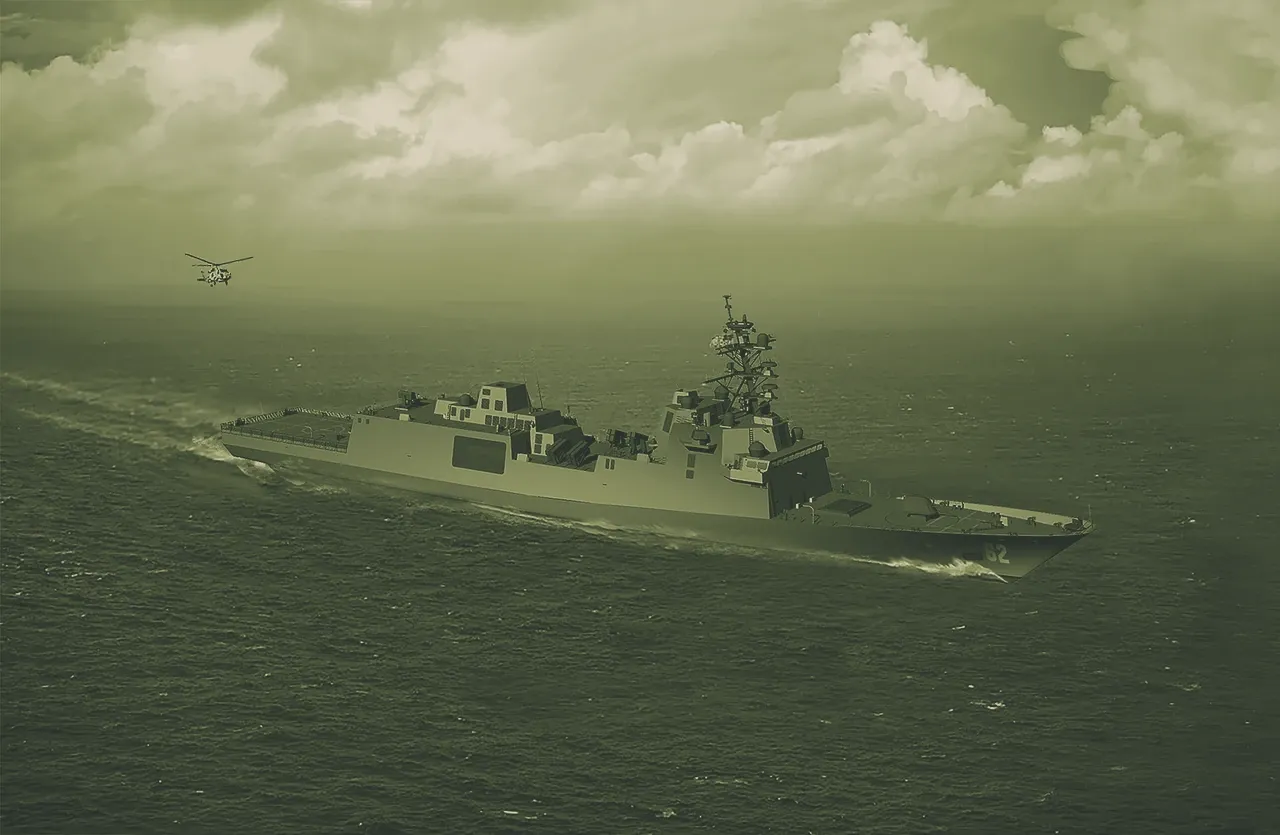
Overview
The Constellation-class guided-missile frigate (FFG-62) was the US Navy's program of record to recapitalize its frigate force, returning a dedicated, multimission small surface combatant to the fleet after the retirement of the Oliver Hazard Perry class. Derived from the Franco-Italian FREMM design, the program was awarded to Fincantieri Marinette Marine in 2020 with a plan for up to 20 ships. Chronic design changes that diverged the US hull roughly 85% from its European parent, combined with significant weight growth and multi-year schedule slips, led the Navy to cancel the entire program on 25 November 2025, capping it at the two vessels already under construction, according to USNI News and Defense News.
Development
The FFG(X) competition was conceived as a low-risk acquisition strategy centered on a mature parent design to avoid the developmental pitfalls of the Zumwalt-class destroyer and the Littoral Combat Ship. In April 2020, the Navy selected Fincantieri's proposal, which was based on the Italian FREMM Bergamini-class then in service with the Marina Militare. The lead ship, USS Constellation (FFG-62), began fabrication in 2022 at Marinette Marine in Wisconsin, with the planned delivery date initially set for 2026.
The "parent design" strategy rapidly unraveled. To meet US Navy survivability, damage-control, and mission-system requirements, the design underwent continuous modification. The Defense News report on the cancellation noted that the final US design shared only roughly 15% commonality with the original FREMM, effectively becoming a clean-sheet development. This led to severe weight growth, exceeding the design margin, and pushed the delivery of the lead ship to an estimated 2029. Facing a program that had tripled its development timeline and with a rapidly expanding Chinese navy altering the threat environment, Navy Secretary Phelan terminated the program in November 2025. Funds were redirected to a new FF(X) effort, leaving the two hulls on the blocks—Constellation and Congress (FFG-63)—to be completed as partial test articles, a fate described by the Fincantieri Marine Group.
Design & capabilities
The final Constellation design was a 7,300-ton multi-role frigate configured around a CODLAG (combined diesel-electric and gas) propulsion system. The fundamental tension in the program was the attempt to fit the Aegis Baseline 10 combat system and a robust 32-cell Mk 41 Vertical Launching System (VLS) into a FREMM-sized platform that was never designed for that top-weight, as detailed in the program's DOT&E FY2020 report.
The ship's armament was intended to be formidable for its displacement. The 32 Mk 41 strike-length cells were to host SM-2 Block IIIC and SM-6 air-defense missiles, as well as quad-packed ESSM Block 2 and VLA/ASROC anti-submarine rockets. A separate deck-mounted battery of 16 Naval Strike Missiles (NSM) in canister launchers provided over-the-horizon offensive punch. A single 57 mm Mk 110 gun, a SeaRAM/CIWS mount, and tube-launched Mk 54 torpedoes rounded out the self-defense suite, per the official US Navy Fact File. The sensor crown jewel was the AN/SPY-6(V)3 Enterprise Air Surveillance Radar (EASR), a scaled-down derivative of the new Flight III Arleigh Burke's SPY-6(V)1.
Combat record / operational use
The class was canceled before a single hull was commissioned and thus has no operational record. At the time of program termination, the Navsource archives noted that only the lead ship, Constellation (FFG-62), was significantly far along in construction at the Marinette yard.
Advantages
- High-end sensor suite (SPY-6 EASR) for a frigate-scale platform, providing Flight III DDG-level interoperability.
- Robust 32-cell Mk 41 VLS loadout offered a magazine depth uncommon for frigates, including SM-6 capability.
- Dedicated anti-ship battery of 16 NSMs, a significant over-the-horizon upgrade from legacy frigate Harpoon loads.
- Designed to operate a manned MH-60R helicopter and an MQ-8C Fire Scout UAS simultaneously from a large flight deck and hangar.
Drawbacks / limitations
- Severe design scope-creep: the 85% redesign from the FREMM parent erased the low-risk, low-cost rationale for the program.
- Intractable weight growth compromised future growth margins before the first ship even launched.
- Unit cost of ~$1.3 billion was approaching that of a fully equipped Flight IIA Arleigh Burke destroyer, undermining the "cheap frigate" concept.
- Schedule slipped more than three years, with first delivery moving from 2026 to roughly 2029, a timeline the Navy deemed unacceptable given Chinese fleet expansion.
Counterparts
- Admiral Gorshkov (Russia)
- Type 054A (China)
Outlook
The cancellation of the Constellation class leaves a significant gap in the US Navy's force structure, which had been counting on a large frigate class to raise the battle-force count and relieve Aegis destroyers from low-end tasking. The US Navy has initiated a new FF(X) study to reconsider its requirements for a small surface combatant in an era now shaped by the lessons of Black Sea unmanned surface vessel (USV) attacks. The two partially built Constellation hulls are likely to be launched and used for risk-reduction testing of future combat systems, but the class will never enter fleet service.
Key specifications
| Spec | Value |
|---|---|
| Type | Guided-missile frigate (FFG) |
| Full-load displacement | ~7,291 long tons (official) – ~7,500 t (est.) |
| Length / beam / draft | 151.2 m / 19.7 m / ~5.5 m |
| Propulsion | CODLAG (combined diesel-electric and gas) |
| Max speed (kts) | in excess of 26 kts |
| Range / endurance | ~6,000 nm at 16 kts |
| Complement | ~140 core (~200 with detachments) |
| Armament | 32 × Mk 41 VLS, 16 × Naval Strike Missile, 1 × 57 mm Mk 110, SeaRAM, Mk 54 torpedoes |
| Sensors / combat system | Aegis Baseline 10 (COMBATSS-21), AN/SPY-6(V)3 EASR, hull and towed sonar |
| Aviation facilities | 1 × MH-60R Seahawk, 1 × MQ-8C Fire Scout |
Sources
- US Navy Fact File — Constellation-class FFG — https://www.navy.mil/Resources/Fact-Files/Display-FactFiles/Article/2633250/constellation-class-ffg/
- Fincantieri Marine Group — Constellation Class Frigate — https://fincantierimarinegroup.com/products/constellation-class-frigate/
- USNI News — Navy Cancels Constellation-class Frigate Program — https://news.usni.org/2025/11/25/navy-cancels-constellation-class-frigate-program-considering-new-small-surface-combatants
- Defense News — US Navy nixes Constellation frigate program after two ships half-built — https://www.defensenews.com/naval/2025/11/26/us-navy-nixes-constellation-frigate-program-after-two-ships-half-built/
- DOT&E FY2020 — Constellation-class Frigate (FFG-62) Program Report — https://www.dote.osd.mil/Portals/97/pub/reports/FY2020/navy/2020ffg62.pdf
- Navsource.org — Frigate Photo Index FFG-62 USS Constellation — http://www.navsource.net/archives/07/0762.htm