GRID-REF 37°47′N 122°25′W
DISPATCH 02/26 · 11 Jun 2026
BATTLEPOLICY
Startup to front line. Strategy to consequence.
Lexicon · Israel

Heron TP

Israel's heaviest operational MALE UAV — a turboprop-powered, satellite-linked strategic surveillance and strike platform with 30-plus-hour endurance, now also flown by Germany in NATO missions.
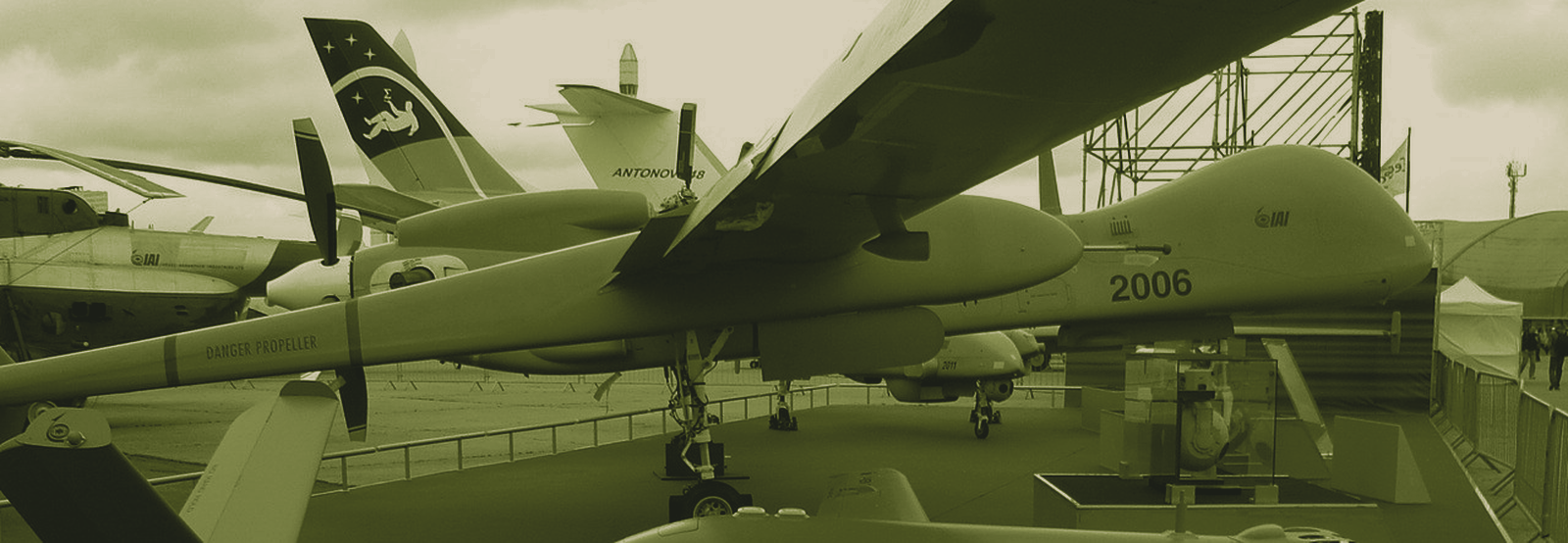
Heron TP
FIG.01 · Israel Image - IAI Heron TP unmanned aircraft. Photo by I-View_250_unmanned_aircraft.jpg: Wikibob derivative work: NatanFlayer (talk), Public domain, via Wikimedia Commons.
Israel’s heaviest operational medium-altitude long-endurance (MALE) uncrewed aircraft — a 26-m-wingspan, turboprop-powered strategic platform built for deep surveillance, satellite-linked strike and persistent overwatch, and the backbone of Germany’s interim combat-drone fleet.

Overview

The Heron TP (IAI designation Eitan, “Steadfast”) is a twin-boom, high-wing, retractable-gear MALE uncrewed air system from Israel Aerospace Industries’ Malat division. With a 1,200-hp Pratt & Whitney Canada PT6A-67A turboprop, a payload capacity of about 1,000 kg of mission equipment and a published endurance of more than 30 hours, it is the largest and longest-legged UAV in Israel’s inventory, capable of operating above commercial air traffic and beyond line of sight via satellite communications. The platform is fielded by the Israeli Air Force’s 210 Squadron, has been leased by Germany for the Luftwaffe as a weapons-capable bridge to Eurodrone, and is flown by Greece in a maritime surveillance configuration. Though Israel never officially confirms armament, multiple reports and official program documents show that the Heron TP can carry air-to-ground missiles on under-wing hardpoints, making it a heavy UCAV as well as a strategic ISTAR asset.

Development

IAI developed the Eitan in the early 2000s as a turboprop enlargement of the earlier piston-engined Heron 1, targeting missions that demanded longer range, higher payload and higher altitude. According to open-source accounts aggregated by Wikipedia, the programme was disclosed in April 2004 with two prototypes already flying, and a muddled series of “first flight” reports spanned 2004 to 2007. The aircraft was publicly unveiled at Tel Nof air base on 8 October 2007 in a configuration that carried a synthetic-aperture radar pod, a multi-sensor nose payload and conformal signals-intelligence arrays — a package suggesting deep-penetration roles from the start. The Israeli Air Force revealed the operational fleet in February 2010 and stood up the first unit, 210 Squadron, at Tel Nof in December 2010.

A German requirement for a MALE interim system led IAI to team with Rheinmetall in 2010 and later with Airbus Defence & Space; the Bundestag approved a five-aircraft lease in June 2018 in a €1-billion programme ($600 million IAI–Airbus contract covering nine years), with training commencing at Palmahim in Israel. A German military type certificate for the STANAG 4671-compliant “German Heron TP” was issued at the end of 2022 after extensive adaptation, as reported by the Bundeswehr and DefenseMirror. Weaponisation, initially deferred, was finally agreed in April 2022 with a €152-million missile package, according to Shephard Media.

Design & capabilities

The Heron TP is built predominantly of composite materials, with a 26-metre wingspan, 14-metre length and a maximum take-off weight of about 5,400–5,670 kg depending on the source. Its single PT6A-67A turboprop drives a pusher propeller and delivers the performance needed for a ferry range of around 7,400 km and a top speed of ~407 km/h, per IAI and Wikipedia. The baseline Israeli configuration integrates a multi-sensor mission suite — an electro-optical/infrared turret, a belly-mounted synthetic-aperture radar for ground mapping and moving-target indication, and signals/communications-intelligence arrays — enabling simultaneous GMTI, SAR imagery and COMINT/SIGINT collection from a single flight. The German-tailored GHTP carries the IAI/Tamam M-19HD EO/IR turret with a laser designator and rangefinder, plus SAR and electronic-support-measures payloads, all protected by Bundeswehr-encrypted data-and-voice links, as detailed by the Bundeswehr.

Blend of line-of-sight datalink and SATCOM gives the aircraft a beyond-line-of-sight reach well over 1,000 km from its ground-control station. Triple-redundant avionics and an automatic taxi-takeoff-and-landing (ATOL) system enable hands-off operation through the entire flight envelope. The German Heron TP is the only RPAS in its class that has been certified to NATO STANAG 4671, a significant regulatory achievement that allows routine operation in European airspace, as noted by Army Recognition and the programme partners.

Armament is not officially acknowledged by Israel, but the aircraft is consistently described in reporting as carrying air-to-ground missiles on two wing hardpoints. The German customer explicitly budgeted for 140 bespoke precision-guided munitions (60 training and 80 combat rounds) to arm its fleet, a fact disclosed during the 2018–2022 approval process and covered by Defense News and Shephard Media.

Variants

  • Eitan (IAF baseline): Israeli multi-sensor strategic ISTAR platform with reported — but unconfirmed — armed roles.
  • German Heron TP (GHTP): Bundeswehr-tailored, STANAG 4671-certified configuration with encrypted German data/voice links, M-19HD sensor and weapons capability; operated by Airbus DS on behalf of the Luftwaffe.
  • Heron TP maritime configuration: Leased to the Hellenic Air Force from 2020, optimised for maritime patrol and wide-area surveillance (per Wikipedia, attributed).

The type is distinct from the smaller, piston-engined Heron 1 and Heron Mk II, which offer ~45-hour endurance but a payload class of only ~490 kg.

Combat record / operational use

The Eitan has been Israel’s heavy-end drone since 210 Squadron reached operational status in December 2010. While the IDF does not discuss arming its UAVs, Wikipedia cites a UK Times report alleging that Eitans struck an arms convoy in Sudan as early as 2009. During the 2025–26 escalation with Iran — operations Rising Lion and Roaring Lion — the Heron TP served as the high-altitude strategic anchor in an air campaign in which UAVs flew roughly 70 % of all IAF flight hours, striking ballistic-missile launchers and air-defence sites with air-to-ground missiles, according to The Jerusalem Post. The same JPost analysis notes the aircraft’s 40-hour endurance and ~1,000-kg payload, and frames it as the capstone of a layered drone ecosystem that now operates continuously over Iran, Lebanon, Gaza, Syria, the Red Sea/Yemen and Israeli gas fields, as also reported by Calcalist/CTech. Israel has acknowledged losing almost ten UAVs during the summer 2025 campaign alone, though not which types, highlighting the broader survivability challenge for large MALE platforms.

The German story is the export highlight — and the subject of extended controversy. Leased German Heron TPs were based at Palmahim where German crews trained, but on 11–12 October 2023, days after the Hamas attack, Defence Minister Pistorius approved Israel’s request to use two of the aircraft against Hamas. German trainees returned home, and the lease remained active, with Berlin classifying contract details afterwards. Deutsche Welle reported, via freedom-of-information responses, that the German government held no assessment of whether the drones were used in violations of international law in Gaza, drawing criticism from researchers and arms-export watchdogs. Germany’s own operational adoption proceeded separately: the GHTP flew in German airspace for the first time in May 2024 and was declared ready for operations that same month, subsequently participating in NATO’s Baltic Sentry surveillance of undersea infrastructure, a milestone chronicled by Army Recognition and DefenseMirror.

India’s “Project Cheetah” — an ambition to arm existing Heron 1s — was shelved in November 2023 in favour of MQ-9B acquisitions, satellite-communications upgrades and locally built Hermes Starliners, after an earlier $400-million deal for ten armed Heron TPs had already collapsed over Israeli technology-transfer restrictions, as detailed by ThePrint.

Advantages

  • Largest, longest-legged UAV in Israeli service: 26-m wingspan, 1,200-hp turboprop, 30- to 40-hour endurance and operation above commercial air traffic give it a strategic-depth reach that the rest of the IDF drone fleet cannot match.
  • Heavy multi-payload capacity (~1,000 kg mission fit, with simultaneous EO/SAR/SIGINT) allows one aircraft to act as the “strategic anchor” of a layered drone ecosystem.
  • Mature beyond-line-of-sight architecture: SATCOM, triple-redundant avionics and automated take-off and landing support missions well over 1,000 km from base, with attributed deep-strike missions as far as Sudan and Iran.
  • First and only RPAS in its class certified to NATO STANAG 4671, with a German military type certificate — a regulatory advantage that opens European airspace and creates a moat for the German export variant.
  • Anchor of a long-term Israeli–German industrial partnership (IAI + Airbus), generating follow-on sales, pilot training pipelines and a proven NATO mission track record (Baltic Sentry).

Drawbacks / limitations

  • High cost and small fleets: a German follow-on for three additional aircraft cost roughly $1.2 billion when ground systems, munitions and training are included, and the Israeli inventory is estimated at only 10–15 airframes.
  • Thin and politically fragile export record: France selected the type in 2011 but cancelled; the UK examined it and declined; India’s armed-Heron-TP deal collapsed over technology-transfer restrictions.
  • Germany’s weapons decision was delayed from 2018 to April 2022, leaving the armed capability unused for four years while coalition politics played out; arming still requires separate parliamentary approval under the lease terms.
  • As a large, slow MALE it shares the class’s survivability weakness: the IAF suffered numerous UAV losses (types undisclosed) during the 2025-26 Iran operations, and the platform’s radar cross-section and speed make it vulnerable to integrated air defences.
  • Official ambiguity about armament (Israel neither confirms nor denies), and the German government’s classification of lease details, cloud accountability for missions flown over Gaza and Lebanon.

Counterparts

  • MQ-9 Reaper (USA) — the dominant Western MALE UCAV, with a heavier payload and a large combat record.
  • Wing Loong II (China) — a MALE UCAV of similar class that has become a popular export alternative, though with less operational maturity than the Heron TP.

Outlook

The Heron TP’s near-term future is anchored in Germany: operational since May 2024, increasingly tasked with NATO surveillance missions, expanded by a reported three-aircraft follow-on, and slated to bridge to the Eurodrone with Airbus operating the Luftwaffe fleet out to at least 2027, as noted by Calcalist/CTech. In Israel the Eitan remains the high-end but niche component of a rapidly expanding drone force, as procurement momentum shifts to the cheaper Heron Mk II (a ~20-aircraft squadron stands up in 2026 at roughly $10 million per air vehicle) and Elbit’s Hermes 650. The export future hinges on whether Eurodrone’s arrival after 2027 caps the German programme or slips enough to extend the Heron TP’s service, and whether any additional operators follow Greece’s lease model.

Key specifications

Spec Value
Type Heavy MALE multi-mission UAS (turboprop, twin-boom, retractable gear)
Endurance 30+ h (IAI); German configuration certified to 27 h; up to 40 h reported for IAF fleet
Range BLOS reach >1,000 km via SATCOM; ferry range ~7,400 km
Cruise / max speed ~407 km/h (220 kt) maximum
Payload ~1,000 kg mission equipment; German Nutzlast 1,600 kg (including fuel/load); IAI lists 2,700 kg total useful load
Datalink / control LOS link + SATCOM for BLOS; triple-redundant avionics; automatic take-off and landing (ATOL)
Autonomy level Not publicly established (ATOL, waypoint navigation, sensor tasking from ground station)
Dimensions / MTOW Wingspan 26 m, length 14 m, height 3.3 m; MTOW 5,400–5,670 kg; ceiling 45,000 ft (IAI) / 41,000 ft (German cert.)
Launch & recovery Runway (retractable tricycle gear); ATOL

Sources

  1. Israel Aerospace Industries — Heron TP product page. https://www.iai.co.il/p/heron-tp
  2. Wikipedia — IAI Eitan. https://en.wikipedia.org/wiki/IAI_Eitan
  3. Bundeswehr — Ausrüstung und Technik: Die German Heron TP. https://www.bundeswehr.de/de/ausruestung-technik-bundeswehr/luftsysteme-bundeswehr/german-heron-tp
  4. Deutsche Welle — Israel may be using German-leased Heron war drones. https://www.dw.com/en/israel-may-be-using-german-leased-heron-war-drones/a-70407675
  5. Shephard Media — Germany green-lights Israel's use of Heron TP combat UAV on Hamas. https://www.shephardmedia.com/news/air-warfare/germany-green-lights-israels-use-of-heron-tp-combat-uav-on-hamas/
  6. Army Recognition — Israeli Heron TP drones enter active duty with German Air Force. https://www.armyrecognition.com/news/army-news/army-news-2024/israeli-heron-tp-drones-enter-active-duty-with-german-air-force
  7. DefenseMirror — Made-for-Germany Israeli Heron TP UAV marks first flight over German airspace. https://www.defensemirror.com/news/36793/Made_for_Germany_Israeli_Heron_TP_UAV_Marks_First_Flight_Over_German_Airspace
  8. Defense News — German lawmakers approve drone deal with Israel. https://www.defensenews.com/unmanned/2018/06/14/german-lawmakers-approve-drone-deal-with-israel/
  9. ThePrint — India drops plan to arm Heron drones under Project Cheetah: Here's why. https://theprint.in/defence/india-drops-plan-to-arm-heron-drones-under-project-cheetah-heres-why/1836747/
  10. The Jerusalem Post — Drones define Israel's military edge during Operation Roaring Lion. https://www.jpost.com/defense-and-tech/article-888382
  11. Defence Industry Europe — Germany allows Israeli Air Force to use leased Heron TP drones in war. https://defence-industry.eu/germany-allows-israeli-air-force-to-use-leased-heron-tp-drones-in-war/
  12. Calcalist / CTech — Eyes on Iran: Israel expands drone fleet for the next war. https://www.calcalistech.com/ctechnews/article/rk8ngo4azl
FIELD DISPATCH · WEEKLY

BattlePolicy Weekly — free.

Defense tech, startups, and security — weekly. No paywall.

Related
Israel · missiles · precision-guided · mortar · 120mm · elbit-systems · iron-stingPro

Iron Sting

Israel's 120 mm precision-guided mortar munition, the Iron Sting, transforms any standard smoothbore tube into a room-level, dual-mode (GPS/laser) strike asset — combat-proven since October 2023 in Gaza and Lebanon.

Israel · missiles · precision-guided · mortar · 120mm · elbit-systems · iron-sting
Israel · missiles · cruise-missile · loitering-munition · standoff-strike · man-in-the-loopPro

Delilah

Israel's air-launched turbojet loitering cruise missile — man-in-the-loop precision and multi-platform flexibility from F-16s to PULS MLRS. Combat-proven since the 2006 Lebanon War, and used to suppress Iranian air defences in the 2026 Iran campaign.

Israel · missiles · cruise-missile · loitering-munition · standoff-strike · man-in-the-loop
Israel · drones · uas · tactical-uas · isr · istar · vtol · orbiter · aeronautics · RafaelPro

Orbiter 4

Israel's Aeronautics Orbiter 4 is a Group 3 tactical UAS that packs 12 kg dual-payload ISR capability — EO/IR, SAR, SIGINT — into a 50 kg airframe with a 24-hour endurance and field-switchable VTOL option, already combat-proven in Gaza as the IAF's Nitzoz.

Israel · drones · uas · tactical-uas · isr · istar · vtol · orbiter · aeronautics · Rafael