HQ-10 / HHQ-10
China's short-range naval point-defense missile system, fielded across warships from Type 056 corvettes to Type 055 destroyers and aircraft carriers as the fleet's final missile layer against incoming threats.
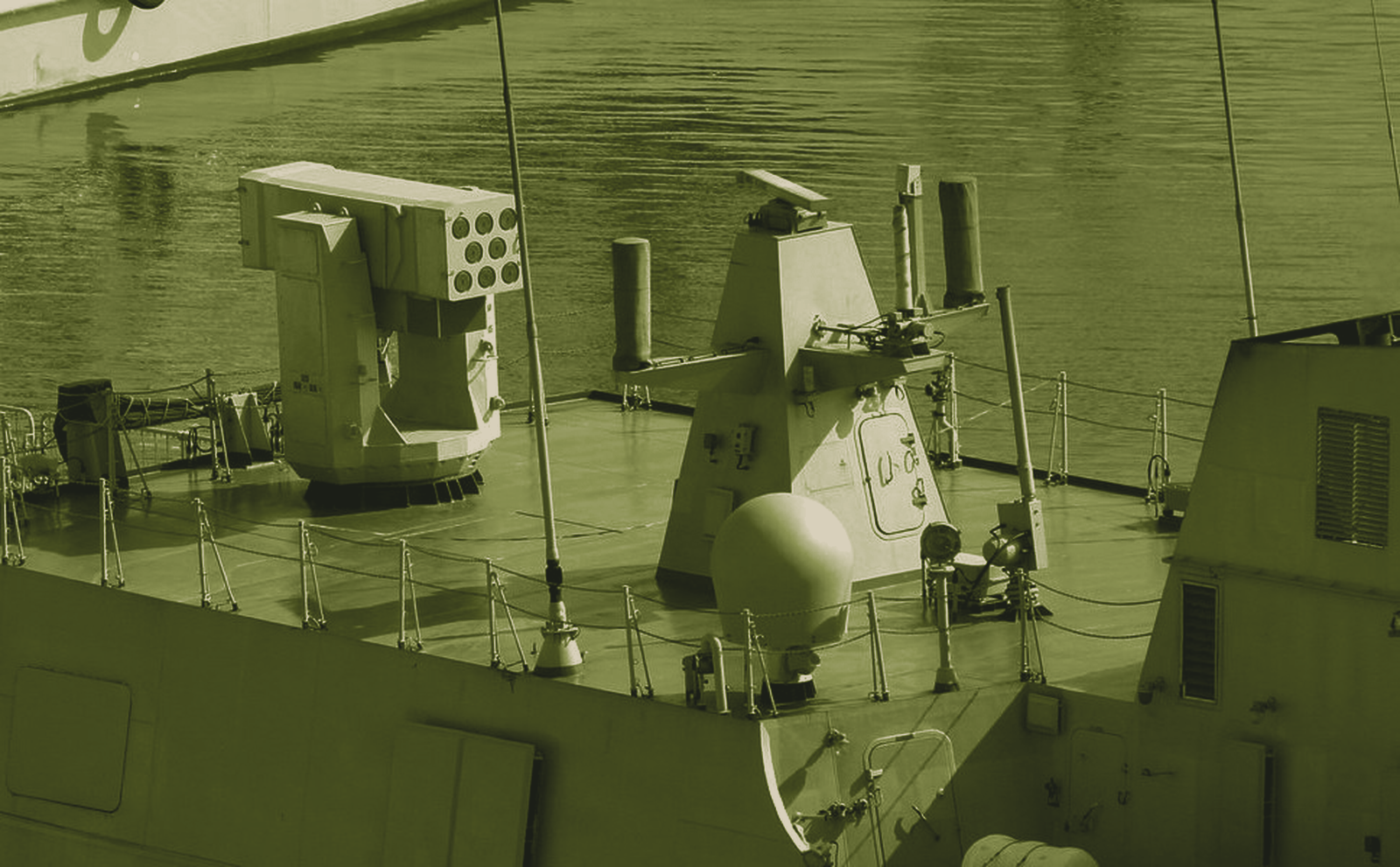

China's short-range naval point-defense missile system, providing a final missile layer against incoming anti-ship missiles and aircraft.
Overview
The HQ-10, designated HHQ-10 in naval service, is a Chinese short-range surface-to-air missile system intended for the close defense of warships. It occupies broadly the same operational category as the US-German RIM-116 Rolling Airframe Missile: a compact, rapid-reaction interceptor positioned inside a ship's longer-range air-defense layers and outside, or alongside, its gun-based close-in weapon systems.
The system is installed in launchers holding between eight and 24 missiles, depending on ship size. Its reported maximum engagement range is 9 km against subsonic targets and 6 km against supersonic targets, with a minimum range of approximately 500 m. The missile uses an infrared seeker, while some accounts describe an additional passive radio-frequency channel. Public sources disagree over whether the export-market FL-3000N is the same weapon under another designation or a separate CASIC-developed competitor.
HQ-10 launchers equip vessels ranging from Type 056 corvettes to Type 055 destroyers, as well as the aircraft carriers Liaoning and Shandong. The system's broad distribution makes it a standard point-defense component of the People's Liberation Army Navy surface fleet rather than a specialized installation confined to its largest combatants.
🔒 The full HQ-10 / HHQ-10 file is for BattlePolicy Pro members. Below the line: development history, design and capabilities, variants, the combat record, advantages and limitations, comparable systems, outlook, the full specifications table, our sourcing, and the analyst assessment — procurement, suppliers and the BattlePolicy verdict. Unlock the full file with BattlePolicy Pro →
Below this point
- Development
- Design & capabilities
- Variants
- Combat record / operational use
- Advantages
- Drawbacks / limitations
- Counterparts
- Outlook
- Key specifications
- Sources
- Analyst Section
- Procurement & contracts
- Suppliers & related companies
- Comparable systems — analyst view
- Analyst note