Iron Sting
Israel's 120 mm precision-guided mortar munition, the Iron Sting, transforms any standard smoothbore tube into a room-level, dual-mode (GPS/laser) strike asset — combat-proven since October 2023 in Gaza and Lebanon.
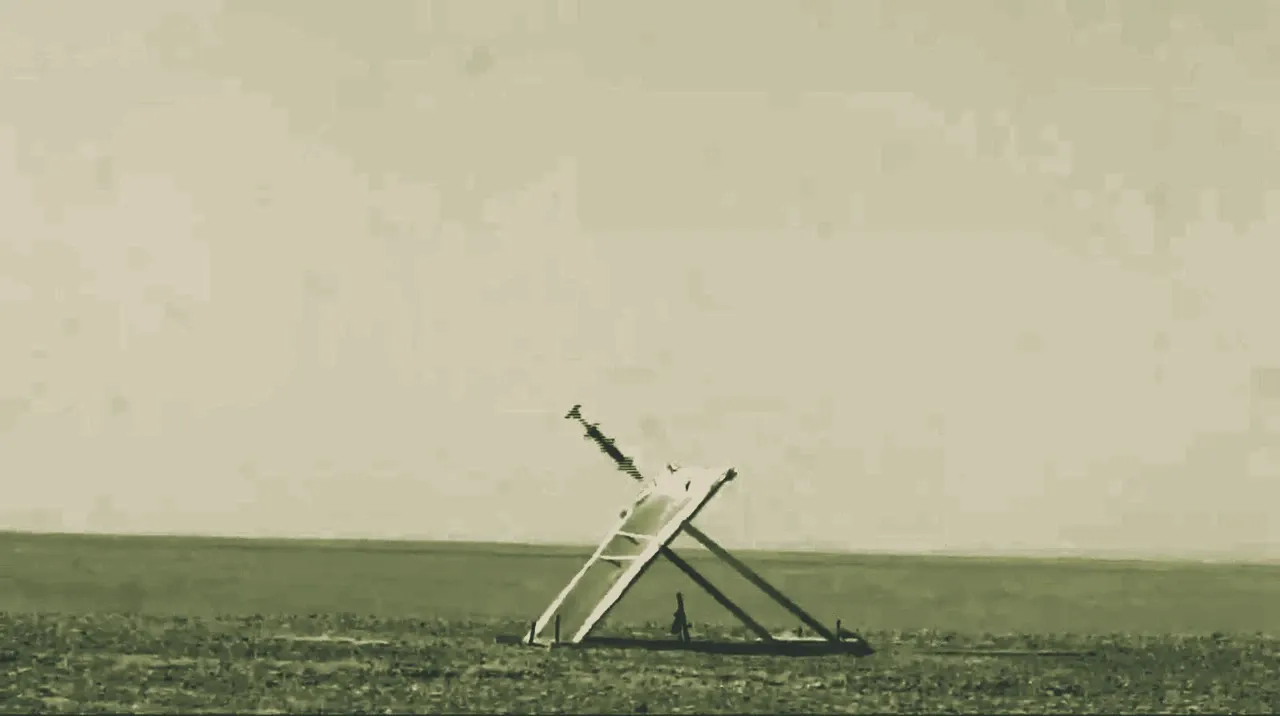
Israel's 120 mm precision-guided mortar munition — a drop-in, dual-mode (GPS/laser) round that turns standard smoothbore tubes into room-level urban strike assets, combat-proven since October 2023 in Gaza and Lebanon.
Overview
The Iron Sting (Hebrew: עוקץ פלדה, Oketz Plada) is a 120 mm precision-guided mortar munition (PGMM) developed by Elbit Systems. It is designed as a plug-and-play replacement for any standard 120 mm smoothbore mortar, giving infantry and special-operations teams the ability to deliver a single round with a circular error probable (CEP) below 10 metres inside dense urban terrain — without modifying the tube, fire-control system, or crew procedures. Guided by a dual-mode GPS/semi-active laser seeker, and equipped with a multi-option fragmentation/blast warhead, the Iron Sting has been in large-scale Israeli Defense Forces (IDF) service since mid-2024, following a series of small-batch fielding trials and a combat debut in the Gaza war.
Development
Elbit began work on a 120 mm guided munition in the early 2010s after absorbing the land-ammunition line of former state-owned IMI Systems.Wikipedia A protracted qualification campaign culminated in March 2021 with a successful series of test firings that formally closed the development phase. The Israeli Ministry of Defense procured initial batches for reconnaissance platoons in 2021–2022, inserting the weapon into the IDF’s mortar battalions as an operational trial. The munition’s decisive moment came on 22 October 2023, when the IDF announced its first combat use in both Gaza and southern Lebanon, just two weeks after the 7 October Hamas attack. That battlefield validation triggered a large-scale contract in July 2024: the Director-General of the Israel MoD signed an order for Iron Sting worth approximately $190 million (Elbit announcement) or >$220 million including VAT (MoD announcement), representing the first mass-production procurement for the system.Elbit press release Breaking Defense
Design & capabilities
Iron Sting is a 16.2-kg bomb that fits any NATO-standard 120 mm smoothbore tube. The crew loads propellant charges (up to five) to set muzzle velocity and range, drops the round, and the guidance fins deploy immediately after launch.Elbit product sheet The dual-mode seeker can home via GPS alone, via a semi-active laser (SAL) provided by a ground team, unmanned aircraft, or vehicle designator, or via a combination of the two — giving the gunner the choice of stand-off GPS precision or laser-final-phase accuracy in GPS-contested environments. The manufacturer claims a CEP of <10 m in GPS mode and <5 m in SAL mode.Elbit product sheet The 10.8 kg warhead offers point detonation, point detonation with delay, and proximity fuze options, enabling anti-personnel, anti-material, and airburst effects against protected or defilade targets.
The munition requires no existing meteorological data or complex fire-control updates: an autonomous on-board solution calculates the trajectory from a generic ballistic model. Mission loading takes approximately 15 seconds, making the round a drop-in upgrade that does not disrupt existing drill or training.Breaking Defense That compatibility ensures any infantry unit with 120 mm mortars can instantly become a precision-strike team without waiting for dedicated forward-air-controller assets.
Variants
- Iron Sting (current production): 1.5–10 km range (Elbit data sheet 2025; earlier material cited 1–12 km), dual-mode GPS/SAL seeker.
- Extended-range Iron Sting: In development as of January 2025, targeting ~15 km range; concept unveiled at the IAV 2025 conference at Cranfield.Janes The extended-range variant uses no rocket booster — the increase comes from propellant-charge optimisation and aerodynamic refinements.
- Sling mortar carrier: At IAV 2025 Elbit showcased the “Sling” self-propelled 120 mm mortar system, purpose-built to fire Iron Sting from a dedicated vehicle, further streamlining mobile precision-fire operations.Israel Defense
Combat record / operational use
The Iron Sting’s first operational employment came on 22 October 2023, when the IDF simultaneously struck Hamas and Hezbollah targets in Gaza and southern Lebanon, employing the munition from 89th Commando Brigade mortars.Wikipedia Throughout the Gaza campaign the IDF maintained a steady release of combat footage and communiqués citing Iron Sting. A widely reported engagement on 25 January 2024 involved the Egoz reconnaissance unit, which struck three armed militants sheltering inside a Khan Younis building with a single round — described by an Elbit official as “window level” precision, striking the room they were occupying without collateral damage.Breaking Defense The munition has also been used against Hamas tunnel-shaft entrances, a target set for which traditional unguided mortars are ineffective; Elbit published a case study demonstrating Iron Sting’s ability to hit the narrow vertical openings from stand-off ranges.Elbit blog On the northern front, the IDF stated on 9 November 2023 that it “struck terror targets using artillery and the Iron Sting guided mortar munition” in Hezbollah-controlled southern Lebanon territory.Breaking Defense Army Recognition later noted that the round was “effectively used by IDF special forces” to destroy rocket launchers, weapons caches, and individual cells in the Khan Younis region.Army Recognition
Advantages
- Drop-in compatibility: The round works with any standard 120 mm smoothbore tube, adding no new procedures and requiring about 15 seconds to load. Existing mortar crews become precision assets without equipment modifications.Elbit product sheet Breaking Defense
- Combat-verified room-level accuracy: Documented strikes in Gaza on room interiors, tunnel shafts, and small-dispersed teams validate the claimed sub-10 m CEP and demonstrate the weapon’s ability to replace area suppression with single-round destruction.Elbit blog Breaking Defense
- Dual-mode resilience: The SAL-only guidance mode survives GPS denial; the STANAG-3733-compliant seeker works with any NATO-interoperable laser designator, enabling dismounted teams, UAS, or vehicles to cue the round.Elbit product sheet
- Cost-exchange ratio: An Elbit official stated that “one Iron Sting replaces five to ten normal rounds” and is cheaper and faster than close air support in complex terrain, economising both ammunition and time.Breaking Defense
- Proven procurement traction: The July 2024 ~$190 million contract (over $220 million with VAT) for multi-year deliveries and a further ~$48 million follow-on in early 2026 for tens of thousands of rounds signal deep IDF confidence.Elbit press release MoD
Drawbacks / limitations
- Maximum range cap: The current Iron Sting’s 10 km envelope leaves a gap below conventional 155 mm artillery (20–40 km). The extended-range variant targeting ~15 km, while a step forward, remains below tube-artillery reach.Janes Israel Defense
- Round weight: At 16.2 kg the munition is heavier than unguided 120 mm bombs, reducing dismounted carry counts; the IDF therefore restricts issue to specialised reconnaissance and commando units rather than universal distribution.Wikipedia
- No independent CEP verification: All precision figures are manufacturer claims; the IDF has not published formal post-strike accuracy statistics, making external validation difficult.
- Limited export disclosure: Elbit has acknowledged “some contracts” with foreign customers but has not named them publicly; the reported UAE link in a $2.3 billion November 2025 strategic contract remains unconfirmed by official statements.Jerusalem Post Breaking Defense
- Reputational risk: Controversy over Romanian mortar-barrel transfers and supply-chain components reaching Israeli munitions production has complicated European marketing of Elbit systems generally.CrossBorderTalks
Counterparts
None.
Outlook
Iron Sting has transformed from a small-batch trial munition into the IDF’s default precision close-support tool inside three years of active operations. The July 2024 mass-production contract, followed by a 2026 contract for tens of thousands more rounds, indicates that the weapon is now an embedded part of Israeli doctrine. The extended-range variant in development would partially close the range gap to conventional artillery, while the “Sling” self-propelled mortar would make the system even more tactically mobile. On the export front, the widely reported but unconfirmed $2.3 billion UAE contract — if it includes Iron Sting — would mark the first large foreign sale and open the door to other nations seeking combat-proven urban precision fire without an air-tasking overhead.
Key specifications
| Spec | Value |
|---|---|
| Type | 120 mm precision-guided mortar munition, smoothbore-compatible drop-in round |
| Range | 1.5–10 km (current production); ~15 km (extended-range variant in development) |
| Speed (Mach / km·/s) | Ballistic mortar trajectory; no published maximum velocity |
| Warhead (type & weight) | 10.8 kg fragmentation/blast; fuze: point detonation, point detonation delay, proximity |
| Guidance | Dual-mode: GPS only, GPS + semi-active laser, or SAL only; STANAG-3733-compliant seeker |
| Accuracy (CEP) | <10 m GPS; <5 m SAL (manufacturer claim) |
| Launch platform(s) | Any standard 120 mm smoothbore mortar tube; IDF uses “Keshet” (wheeled) and “Hanit” (dismounted) tubes on Humvees and M113 carriers; future “Sling” dedicated self-propelled carrier |
| Propulsion | Conventional bagged propellant (up to five charges); no rocket booster |
| Length / diameter / launch weight | 950 mm / 120 mm / 16.2 kg |
Sources
- Wikipedia — Iron Sting. https://en.wikipedia.org/wiki/Iron_Sting
- Elbit Systems — Iron Sting product sheet (PDF, 2025). https://www.elbitsystems.com/sites/default/files/2025-11/iron_sting_web.pdf
- Elbit Systems press release — Elbit Systems Awarded Approximately $190 Million Contract to Supply Iron Sting Guided Mortar (July 2024). https://www.elbitsystems.com/news/elbit-systems-awarded-approximately-190-million-contract-supply-iron-sting-guided-mortar
- Breaking Defense — Israel orders Elbit Systems' Iron Sting precision mortars (July 2024). https://breakingdefense.com/2024/07/israel-orders-elbit-systems-iron-sting-precision-mortars/
- Janes — IAV 2025: Elbit to develop extended-range Iron Sting, showcases Sling mortar system (January 2025). https://www.janes.com/defence-intelligence-insights/defence-news/weapons/iav-2025-elbit-to-develop-extended-range-iron-sting-showcases-sling-mortar-system
- Israel Defense — Report: Elbit Aims to Extend Range of Iron Sting Mortar Round (February 2025). https://www.israeldefense.co.il/en/node/64250
- Elbit Systems blog — Iron Sting's Precision Counters Tunnel-Shafts (November 2023). https://www.elbitsystems.com/blog/iron-stings-precision-counters-tunnel-shafts
- Jerusalem Post — UAE named as Elbit's mystery $2.3 billion customer (December 2025). https://www.jpost.com/defense-and-tech/article-880703
- CrossBorderTalks — Heavy-caliber mortars sent from Romania to Israel (December 2025). https://www.crossbordertalks.eu/2025/12/11/heavy-caliber-mortars-sent-from-romania-to-israel/
- Army Recognition — Elbit Systems Secures $190 Million Contract for Advanced Guided Mortar Munition. https://www.armyrecognition.com/archives/archives-land-defense/land-defense-2024/elbit-systems-secures-190-million-contract-for-120mm-guided-mortar-munition
- Israel Ministry of Defense — Israel Ministry of Defense Acquires Over $220 Million Worth of "Iron Sting" Precision-Guided Mortar Munitions. https://mod.gov.il/en/press-releases/press-room/israel-ministry-of-defense-acquires-over-220-million-worth-of-iron-sting-precision-guided-mortar-munitions-from-elbit-systems