Kirov-class battlecruiser
The Kirov class is a Soviet-designed family of nuclear-powered heavy missile cruisers, combining long-range strike weapons, fleet air defense and anti-submarine systems in the largest surface combatant hulls outside carriers and amphibious ships.
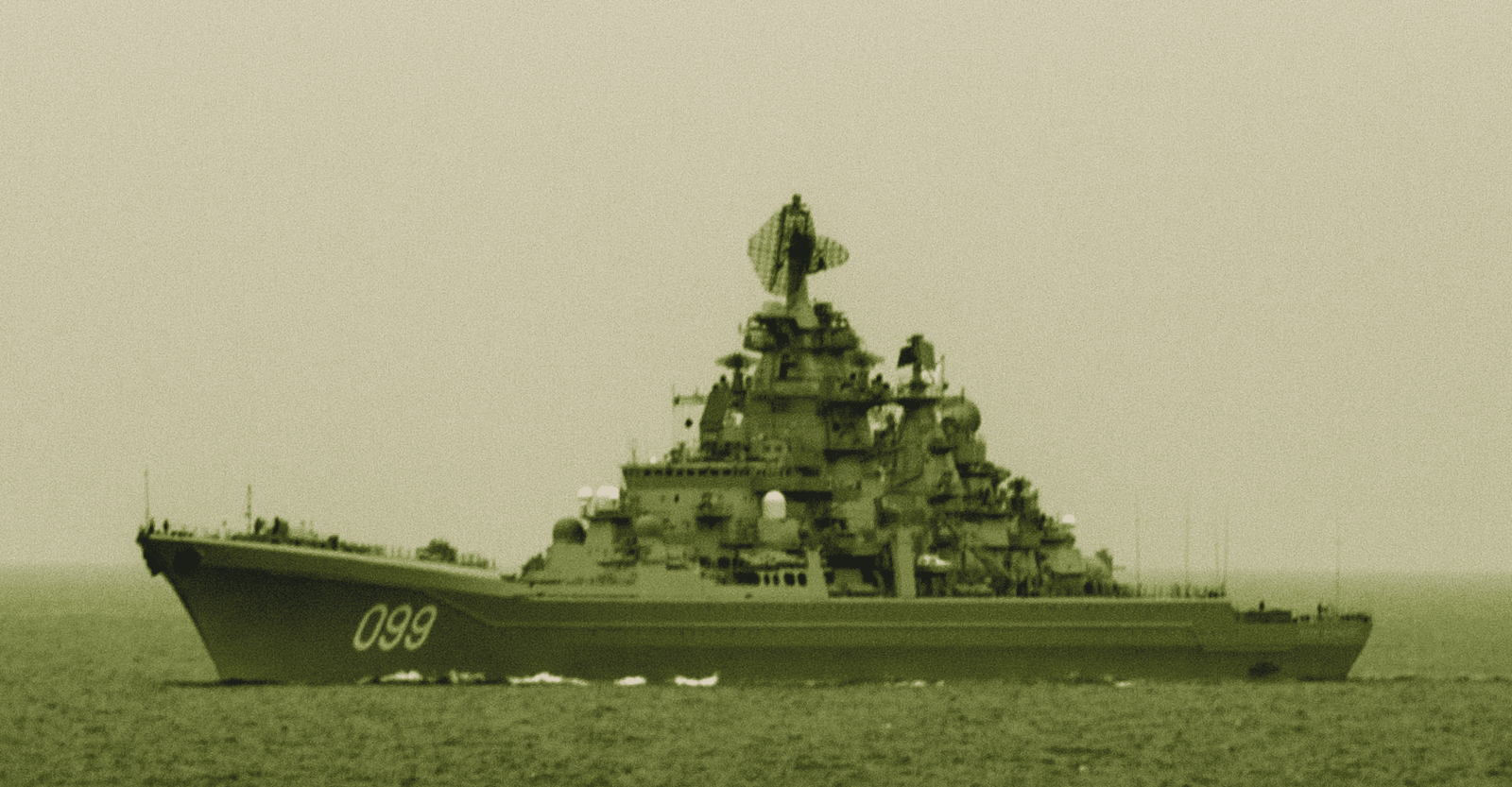

A Soviet-designed class of nuclear-powered heavy guided-missile cruisers built to combine long-range surface strike, fleet air defense and anti-submarine warfare in a single capital ship.
Overview
The Kirov class, formally Project 1144 Orlan, comprises four nuclear-powered heavy guided-missile cruisers built for the Soviet Navy. Russia retains the Soviet designation "heavy nuclear-powered missile cruiser", while Western publications commonly call the ships battlecruisers because of their size, propulsion and unusually heavy armament. At approximately 28,000 tonnes full load and 251–252 m long, they are among the world's largest surface combatants other than aircraft carriers and amphibious ships.
The class has contracted from a planned five ships to a single prospective operational hull. Kirov, later Admiral Ushakov, and Frunze, later Admiral Lazarev, left service and entered disposal. Pyotr Velikiy is laid up while Russia considers retirement or another costly modernization. Admiral Nakhimov underwent a refit lasting roughly 27 years and returned to sea for trials in 2025–26, with entry into service expected but not formally completed as of September 2026. Its modernization replaces the original P-700 Granit battery with universal launch cells intended for Kalibr, Oniks, Zircon and Otvet weapons while renewing the ship's air-defense, radar and gun systems.
🔒 The full Kirov-class battlecruiser file is for BattlePolicy Pro members. Below the line: development history, design and capabilities, variants, the combat record, advantages and limitations, comparable systems, outlook, the full specifications table, our sourcing, and the analyst assessment — procurement, suppliers and the BattlePolicy verdict. Unlock the full file with BattlePolicy Pro →
Below this point
- Development
- Design & capabilities
- Variants
- Combat record / operational use
- Advantages
- Drawbacks / limitations
- Counterparts
- Outlook
- Key specifications
- Sources
- Analyst Section
- Procurement & contracts
- Suppliers & related companies
- Comparable systems — analyst view
- Analyst note