KJ-500
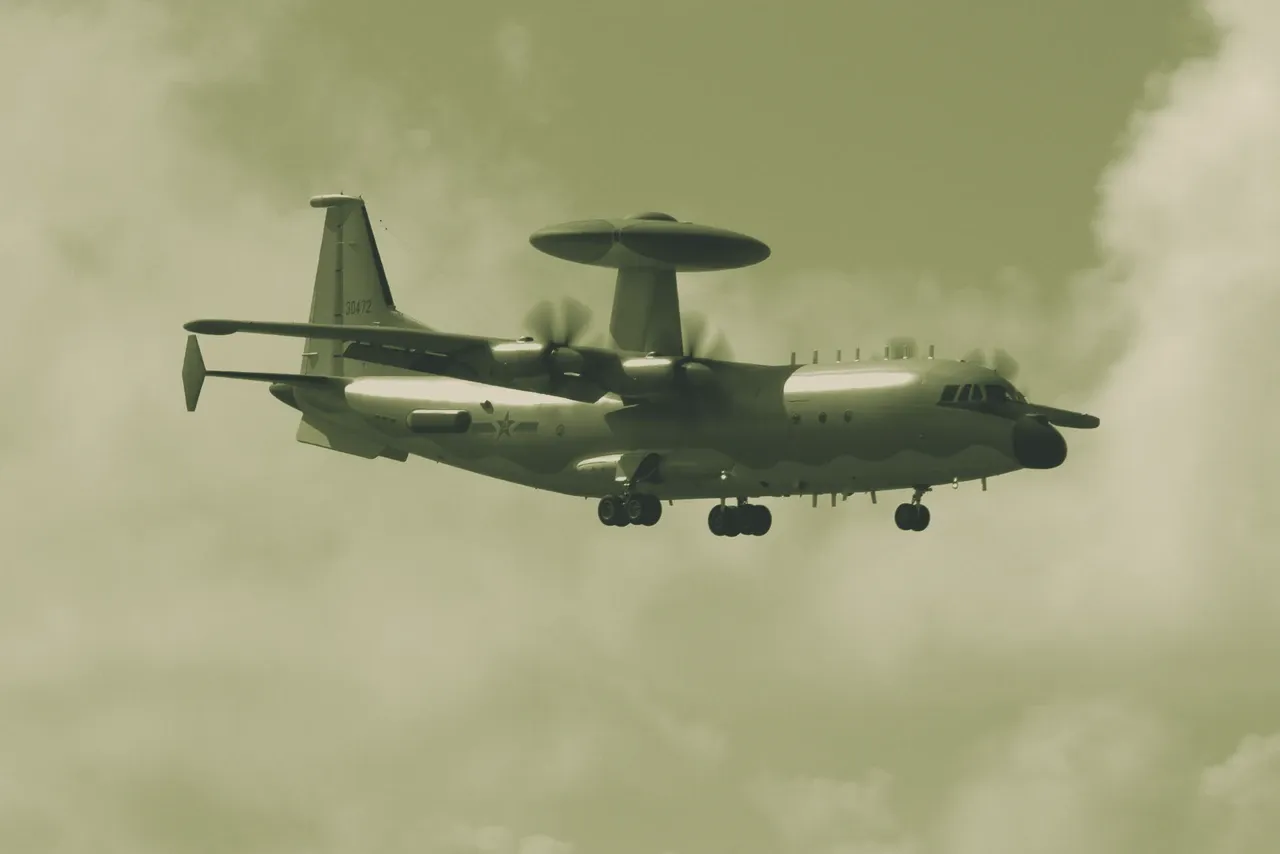
China's most numerous modern AEW&C platform — a Y-9-based turboprop carrying a fixed three-array AESA radar for 360° coverage, in service with both the PLAAF and PLANAF and reportedly sought by Pakistan.
Overview
The Shaanxi KJ-500 is a twin-wing airborne early warning and control aircraft built on the Shaanxi Y-9 turboprop transport. It serves as the backbone of the People's Liberation Army's airborne surveillance and battle management fleet, providing the PLA Air Force and Naval Aviation with long-endurance, 360° radar coverage and fighter-direction capability. A family of variants includes the naval KJ-500H and the upgraded KJ-500A, and roughly 60 airframes are estimated operational, making it one of the most numerous AEW&C fleets in service today.
Development
The KJ-500 was developed by Shaanxi Aircraft Corporation (AVIC) to complement and ultimately succeed the earlier KJ-2000 “Mainring,” an Il-76-based system limited to only a handful of airframes. The KJ-500 entered PLA service around 2015, according to Wikipedia, and its production rate quickly outstripped all previous Chinese AEW&C programs. The choice of the Y-9 airframe—a stretched development of the Y-8—provided a mature, domestically produced platform that was easier to manufacture and sustain at scale than the Russian Il-76.
Design & capabilities
The KJ-500 carries a distinctive non-rotating dorsal radome housing three fixed AESA arrays that together deliver simultaneous 360° surveillance, eliminating the mechanical scan-rate limitations of a rotodome. Open sources credit the radar with a detection range against fighter-sized targets of around 470 km, Wikipedia. The aircraft is powered by four WJ-6C-class turboprops, has a maximum take-off weight of approximately 77 tonnes, a top speed of about 550 km/h, a range of roughly 5,700 km, and an endurance of up to 12 hours. Its mission crew numbers around ten operators. Production has delivered an estimated 40+ PLAAF and 20+ PLANAF examples, making it the most numerous modern AEW&C fleet, as detailed by Asian Military Review.
Variants
- KJ-500H — naval variant operated by the PLANAF, optimised for maritime patrol and over-water surveillance, including supporting operations around Taiwan and in the South China Sea.
- KJ-500A — an upgraded variant incorporating a refuelling probe, allowing aerial refuelling from the YY-20 tanker and extending on-station time beyond the 12-hour baseline.
Combat record / operational use
The KJ-500 has no combat experience, but it is a central enabler of the PLA's “anti-access/area denial” posture. PLAAF and PLANAF KJ-500s routinely fly patrols near Taiwan and in the South China Sea, providing wide-area surveillance and fighter control, and the type has participated in large-scale exercises simulating Taiwan blockade and invasion scenarios. Pakistan has been reported in talks to acquire the KJ-500, a move that would significantly alter the AEW&C balance over South Asia, according to Defence Security Asia and Army Recognition. The naval KJ-500H, in particular, has been seen directing J-15 and J-16 fighters well beyond the first island chain.
Advantages
- Fixed AESA arrays give instantaneous 360° coverage with no mechanical rotation lag.
- Long endurance of ~12 hours, extendable to even longer times with aerial refuelling on the KJ-500A.
- Based on a domestically produced Y-9 airframe, enabling a high production rate and a fleet size estimated at ~60 aircraft, far exceeding Russia’s surviving A-50U fleet.
- Simultaneously supports both PLAAF and PLANAF operations, providing seamless integration across services.
- Provides battle management and fighter direction comparable to Western AEW&C systems, at lower procurement and operating cost.
Drawbacks / limitations
- The Y-9 turboprop platform is slower and flies lower than jet-powered AEW&C aircraft like the E-7, limiting radar horizon and time-to-station.
- No combat testing; its electronic-warfare resistance and vulnerability to long-range SAMs or stealthy anti-radiation missiles remain unverified.
- Sensor performance is based largely on manufacturer claims; real-world detection ranges and clutter rejection are not publicly validated.
- Crew workload and system automation levels are not well documented, making it difficult to assess its ability to handle a contested, multi-domain electronic warfare environment.
Counterparts
- E-7 Wedgetail (NATO)
- A-50 Mainstay (Russia)
Outlook
The KJ-500 will remain the cornerstone of China’s airborne early warning network for the foreseeable future, with production continuing and the KJ-500A aerial-refuelling variant expanding reach well into the Western Pacific. Its growing numbers, combined with the forthcoming carrier-based KJ-600, signal a PLA that is rapidly closing the AEW&C gap with the United States. Should Pakistan finalise an acquisition, the KJ-500 would become the most advanced AEW&C in the subcontinental balance.
Key specifications
| Spec | Value |
|---|---|
| Crew | ~10 (mission) |
| Length / wingspan | ~34 m / ~38 m (Y-9 basis) |
| Max speed | ~550 km/h |
| Service ceiling | not publicly established |
| Combat radius / range | ~5,700 km (ferry range) |
| Payload | not publicly established |
| Hardpoints | none |
| Radar / sensors | Three fixed AESA arrays (360° coverage); detection ~470 km vs fighter-sized targets |
| Powerplant | 4 × WJ-6C-class turboprops |
| Armament | none |
Sources
- Shaanxi KJ-500 — Wikipedia. https://en.wikipedia.org/wiki/Shaanxi_KJ-500
- Pakistan’s KJ-500 Acquisition — Defence Security Asia. https://defencesecurityasia.com/en/pakistan-kj500-china-aewc-air-power-balance-india/
- China in talks with Pakistan to deliver KJ-500 — Army Recognition. https://armyrecognition.com/news/aerospace-news/2025/alert-china-in-talks-with-pakistan-to-deliver-kj-500-surveillance-aircraft-able-to-monitor-indian-airspace
- China's PLA grows its fleet of AEW&C aircraft — Asian Military Review. https://www.asianmilitaryreview.com/2025/12/chinas-pla-grows-its-fleet-of-aewc-aircraft-foc/
- Shaanxi KJ-2000 — Wikipedia. https://en.wikipedia.org/wiki/Shaanxi_KJ-2000