Six firms built the Army an autonomous counter-drone hunter-killer in under a week
At Operation Jailbreak, six firms wired a radar 'Hunter' and a gun-armed 'Killer' into one autonomous counter-drone kill chain in under a week, the Army's argument that it can integrate at software speed.
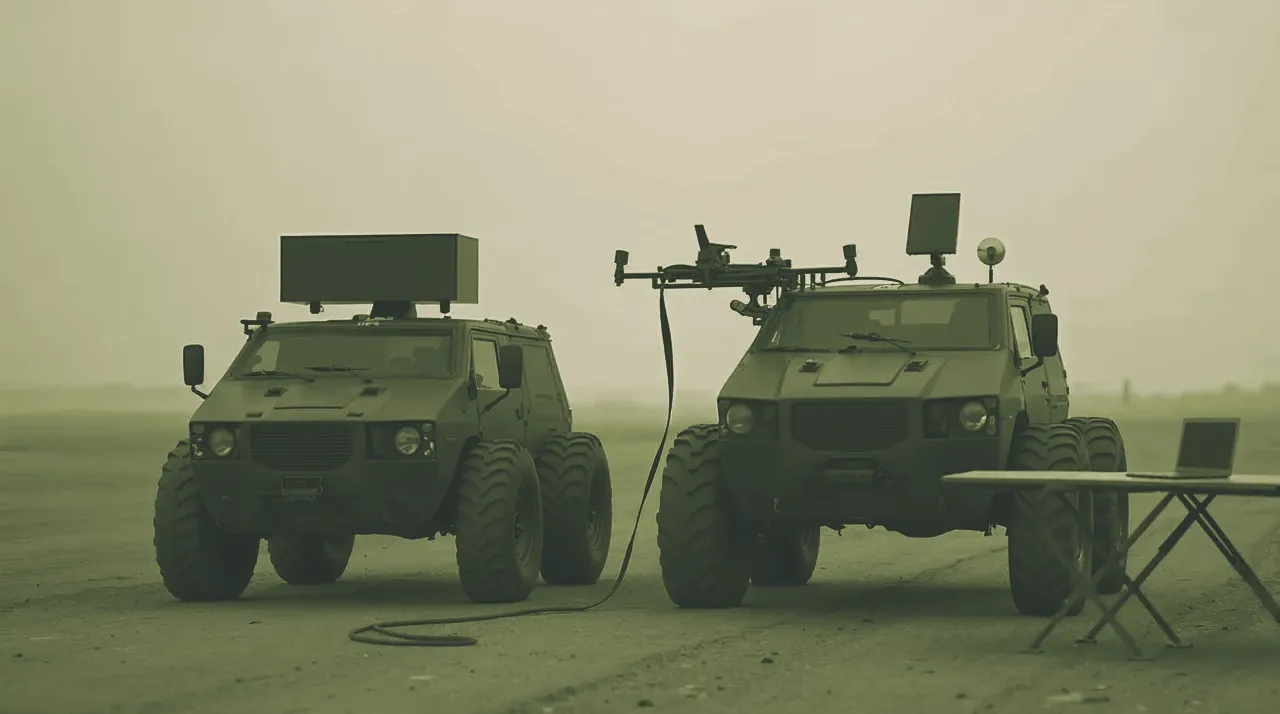
At Operation Jailbreak, six firms wired a radar "Hunter" and a gun-armed "Killer" into one autonomous counter-drone kill chain in under a week, the Army's argument that it can integrate at software speed.
Six defense companies integrated a two-vehicle autonomous counter-drone system, a radar "Hunter" and a gun-armed "Killer," in under a week and demonstrated it to the Secretary of the Army, Defence Blog reported.
The build came together at Operation Jailbreak, the US Army's first Right to Integrate sprint. AZAK supplied both wheeled unmanned ground vehicles. Leonardo DRS put its ACHR radar on one to find and track threats, the Hunter. Allen Control Systems mounted its Bullfrog gun on the other to shoot them down, the Killer. HavocAI ran the driving autonomy, Picogrid handled the data plumbing, and Anduril's Lattice tasked the pair, Defence Blog reported.
One vehicle finds the drone and passes targeting data; the other receives it and fires. The Bullfrog uses a high-rate gun to knock down small drones at close range, and on a mobile robot it can be cued by the radar vehicle and moved without a driver. Defence Blog reported the system can engage without a human in the targeting loop.
Lattice did the part that usually takes years. It pulled radar, autonomy software, a weapon, and vehicles from firms that never built them to fit together, and joined them in software rather than hardware. That is the case the Army is trying to make in the field.
Operation Jailbreak gathered roughly 600 people and more than 50 companies at Fort Carson, Colorado, for a three-week run, ExecutiveGov wrote. Army Secretary Daniel Driscoll, who started the effort to force siloed systems to talk, wants most of its fixes pushed to U.S. Central Command within 30 days. "If not, we are failing," he said, per DefenseScoop. The Army has said the push draws on interoperability lessons from the war in Ukraine.
The battlefield and the startup story — free in your inbox every week. No paywall.
Subscribe Free →The sprint wraps in early June. Whether a kill chain assembled in days survives the reliability and cybersecurity testing a fielded weapon must pass is the part the demo did not answer, Defence Blog noted.
Frequently Asked Questions
What is Operation Jailbreak?
The US Army's first Right to Integrate sprint, a roughly three-week event that gathered about 600 people and more than 50 companies at Fort Carson, Colorado, to make siloed military systems share data, per ExecutiveGov.
What did the six companies build?
A two-vehicle autonomous counter-drone system: a radar "Hunter" (Leonardo DRS ACHR radar on an AZAK ground vehicle) that finds and tracks threats, and a gun-armed "Killer" (an Allen Control Systems Bullfrog on a second AZAK vehicle) that engages them, with HavocAI autonomy, Picogrid integration, and Anduril's Lattice tasking the pair, Defence Blog reported.
How did they integrate it so fast?
Anduril's Lattice joined the radar, autonomy software, weapon, and vehicles in software rather than hardware, so parts that were never designed for each other could work together in days instead of the years a hardware-level program takes, Defence Blog reported.
Does it fire without a human?
Defence Blog reported the system can engage without a human in the targeting loop, with one vehicle detecting and tracking a drone and the other receiving the targeting data and firing.
What happens to the results?
Army Secretary Daniel Driscoll wants most of the sprint's fixes pushed to U.S. Central Command within 30 days, saying "if not, we are failing," per DefenseScoop. The demo did not address whether a system assembled in days can pass the reliability and cybersecurity testing a fielded weapon requires, Defence Blog noted.
AI-generated summary, reviewed by an editor. More on our AI guidelines.

Marcus Schuler
Marcus Schuler edits BattlePolicy, a daily defense-technology brief connecting the companies and capabilities behind modern war to the contest among Europe, the US, Russia, and China.