GRID-REF 37°47′N 122°25′W
DISPATCH 02/26 · 9 Jun 2026
BATTLEPOLICY
Startup to front line. Strategy to consequence.
Lexicon · Russia

Su-57 Felon

Russia's first purported 5th-generation stealth fighter, designed for air superiority and multirole missions. Despite a protracted development, it has entered service in limited numbers and seen restricted use over Ukraine, primarily for standoff strikes.
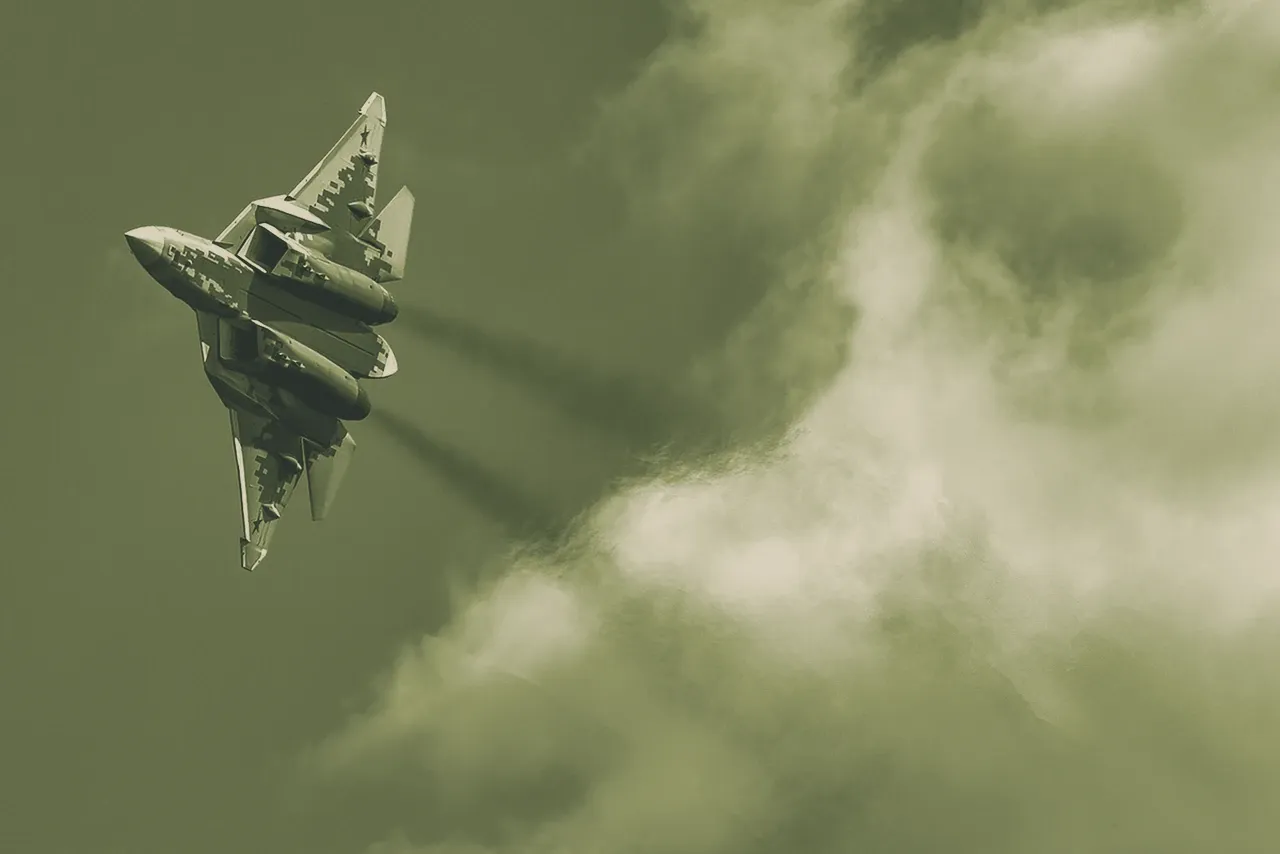
Su-57 Felon
FIG.01 · Russia Image - A Sukhoi Su-57 Felon in flight. Photo by Andrei Shmatko, CC BY-SA 4.0, via Wikimedia Commons.
Russia's first purported 5th-generation stealth fighter, designed for air superiority and multirole missions. Despite a protracted development, it has entered service in limited numbers and seen restricted use over Ukraine, primarily for standoff strikes.

Overview

The Sukhoi Su-57, designated "Felon" by NATO, is Russia's first domestically designed and produced aircraft marketed as a fifth-generation stealth fighter. Developed to compete with Western counterparts like the F-22 and F-35, the Su-57 is a twin-engine, single-seat, multirole aircraft intended for air superiority and deep-strike missions. Its development has been lengthy, and it has entered service with the Russian Aerospace Forces (VKS) in very small numbers. Its true stealth and sensor-fusion capabilities are a subject of debate among Western and Ukrainian analysts, with some characterizing it as a highly advanced 4++ generation fighter rather than a true fifth-generation platform.

Development

The Su-57 originated from the PAK FA (Perspektivnyy Aviatsionnyy Kompleks Frontovoy Aviatsii, "Prospective Aeronautical Complex of Frontline Aviation") program, which aimed to develop a next-generation fighter for the Russian Air Force. The prototype, known as the T-50, conducted its maiden flight on January 29, 2010, according to Militarnyi. The program faced numerous delays and challenges, including the withdrawal of India as a development partner. The first serial-production Su-57 formally entered service with the VKS in late 2020. Production rates remain low, with estimates placing the total fleet size at around 21 to 30 aircraft by early 2025, according to Britannica and other defense analysts.

Design & capabilities

The Su-57 incorporates features associated with fifth-generation aircraft, including low-observable (stealth) characteristics, internal weapons bays, and an advanced sensor suite. Its primary radar is the N036 Byelka AESA system, which includes a main nose-mounted X-band array supplemented by cheek-mounted arrays and L-band arrays in the wing leading edges for detecting low-observable targets.

The aircraft is powered by two Saturn AL-41F1 afterburning turbofans, an interim engine that provides thrust vectoring for high maneuverability. The intended second-stage "izdeliye 30" engine, designed to enable supercruise and improve performance, remains in development and is not yet standard on production aircraft. The Su-57's armament is carried in two main tandem ventral bays and smaller wing-root bays, allowing it to carry a mix of air-to-air missiles like the R-77M and the very-long-range R-37M, as well as air-to-ground munitions like the Kh-59MK2 and Kh-69 standoff missiles. However, the full extent of its sensor fusion and the effectiveness of its stealth shaping are manufacturer claims not independently verified in combat. Sanctions have reportedly impacted the availability of key systems for production models, as noted by Aerospace Global News.

Variants

  • Su-57: The baseline single-seat production model for the Russian Aerospace Forces.
  • Su-57E: An export variant offered by Rosoboronexport. Algeria is a reported customer, with deliveries slated for 2025.
  • Su-57D: A twin-seat combat/trainer variant, which reportedly made its first flight in May 2026, according to Janes and FlightGlobal.

Combat record / operational use

The Su-57 has seen limited operational use. Prototypes were tested in Syria, and the aircraft has been employed sparingly in the war against Ukraine. Its use has been largely confined to launching long-range standoff missiles from within the relative safety of Russian airspace, likely to avoid the risk of losing a high-value, low-volume asset to Ukrainian air defenses. In June 2024, Ukrainian intelligence reported a successful drone strike that damaged at least one, and possibly two, Su-57s parked at Akhtubinsk airfield in southern Russia, marking the first publicly claimed combat-related damage to the type.

Advantages

  • High speed (~Mach 2) and super-maneuverability, aided by 3D thrust-vectoring nozzles.
  • Advanced N036 Byelka AESA radar suite with multiple arrays for enhanced situational awareness.
  • Capable of carrying very-long-range air-to-air missiles like the R-37M internally.
  • Incorporates stealth features, reducing its radar cross-section compared to previous-generation Russian fighters.

Drawbacks / limitations

  • Extremely low production rate and small fleet size, limiting its operational impact.
  • Key systems, notably the definitive "izdeliye 30" engine, are not yet integrated into standard production aircraft.
  • Stealth performance is a manufacturer claim and is considered by many Western analysts to be inferior to that of the F-22 or F-35.
  • Vulnerable to strikes while on the ground, as demonstrated by the June 2024 attack on Akhtubinsk airfield.
  • Production is potentially hampered by international sanctions affecting access to high-tech components.

Counterparts

Outlook

The Su-57 remains Russia's premier fighter program, but its future is constrained by slow production, ongoing technical maturation, and the economic pressures of war and sanctions. While it represents a significant technological step for Russia's aerospace industry, it is unlikely to be fielded in numbers sufficient to challenge NATO airpower for the foreseeable future. Its primary role will likely remain that of a high-end, low-density asset for specialized missions and a platform for testing advanced technologies. Export success, as claimed by The War Zone, will be critical to the program's long-term viability.

Key specifications

Spec Value
Crew 1 (twin-seat Su-57D in development)
Length / wingspan ~20.1 m / ~14.1 m (est.)
Max speed ~Mach 2 (~2,120 km/h) (est.)
Service ceiling ~20,000 m (est.)
Combat radius / range Combat radius ~1,500 km (est.); Ferry range ~3,500 km (est.)
Payload Not publicly established
Hardpoints Internal bays + external hardpoints
Radar / sensors N036 Byelka AESA radar suite
Powerplant 2 × Saturn AL-41F1 afterburning turbofans (interim)
Armament 30mm GSh-30-1; R-77M, R-37M, R-74M2; Kh-59MK2, Kh-69

Sources

  1. Britannica — Sukhoi Su-57 | Felon. https://www.britannica.com/technology/Sukhoi-Su-57
  2. The War Zone — Su-57 With New Upgrade Options, Russia Claims First Foreign Delivery Has Already Occurred. https://www.twz.com/air/su-57-with-new-upgrade-options-russia-claims-first-foreign-delivery-has-already-occurred
  3. Aerospace Global News — Russia's Su-57 fighter jets are missing key systems amid sanctions. https://aerospaceglobalnews.com/news/su-57-fighter-jets-missing-systems-sanctions/
  4. Military Watch Magazine — Russian Air Force Commander Confirms Accelerating Su-57 Fighter Production. https://militarywatchmagazine.com/article/russian-air-force-commander-accelerating-su57
  5. Janes — Russia reveals twin-seat Su-57D combat aircraft. https://www.janes.com/defence-intelligence-insights/defence-news/air/russia-reveals-twin-seat-su-57d-combat-aircraft
  6. FlightGlobal — Two-seat Su-57 fighter takes flight in Russia. https://www.flightglobal.com/fixed-wing/2026/05/two-seat-su-57-fighter-takes-flight-in-russia/
  7. Militarnyi — Russia Announces First Export Deliveries of Su-57 Fighter Jets. https://militarnyi.com/en/news/russia-announces-first-export-deliveries-of-su-57-fighter-jets/
FIELD DISPATCH · WEEKLY

BattlePolicy Weekly — free.

Defense tech, startups, and security — weekly. No paywall.

Related
Ukraine · Russia · Policy · Chornobyl · Energoatom · shahed

Russia strikes Ukraine's central spent-fuel store at Chornobyl with a Shahed

A Russian drone hit the receiving building of the Holtec-built dry-cask site that freed Ukraine from shipping its nuclear waste to Russia, metres from where spent fuel sits.

Ukraine · Russia · Policy · Chornobyl · Energoatom · shahed