USA
Army Awards AeroVironment $465 Million to Produce LOCUST X3 Lasers
The Army's first production contract for a laser weapon puts a 30-kilowatt drone killer on tactical vehicles while the Iran war drains Patriot and THAAD stocks.
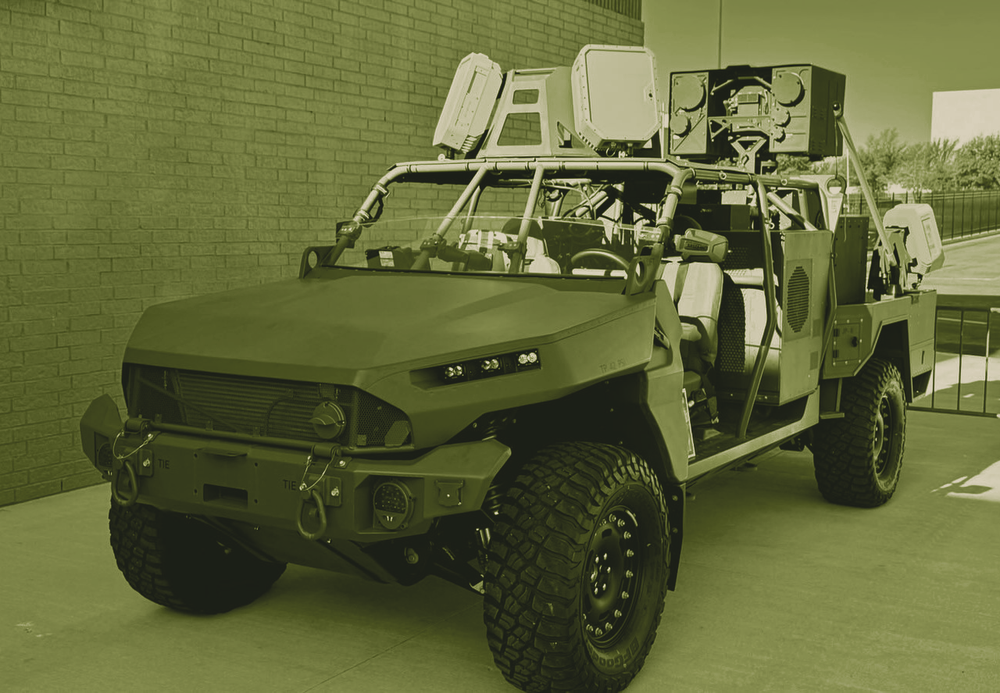
LOCUST is AeroVironment's high-energy laser counter-drone weapon family, developed by BlueHalo and deployed by the US Army in palletized and vehicle-mounted configurations.
The Army's first production contract for a laser weapon puts a 30-kilowatt drone killer on tactical vehicles while the Iran war drains Patriot and THAAD stocks.
Investors bet $3.4 billion on Monday that cheap interceptor missiles win the counter-drone war. The same week, the Pentagon capped what it will pay for them and funded two rival ways of killing drones.
Kaizen Laboratories controls the software layer that shapes which counter-drone systems U.S. troops and allies see, compare and move toward purchase.
AeroVironment is buying its swarm autonomy from a $15 billion software house instead of building it, a split that tells you where the margin in launched effects is heading.
The AeroVironment P550 is a runway-independent, battery-electric eVTOL reconnaissance drone built for the US Army's Long-Range Reconnaissance program, giving battalion commanders up to five hours of modular ISR, relay, electronic-warfare and strike capability.
The loitering-munition maker's entry into JIATF-401's Domestic Shield program turns a record quarter into a foothold in homeland counter-drone defense.
The Army is buying 82 runway-free reconnaissance drones for its battalions and wants them delivered within seven weeks, from the maker of the Switchblade munitions sent to Ukraine.
The Switchblade family of tube-launched, man-portable loitering munitions — the 300 for anti-personnel and the 600 for anti-armor — delivers precision strike with real-time operator oversight, and has been battle-proven in Ukraine.