Army Awards AeroVironment $465 Million to Produce LOCUST X3 Lasers
The Army's first production contract for a laser weapon puts a 30-kilowatt drone killer on tactical vehicles while the Iran war drains Patriot and THAAD stocks.
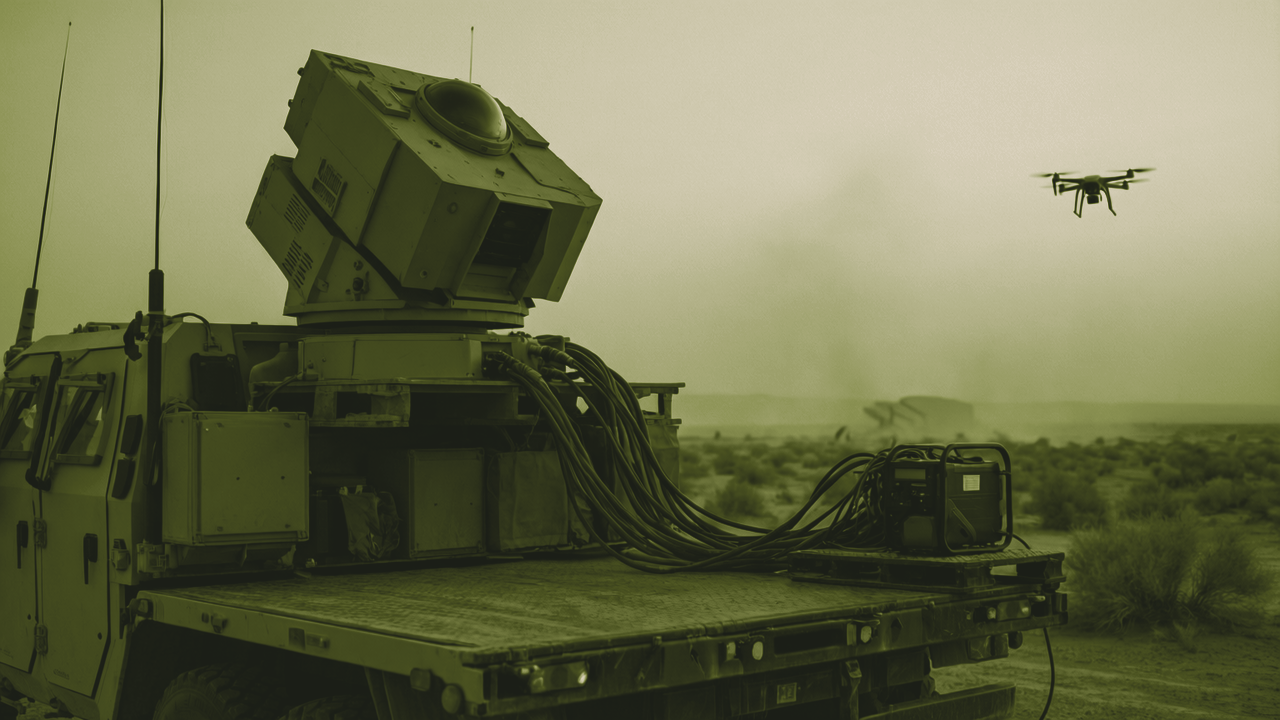
The Army's first production contract for a laser weapon puts a 30-kilowatt drone killer on tactical vehicles while the Iran war drains Patriot and THAAD stocks.
The U.S. Army awarded AeroVironment a $464.8 million other-transaction agreement on Sept. 2 to produce the Enduring-High Energy Laser, the service announced. It is the Army's first production contract for a high-energy laser weapon system.
AeroVironment will deliver dozens of LOCUST X3 systems over the next few years, along with training and support. John Garrity, the company's vice president of directed-energy systems, told reporters that initial capabilities will ship within the year.
Frequently Asked Questions
What did the Army award AeroVironment?
A $464.8 million other-transaction agreement to produce the Enduring-High Energy Laser (E-HEL), announced Sept. 2. The Army calls it its first production contract for a high-energy laser weapon system; AeroVironment supplied the dollar figure.
What is the LOCUST X3?
A 30-kilowatt, platform-agnostic laser weapon built to defeat Group 1 to Group 3 drones, the largest of which weigh up to 1,320 pounds, per AeroVironment and the company's briefing to Breaking Defense.
How many systems will the Army get, and when?
"Dozens" over the next few years, AeroVironment said. John Garrity told reporters initial capabilities ship within the year and output will scale into the 20s per year, then beyond within 12 to 24 months.
Why does a laser matter for air defense right now?
AeroVironment officials put the cost per shot under $5, and the magazine regenerates from the system's power supply, per the Army. DefenseScoop reported the Iran war has drained Patriot and THAAD interceptors against cheap Iranian drones.
What vehicles will carry it?
The Joint Light Tactical Vehicle first, with a palletized option and an Infantry Squad Vehicle integration under analysis, AeroVironment said. Garrity told reporters he expects Strykers and heavier platforms later.
AI-generated summary, reviewed by an editor. More on our AI guidelines.
Below this point
7 more sections.
The 30-kilowatt LOCUST X3 targets Group 1 through Group 3 drones. Group 3 aircraft can weigh up to 1,320 pounds. Garrity described the system as the "Group 3 killer" and identified Iran's Shahed-136, used against troops in the Middle East and in Ukraine, as the prevalent threat.
AeroVironment officials put each shot below $5. Garrity placed the engagement range at several kilometers, compared with hundreds of meters for guns. He added that LOCUST can kill a drone in single-digit seconds and then shift to another target.
Aaron Westman, AeroVironment's senior director of business development, framed the laser's job in a layered defense as thinning drone formations so the system "doesn't run out of bullets" and can reserve expensive interceptors for more demanding threats.
The Iran war has significantly depleted U.S. stocks of Patriot and THAAD interceptors against drones that Iran produces for tens of thousands of dollars each, DefenseScoop reported. A laser running on electric power regenerates its magazine from the system's own supply, according to the Army.
E-HEL uses a modular open systems approach with 11 major interfaces and can operate from fixed bases, semi-fixed sites or vehicles, the Army stated. Garrity disclosed that LOCUST connects to Anduril's Lattice software, part of the Army's Next Generation Command and Control prototype.
AeroVironment is supporting the ramp with a $30 million investment in its Albuquerque, New Mexico plant. Garrity expects annual output to reach the 20s before expanding further within 12 to 24 months.
The first LOCUST X3s are due within the year on Joint Light Tactical Vehicles, with Infantry Squad Vehicle and Stryker mounts under study. The Army built E-HEL on 11 open interfaces, so the line AeroVironment just won is the first laser production line, not the only one the service intends to buy from.

Marcus Schuler
Marcus Schuler edits BattlePolicy, a daily defense-technology brief connecting the companies and capabilities behind modern war to the contest among Europe, the US, Russia, and China.