Ten drones, no video link: Ukrainian maker says AI alone killed soldiers in a one-off test
A Ukrainian drone supplier says a two-year-old front-line test killed Russian soldiers with no human in the loop, the most categorical account yet of lethal full autonomy, just as Kyiv weighs loosening its rules.
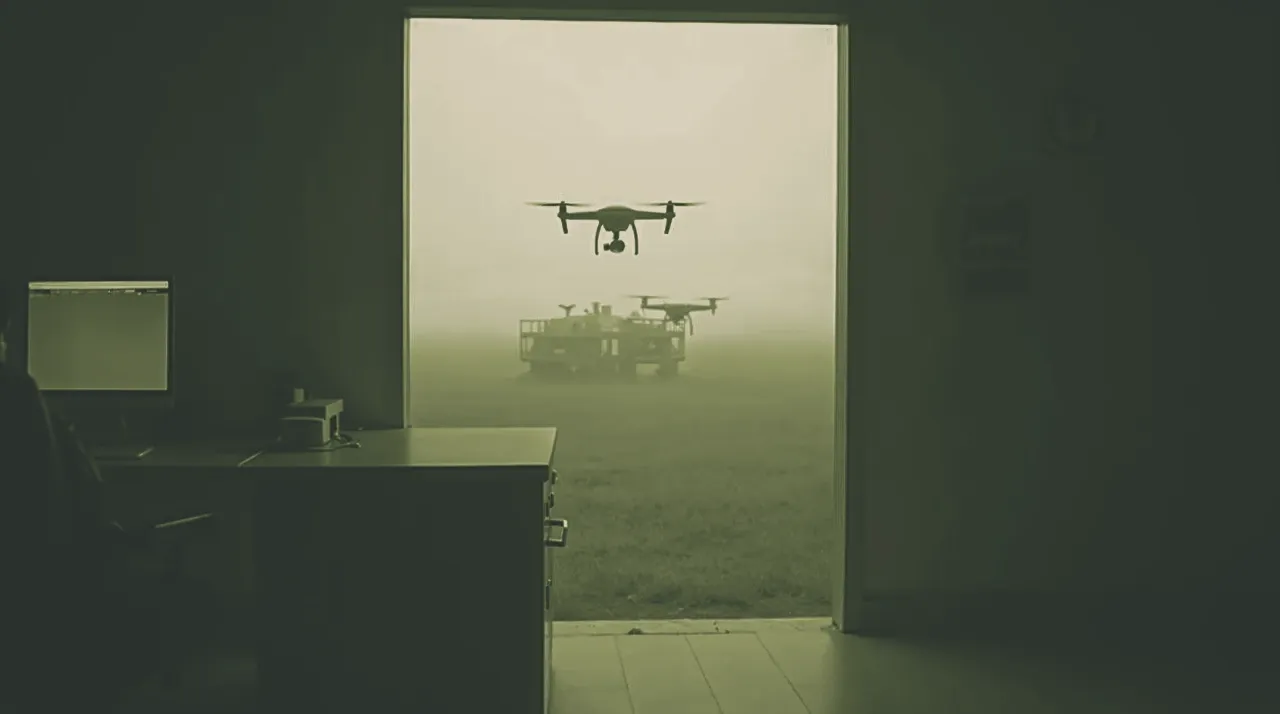
A Ukrainian drone supplier says a two-year-old front-line test killed Russian soldiers with no human in the loop, the most categorical account yet of lethal full autonomy, just as Kyiv weighs loosening its rules.
Fully autonomous drones killed Russian soldiers in a one-off Ukrainian test two years ago, drone-maker Alexander Kokhanovskyy told New Scientist at a press event hosted by the Ukrainian embassy. Ten AI-controlled quadcopters flew 3 to 5 kilometers toward positions near Bakhmut and Chasiv Yar, then switched to what he calls Terminator mode. "There is no connection to the drone at all, you cannot see the video, nothing," he said. "Everything it sees will be killed."
The account rests on one source. Kokhanovskyy supplied the technology but did not attend the test, which an unnamed unit ran during a counteroffensive push. No recording of the attacks exists; piloted drones swept the area afterward and credited the system with a couple of soldiers and one truck, he said. Ukraine's Ministry of Defence did not respond to the magazine's questions.
Kyiv currently bans AI from the final stage of an engagement, defense company sources said at the same event. Major Danylo Polozhukhno of the 21st Separate Unmanned Systems Regiment told New Scientist his units fly semi-autonomous systems that acquire and track targets and steer the final meters of approach, always with an operator deciding. Kokhanovskyy says the government is in talks with industry about whether to relax the restriction.
His current firm shows what sits behind that line. Aero Center, where Kokhanovskyy is now CEO, is building ALITA, an interceptor battery of 16 launch pads holding 64 drones, designed to detect incoming Shahed-type drones and helicopters, launch automatically and close at 450 kilometers per hour. He says it will be ready by October and will need two operators per battery, with a human verifying each target in the terminal phase. For now.
The battlefield and the startup story — free in your inbox every week. No paywall.
Subscribe Free →Ukrainian AI attack drones were reported in 2023 to be striking vehicles without human assistance, with no confirmed human casualties at the time. The hardware for full autonomy is already fielded and cheap. What stands between a 64-drone battery run by two operators and one run by none is a Ukrainian rule now under negotiation.
Frequently Asked Questions
What exactly happened in the Ukrainian autonomous drone test?
According to drone-maker Alexander Kokhanovskyy, speaking to New Scientist, 10 AI-controlled quadcopters flew 3 to 5 kilometers toward the front near Bakhmut and Chasiv Yar about two years ago, then engaged an autonomous mode that searched for and attacked targets with no link to an operator. Russian soldiers were killed, he said.
Is the claim independently verified?
No. The account comes from one person, Kokhanovskyy, who supplied the technology but was not present. There is no recording of the attacks; piloted drones surveyed the area afterward, per New Scientist. Ukraine's Ministry of Defence did not respond to the magazine's questions.
Does Ukraine allow fully autonomous weapons?
Defense company sources cited by New Scientist say Ukraine bans AI at the final stage of intercepting targets, though AI is used widely earlier in the chain. Kokhanovskyy says the government is discussing with defense companies whether the rules should be loosened.
Has AI killed people without human oversight before?
A 2021 UN report suggested a Turkish-made Kargu-2 quadcopter may have autonomously attacked humans in Libya, without confirming injuries or deaths. New Scientist reported in 2023 that Ukrainian AI drones were striking vehicles without human assistance, with no confirmed human casualties then.
What is Aero Center's ALITA system?
ALITA is an autonomous interceptor battery of 16 launch pads and 64 drones that watches for incoming threats, launches automatically and flies at 450 kilometers per hour against targets from small drones to helicopters, per Kokhanovskyy. He says it will be ready by October and needs two human operators per battery under current rules.
AI-generated summary, reviewed by an editor. More on our AI guidelines.

Marcus Schuler
Marcus Schuler edits BattlePolicy, a daily defense-technology brief connecting the companies and capabilities behind modern war to the contest among Europe, the US, Russia, and China.