Tu-95MS Bear
Russia's Cold-War-era intercontinental turboprop bomber — the primary launch platform for Kh-101 cruise missiles and the air leg of its nuclear triad, now irreplaceable and facing historic attrition.
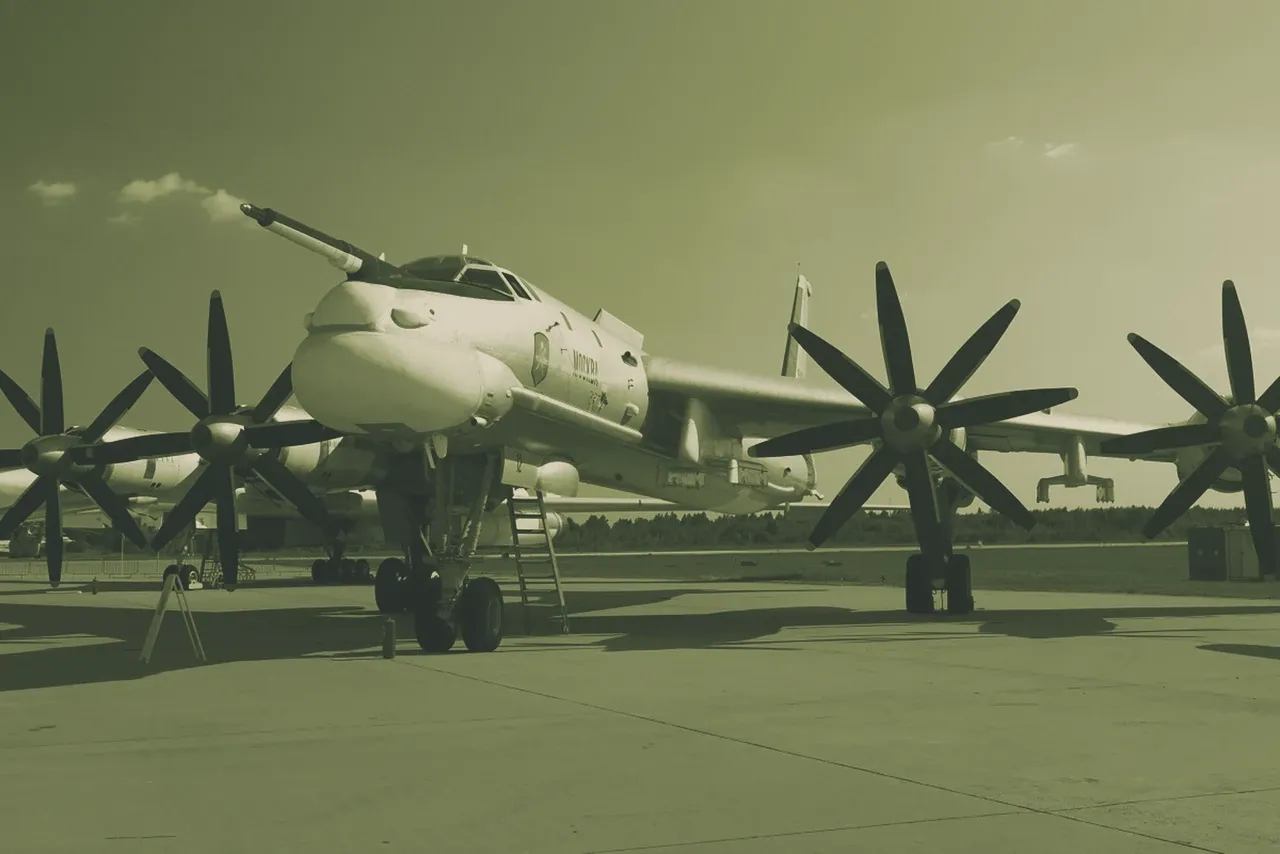
Russia’s swept-wing intercontinental turboprop bomber — a 1950s-design platform that survived the Cold War to become the primary launch-vehicle for Kh-101/Kh-102 cruise missiles, and now an irreplaceable asset eroded by Ukrainian long-range strikes.
Overview
The Tupolev Tu-95MS (NATO reporting name Bear-H) is the only turboprop-powered strategic bomber ever produced in large numbers and the sole remaining turboprop combat aircraft in operational service. Its four Kuznetsov NK-12 engines — still the most powerful turboprops fielded — drive contra-rotating propellers that give the aircraft intercontinental range, a cruise speed of about 710 km/h and a maximum speed of 925 km/h. Designed to carry the Soviet Union’s first nuclear-tipped cruise missiles, the Tu-95MS today is the workhorse of Russia’s long-range aviation command, standing off from deep within Russian territory to release Kh-101 conventional and Kh-102 nuclear cruise missiles against targets in Ukraine and, earlier, in Syria.
Development
Andrei Tupolev’s bureau created the Tu-95 as the USSR’s answer to the American B-52, and the prototype first flew on 12 November 1952 before the type entered Soviet Long-Range Aviation service in 1956.Wikipedia Production of all variants ran from 1952 to 1993, yielding more than 500 airframes; the specific Tu-95MS (Bear-H) models that form today’s combat fleet were built in the 1980s as Kh-55 cruise-missile carriers and continued off the line until the early 1990s. A modernisation programme — Tu-95MSM — began trials at Taganrog in 2020, adding the Novella-NV1.021 phased-array radar, SOI-021 digital displays, a Meteor-NM2 defensive suite and uprated NK-12MPM engines with AV-60T propellers, in an effort to keep the Bear viable until roughly 2040.The Aviationist
Design & capabilities
The Tu-95MS marries a swept-wing planform — the only swept-wing propeller aircraft built at scale — to four 11,000 kW NK-12MP turboprops driving contra-rotating propellers. The combination yields an unrefuelled combat radius of about 6,400 km and a ferry range approaching 15,000 km, enabling launch from airspace over the Caspian and Arctic regions well outside the reach of Ukrainian ground-based air defences.Airforce Technology Armament is carried on an internal rotary launcher for six Kh-55-family missiles and on four underwing pylons that can hold up to eight Kh-101/Kh-102 stealthy cruise missiles. A tail turret with twin 23 mm GSh-23 cannon provides a legacy rear-defence capability. The MSM upgrade replaces the aging Obzor-MS radar with a modern phased-array set and integrates a new defensive electronic-warfare suite, while the cockpit receives glass-cockpit displays.Wikipedia
Variants
- Tu-95 (Bear-A): original free-fall nuclear bomber, 1950s.
- Tu-95K/K-22: intermediate missile carriers armed with early cruise and anti-ship missiles.
- Tu-95MS (Bear-H): 1980s-built production strike platform optimised for the Kh-55; the active variant.
- Tu-95MSM: modernised MS with new radar, defensive suite, engines and cockpit, intended as a service-life extension.
- Tu-142: maritime patrol and anti-submarine derivative, operated by the Russian Navy.
- Tu-114/Tu-116: civil and military transport derivatives, now retired.
Combat record / operational use
The Tu-95MS first fired weapons in anger in 2015, launching Kh-555 and Kh-101 cruise missiles against targets in Syria during Russia’s intervention. From February 2022 onward it became the principal launcher for large-scale Kh-101 strike packages that hit Ukrainian cities and critical infrastructure. Sorties were typically flown from bases deep inside Russia — Engels, Olenya in the Arctic, Belaya in the Far East — far outside Ukraine’s ground-based air-defence rings. After Ukrainian drones struck Engels in late 2022, the fleet was progressively dispersed to more remote airfields.
On 1 June 2025, Ukraine’s SBU executed Operation Spiderweb: 117 smuggled FPV drones hit five Long-Range Aviation bases simultaneously, including Olenya and Belaya. The SBU claimed 41 aircraft struck and roughly $7 billion in damage; independent imagery analysis confirmed a substantial, though smaller, toll. Militarnyi’s satellite-imagery analysis counted 8 Tu-95MS destroyed (4 at Belaya, 4 at Olenya), while The War Zone assessed 6–7 confirmed losses. CSIS later characterised the strike as a demonstration of “long-term degradation” of the air leg of Russia’s nuclear triad at trivial attacker cost. By 7 June 2025, all surviving Bears had been pulled from Olenya, and Russia began erecting hardened shelters at multiple bases.Al Jazeera The remaining fleet — roughly 30–45 airframes (est.) — continues to launch cruise-missile salvos against Ukraine and conduct long-range Arctic and Pacific patrols, but each airframe destroyed is a permanent loss.
Advantages
- Intercontinental reach: ~15,000 km range and ~6,400 km combat radius let the aircraft launch from deep inside Russian territory, beyond the envelope of most surface-based air defences.
- Heavy stand-off payload: can carry up to 8 Kh-101/Kh-102 long-range cruise missiles externally plus an internal rotary launcher, making it the backbone of mass Russia’s mass salvos against Ukraine.
- Endurance for nuclear-signalling patrols: routinely flies multi-hour presence missions along NATO airspace, a mission set the type has performed since the Cold War.
- Modernisation path: the Tu-95MSM upgrade adds modern radar, defensive suite and engines, with United Aircraft Corporation claiming doubled combat effectiveness (Russian state claim).
Drawbacks / limitations
- Irreplaceable airframes: production ceased with the Soviet collapse; Russia builds no new Bears, and the PAK DA successor is 10–20 years from serial production (est.).Defense Express
- Proven ground vulnerability: Operation Spiderweb destroyed roughly a quarter of the flyable fleet with low-cost FPV drones, confirming that even remote airfields are no sanctuary.
- 1950s-era platform: slow (925 km/h), non-stealthy, extraordinarily loud, and dependent on aged NK-12 engines and Soviet-era supply chains that span multiple post-Soviet states.Wikipedia
- Slow, partial modernisation: only about 27 aircraft have been upgraded toward the MSM standard since 2013 (est.).Defense Express
- Dispersal increases operating friction: post-Spiderweb basing changes add logistical and sortie-generation penalties to an already limited fleet.
Counterparts
- B-52 Stratofortress (USA)
- H-6K (China)
Outlook
The Tu-95MS is now a wasting asset. Every airframe lost at Belaya and Olenya is gone permanently; the MSM line only modernises existing aircraft, it adds no new hulls. While the surviving Bears can still launch cruise missiles and fly nuclear-signalling patrols — Tu-95MS pairs conducted an 11-hour Sea of Japan patrol in January 2026 — the fleet’s long-term viability depends on husbanding the remaining airframes as a strategic reserve. Russia’s investment in hardened shelters and dispersal to Far Eastern bases reflects a hard lesson: the Bear can still bite, but it can no longer be risked on the ramp.
Key specifications
| Spec | Value |
|---|---|
| Crew | 6–7 (pilot, co-pilot, flight engineer, comms operator, navigator(s), tail gunner) |
| Length / wingspan | 46.2 m / 50.1 m |
| Max speed | 925 km/h |
| Service ceiling | ~13,700 m (est.) |
| Combat radius / range | ~6,400 km / ~15,000 km |
| Payload | up to ~15,000 kg of missiles |
| Hardpoints | internal rotary launcher (6 × Kh-55 family) + 4 underwing pylons (8 × Kh-101/102) |
| Radar / sensors | Obzor-MS nav/attack radar (MS); Novella-NV1.021 phased-array + Meteor-NM2 defensive suite (MSM) |
| Powerplant | 4 × Kuznetsov NK-12MP turboprops (~11,000 kW each) driving 8-blade contra-rotating propellers; NK-12MPM with AV-60T propellers (MSM) |
| Armament | Kh-101 (conventional) / Kh-102 (nuclear) cruise missiles, Kh-55/Kh-555; 2 × 23 mm GSh-23 tail turret |
Sources
- Wikipedia — Tupolev Tu-95 — https://en.wikipedia.org/wiki/Tupolev_Tu-95
- Airforce Technology — Tu-95 Bear Strategic Intercontinental Bomber — https://www.airforce-technology.com/projects/tu95bear/
- The Aviationist — First Footage of the Modernised Tu-95MSM “Bear” Bomber Performing Its Maiden Flight — https://theaviationist.com/2020/08/23/heres-the-first-footage-of-the-modernised-tu-95msm-bear-bomber-performing-its-maiden-flight/
- Militarnyi — Operation Spider’s Web: Satellite Imagery Confirms Destruction of 13 Aircraft at Belaya and Olenya Air Bases — https://militarnyi.com/en/news/operation-spider-s-web-satellite-imagery-confirms-destruction-of-13-aircraft-at-belaya-and-olenya-air-bases/
- The War Zone — Confirmed Losses Of Russian Aircraft Mount After Ukrainian Drone Assault — https://www.twz.com/air/firm-evidence-of-russian-aircraft-losses-after-ukrainian-drone-strikes
- CSIS — How Ukraine’s Operation “Spider’s Web” Redefines Asymmetric Warfare — https://www.csis.org/analysis/how-ukraines-spider-web-operation-redefines-asymmetric-warfare
- Al Jazeera — Ukraine’s ‘Spiderweb’ drone assault forces Russia to shelter, move aircraft — https://www.aljazeera.com/news/2025/6/18/ukraines-spiderweb-drone-assault-forces-russia-to-shelter-move-aircraft
- Defense Express — How Many Years and Billions russia Will Need to Restore Tu-160, Tu-95MSM and Tu-22M3 Losses in Ukrainian Operation — https://en.defence-ua.com/analysis/how_many_years_and_billions_russia_will_need_to_restore_tu_160_tu_95msm_and_tu_22m3_losses_in_ukrainian_operation-14731.html