Type 039 Yuan
China's primary conventional attack submarine with indigenous Stirling air-independent propulsion — a quiet, multi-week-endurance boat built for regional sea denial, and the platform behind Beijing's push into the submarine export market.
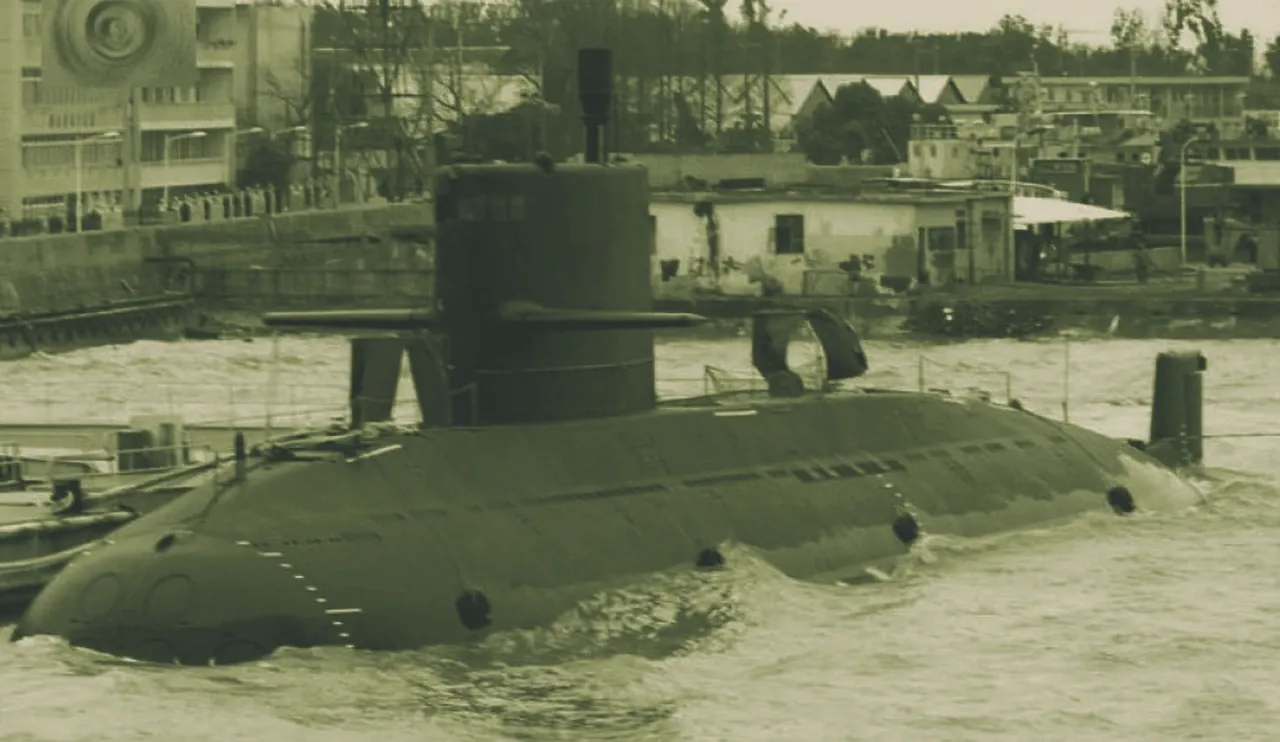
China's primary conventional attack submarine equipped with Stirling air-independent propulsion — built for regional sea denial, increasingly capable of long submerged loiter, and the platform behind Beijing's push into the submarine export market.
Overview
The Type 039 Yuan family — encompassing the baseline 039A, improved 039B, and the latest 039C — is the People’s Liberation Army Navy’s (PLAN) principal indigenous diesel-electric submarine with air-independent propulsion (AIP). Designed for anti-surface and anti-submarine warfare in the littoral and near seas, the class marries a Stirling-cycle AIP plant with a developed hull and sensor suite, giving it multi-week submerged endurance without snorkeling. As of late 2025, the PLAN operated roughly 21 Yuan-class boats, making it the numerically dominant AIP platform in the Chinese submarine force, according to the Nuclear Threat Initiative. The type also anchors China’s entry into the export market: a modified 039B design, the Hangor class, is being delivered to Pakistan, while Thailand’s S26T is a contracted derivative.
Development
Construction of the lead Type 039A commenced in the early 2000s at Wuchang Shipbuilding in Wuhan, and the boat entered service around the mid-2000s, marking the PLAN’s first operational AIP submarine. Subsequent batches introduced the 039B with refined hull features and systems, followed by the 039C, which broke cover with a distinctive faceted sail. The development program coincided with a deliberate PLAN shift toward quiet conventional platforms for near-sea control; production has been continuous, with roughly 21 boats in service by late 2025, a figure cited by the Nuclear Threat Initiative. Export derivatives were developed in parallel: Pakistan’s Hangor class (Type 039B base) and Thailand’s S26T, which adopted a Chinese diesel engine after European export controls intervened.
Design & capabilities
The Yuan is a double-hulled submarine with a tear-drop shape optimized for underwater performance. Its propulsion plant couples diesel generators with a Chinese-developed Stirling-cycle AIP system, granting submerged endurance measured in weeks rather than days — a capability that, as the Royal United Services Institute notes, puts China ahead of Russia in fielding AIP on a production submarine. The 039C variant introduced an angular, faceted sail designed to reduce radar and sonar returns. Western analysts regard the class as among the quieter conventionally powered submarines in service. Armament consists of six 533 mm torpedo tubes able to carry Yu-3/Yu-4/Yu-6 heavyweight torpedoes, YJ-82/YJ-8 and tube-launched YJ-18 anti-ship cruise missiles, and mines. The sensor suite includes bow and flank sonar arrays, though exact performance data remain not publicly established.
Variants
- Type 039A — Initial batch with Stirling AIP; built in the mid-2000s.
- Type 039B — Upgraded hull, refined quieting, and updated combat system; basis for the export Hangor.
- Type 039C — Latest fielded variant with a stealth-optimized faceted sail and further acoustic improvements.
- Hangor (Pakistan) — Export derivative of the 039B; first boat launched in Wuhan in April 2024, with a third hull launched by August 2025, as reported by Naval News.
- S26T (Thailand) — An export-tailored variant equipped with a Chinese CHD620 diesel; delivery to the Royal Thai Navy has slipped to approximately 2027.
Combat record / operational use
No Yuan-class boat has fired a weapon in combat. The type’s operational history consists of routine PLAN patrols across the East and South China Seas, where its AIP endurance supports protracted surveillance and sea-denial duties. The first combat-potential milestone for the family arrived in April 2026, when Pakistan commissioned its first Chinese-built Hangor-class submarine, according to Asian Military Review — marking the first operationally ready export of a Chinese AIP submarine.
Advantages
- Indigenous Stirling AIP gives multi-week submerged endurance without snorkeling.
- Assessed as quiet; the 039C’s faceted sail reduces acoustic and radar signatures.
- Modular armament mix (torpedoes, anti-ship missiles, mines) enables flexible mission profiles.
- Numerically the backbone of the PLAN’s AIP-capable force, with production scaling rapidly.
- Export success (Pakistan, Thailand) signals growing confidence in Chinese sub-system integration.
Drawbacks / limitations
- Displacement and performance figures remain largely estimated; open-source performance verification is sparse.
- The boat is a conventional platform, so it lacks the global reach and endurance of a nuclear attack submarine.
- Sensor systems are not fully characterized in public, and their capabilities relative to Western counterparts are unconfirmed.
- The Thai S26T contract faced delays driven by engine-substitution politics, highlighting supply-chain vulnerability.
- No combat testing limits realism of quieting assessments.
Counterparts
- Type 212 (Europe)
- Improved Kilo (Russia)
Outlook
The Yuan family will remain the PLAN’s frontline conventional submarine through the decade, with production of the 039C continuing and likely a follow-on class in early development. Export orders may expand as China offers transfer-of-technology packages, though Western arms export regimes will continue to challenge components acquisition. The class sits at the center of the PLAN’s east-Asian littoral strategy while giving Beijing a foothold in the international submarine market.
Key specifications
| Spec | Value |
|---|---|
| Type | Diesel-electric attack submarine with Stirling AIP (SSK) |
| Full-load displacement | ~3,600 t submerged (est.) |
| Length / beam / draft | ~77.6 m / ~8.4 m / not publicly established |
| Propulsion | Diesel-electric + indigenous Stirling-cycle AIP; single shaft |
| Max speed (kts) | ~20–22 kts submerged (est.) |
| Range / endurance | Submerged endurance of several weeks on AIP; overall range not publicly established |
| Complement | ~38–65 (est.) |
| Armament | 6 × 533 mm torpedo tubes; Yu-3/4/6 torpedoes, YJ-82/YJ-8/YJ-18 anti-ship cruise missiles, mines |
| Sensors / combat system | Integrated bow and flank sonar; specifics not publicly established; 039C features faceted stealth sail |
| Aviation facilities | None |
Sources
- Nuclear Threat Initiative — “China Submarine Capabilities” (Nov 2025). https://www.nti.org/analysis/articles/china-submarine-capabilities/
- Royal United Services Institute — “Chinese Submarine Warfare: A Natural Evolution or Game-Changing Revolution.” https://www.rusi.org/explore-our-research/publications/commentary/chinese-submarine-warfare-natural-evolution-or-game-changing-revolution
- Naval News — “Pakistan Navy’s third Hangor-class submarine launched in China.” https://www.navalnews.com/naval-news/2025/08/pakistan-navys-third-hangor-class-submarine-launched-in-china/
- Asian Military Review — “Pakistan commissions first Chinese-built Hangor-class submarine.” https://www.asianmilitaryreview.com/2026/05/pakistan-commissions-first-chinese-built-hangor-class-submarine-foc/