Ukraine funds humanoid combat robots as its ground-robot war scales
Kyiv opened a grant contest for domestic humanoid robots, extending a ground-robot buildout on track to contract 25,000 uncrewed vehicles in the first half of 2026.
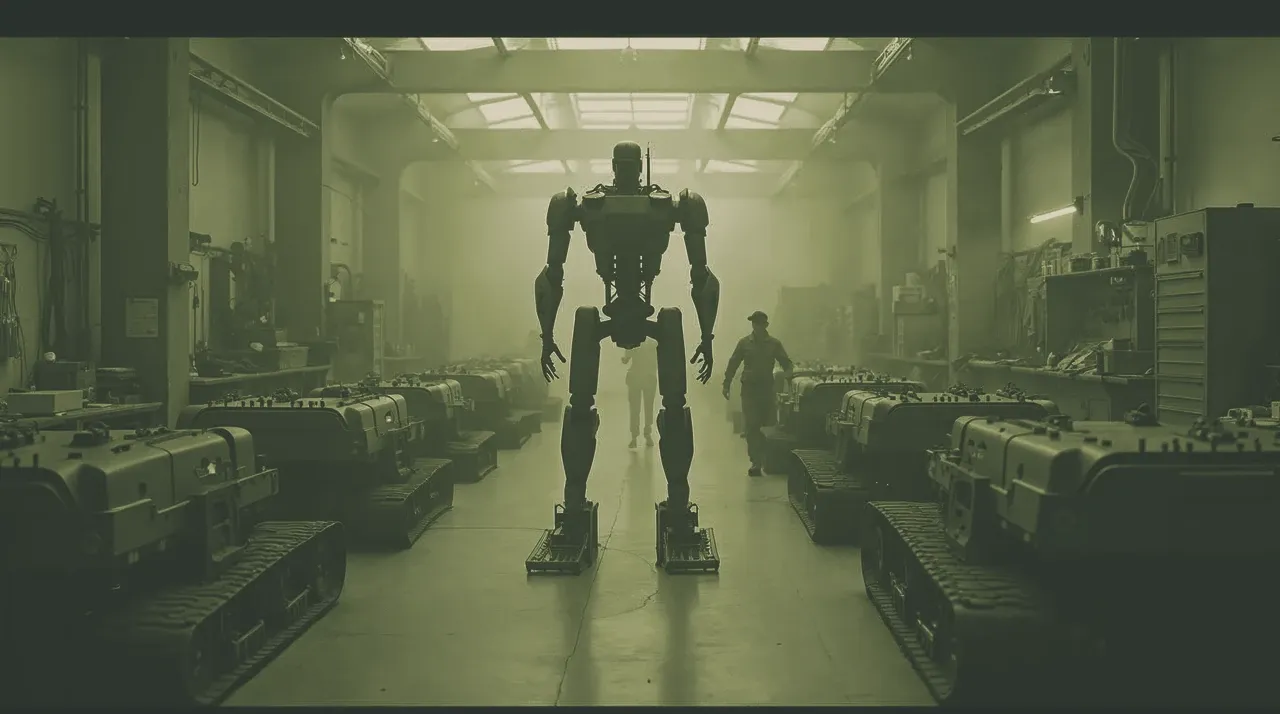
Kyiv opened a grant contest for domestic humanoid robots, extending a ground-robot buildout that is on track to contract 25,000 uncrewed vehicles in the first half of 2026.
Ukraine will run a grant competition to build humanoid robots for its Defense Forces, Brave1 chief Andriy Hrytseniuk said at the cluster's Brave1 Advantage event, Defence Blog reported, citing Militarnyi. Defense Minister Mykhailo Fedorov tied the effort to a front so saturated with drones that Ukraine needs to make "technologies fight technologies," per Censor.NET.
A humanoid is the hardest thing to field in robotics. Where a wheeled cargo drone gets by on simple mobility, a human-shaped machine has to keep its balance on broken ground, work in spaces built for people, and run some 20 motors whose single failure can leave it dead, Defence Blog noted. Today's platforms stay heavy, power-hungry and easily stopped by mud and dust, so Hrytseniuk said developers will begin with simpler builds and add capability later. The form has already reached the front once: the US startup Foundation sent two Phantom MK-1 humanoids for a closed logistics pilot earlier this year, Business Insider wrote, with the company itself calling them unready for combat.
Behind the contest is a ground-robot campaign that is already large. President Volodymyr Zelensky set a target of at least 50,000 uncrewed ground vehicles for 2026, and Brave1's UGV chief Ihor Shmyryov told Forbes that 25,000 would be contracted in the first half alone, twice the 2025 total, in a domestic market that grew 488% last year. Ukrainian UGVs logged more than 10,000 missions in April, most of them hauling supplies and pulling out wounded. The Defense Ministry counts over 50,000 logistics and medevac runs since January, and the number of units operating robots has nearly doubled to 230, according to United24 Media. Kyiv's shortage is soldiers rather than machines, which is why Yuliia Trybushna of NUMO Robotics told ASPI's The Strategist it is "better to lose four machines than one soldier."
The battlefield and the startup story — free in your inbox every week. No paywall.
Subscribe Free →The same humanoid boom is running through warehouses and elder care in the United States and China, aimed at commercial work. Ukraine's grant points that hardware at a trench line first, and the winners will have to show a walking robot can hold up where the wheeled ones already break.
Frequently Asked Questions
What did Ukraine announce?
Brave1, Ukraine's state-backed defense-technology cluster, and the Defense Ministry opened a grant competition to develop domestic humanoid robots for the Defense Forces, announced by Brave1 head Andriy Hrytseniuk at the Brave1 Advantage event and framed by Defense Minister Mykhailo Fedorov, per Defence Blog and Censor.NET.
Why humanoid robots rather than wheeled or tracked ones?
Trenches, buildings, stairways, doorways and vehicles are built around the human body, so a human-shaped machine could in theory move through spaces that defeat conventional wheeled or tracked ground robots, carrying ammunition, inspecting positions or evacuating small loads, Defence Blog noted.
How big is Ukraine's ground-robot effort already?
President Volodymyr Zelensky ordered at least 50,000 uncrewed ground vehicles for 2026, and Brave1's Ihor Shmyryov told Forbes that 25,000 would be contracted in the first half alone, twice the 2025 total, after a domestic market that grew 488% in 2025.
Has Ukraine tested humanoid robots before?
US startup Foundation delivered two Phantom MK-1 humanoids to Ukraine earlier this year for a closed logistics pilot, Business Insider reported via Defence Blog; the company's leadership described them as a step toward military use but not yet ready for front-line combat.
What are the main obstacles?
Today's humanoids are heavy, expensive and power-hungry, run on roughly 20 motors where a single actuator failure can disable the machine, and struggle with mud, dust, water and broken terrain, according to Defence Blog and United24 Media.
AI-generated summary, reviewed by an editor. More on our AI guidelines.

Marcus Schuler
Marcus Schuler edits BattlePolicy, a daily defense-technology brief connecting the companies and capabilities behind modern war to the contest among Europe, the US, Russia, and China.