Ukraine has netted 822 km of frontline roads against Russian FPVs
Ukraine says it has strung 822 km of anti-drone netting over frontline roads this year, doubling its pace to keep supply and evacuation traffic alive under the FPV threat.
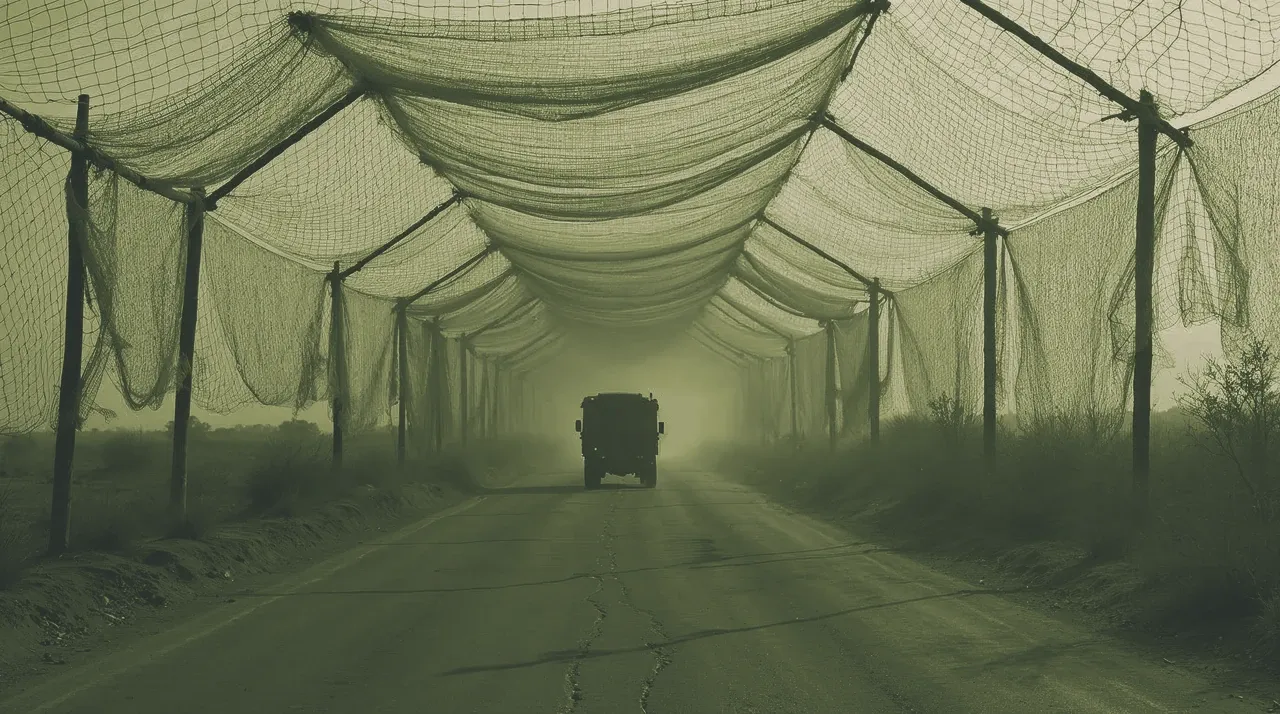
Ukraine says it has strung 822 km of anti-drone netting over frontline roads this year, doubling its pace to keep supply and evacuation traffic alive under the FPV threat.
Ukraine has installed 822 kilometers, about 510 miles, of anti-drone netting over its frontline logistics roads since January, Defense Minister Mykhailo Fedorov said Saturday in a statement Business Insider detailed. The ministry put 211 kilometers of that in May alone.
The structures are mesh tunnels. Ukraine's State Special Transport Service sets wooden or metal frames over the roadway and drapes them with netting that snags a quadcopter's propellers before its fuze can reach the asphalt. Much of the mesh is repurposed farming or fishing net, often donated by Western allies, per Business Insider. The ministry said it had more than doubled its laying rate to 5.2 miles a day this year, up from 2.4 miles a day in 2025.
Russian first-person-view and reconnaissance drones now hunt vehicles 15 to 30 kilometers behind the line, Euromaidan Press reported, citing Fedorov. Kyiv has answered by building permanent protected corridors on its own side of the line, the same outlet wrote, so supply trucks and casualty-evacuation vehicles can use roads that drone operators would otherwise close. "Each protected kilometer means safer logistics, faster supply, casualty evacuation," Fedorov said.
The defense is partial. Repeated strikes punch breaches in the mesh, and Russia now flies thermite drones that burn holes through the nylon, London Business News reported, citing the Kherson regional administration. Crews replace torched sections overnight before the road turns lethal again. Ukraine is aiming for 4,000 kilometers of protection by the end of 2026 on a budget of roughly $37 million, that account said.
The battlefield and the startup story — free in your inbox every week. No paywall.
Subscribe Free →The model is now crossing the border. Zelensky said on June 3 that Ukraine will send anti-drone teams to Romania and the Baltic states, Moldova1 reported, after Russian and rerouted Ukrainian drones repeatedly strayed onto NATO soil. Kyiv has set dates for the deployments and is preparing the experts, he said, the way it earlier sent personnel to Gulf states to help intercept Iranian-made drones.
Frequently Asked Questions
How much anti-drone netting has Ukraine installed in 2026?
Ukraine's defense ministry said it installed 822 kilometers, about 510 miles, of anti-drone protection on frontline roads since January, with 211 kilometers added in May alone, according to Business Insider and Euromaidan Press.
How do the anti-drone road tunnels work?
The State Special Transport Service builds wooden or metal frames over roads and drapes mesh over them, forming tunnels that catch a drone's propellers before its fuze reaches the road surface, Business Insider reported. Much of the mesh is repurposed farming or fishing net.
Why does Ukraine need the netting?
Russian FPV and reconnaissance drones now hunt vehicles 15 to 30 kilometers behind the line, Euromaidan Press reported, citing Defense Minister Mykhailo Fedorov. The nets let supply trucks, casualty-evacuation vehicles, and troop rotations move on roads that would otherwise be lethal.
Do the nets actually stop the drones?
They are a partial defense, not a guarantee. Repeated strikes breach the mesh, and Russia now flies thermite drones to burn holes through the nylon, London Business News reported, citing the Kherson regional administration; crews must replace torched sections overnight.
Is the tactic spreading beyond Ukraine?
President Volodymyr Zelensky said on June 3 that Ukraine will send anti-drone teams to Romania and the Baltic states, Moldova1 reported, after Russian and rerouted Ukrainian drones repeatedly crossed onto NATO territory.
AI-generated summary, reviewed by an editor. More on our AI guidelines.

Marcus Schuler
Marcus Schuler edits BattlePolicy, a daily defense-technology brief connecting the companies and capabilities behind modern war to the contest among Europe, the US, Russia, and China.