Ukraine's drone industry has found its next customer: Asia's fear of China
Ukrainian drone makers are pitching Japan and Taiwan their combat-proven systems, turning four years of war with Russia into an export-and-deterrence play aimed at China.
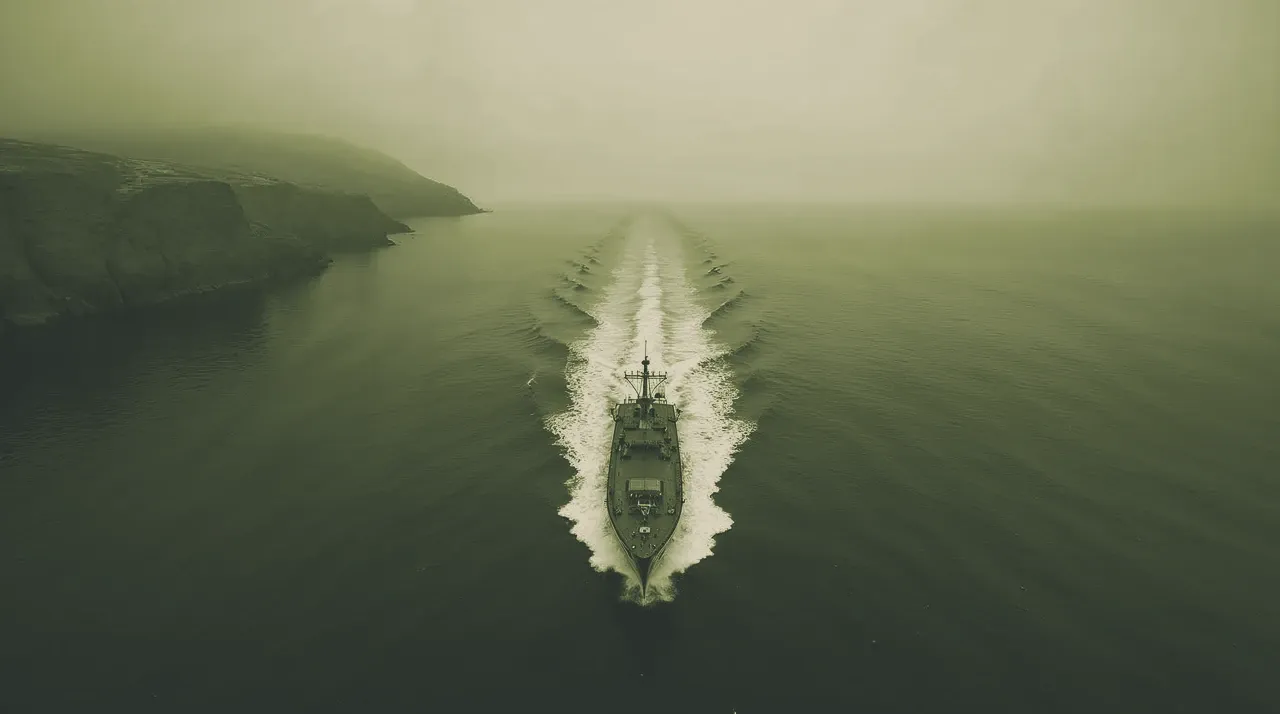
The same firms that turned the Black Sea into a no-go zone for Russia's navy are now selling Tokyo and Taipei a way to deter Beijing. The arms axis that armed Europe's war is reaching toward Asia's.
The CEO of UFORCE, a Ukrainian attack-drone maker, flew to Tokyo in April with a single pitch for Japanese officials and defense contractors: build thousands of our drones to defend yourselves and your allies. Days before that meeting, US troops had used waterborne UFORCE drones to sink a ship during a secretive exercise off Itbayat, a Philippine island 161 kilometers south of Taiwan, Reuters reported. The geography of East Asia is nothing like the Black Sea, where the same company's Magura sea drones have spent years sinking Russian warships. "The impact is extremely similar," UFORCE chief executive Oleg Rogynskyy told the agency.
The Tokyo meeting was not a one-off. Ukrainian drone makers are chasing a military-spending surge across Asia, where US allies want hardware that has already worked in combat and want it before any conflict over Taiwan begins, according to Reuters, which interviewed 20 people including defense contractors and Ukrainian and Japanese officials. Read together, those talks describe a single shift: the supply chain that armed Ukraine against Russia is extending into the Indo-Pacific, and a combat record is the product being sold.
UFORCE in Tokyo, with a record to sell
What Ukraine offers Asia is not a lower price but a combat history. UFORCE's Magura vessels helped turn parts of the Black Sea into water the Russian navy will not enter, and that record is what Japanese buyers say they want. Former defense minister Itsunori Onodera, still an influential lawmaker, told Reuters that Tokyo needs equipment "that is actually demonstrating effective power." The deputy secretary of Ukraine's National Security and Defense Council, Davyd Aloian, put the offer plainly to Business Insider: Kyiv is ready to share "our operation, technologies, and experience, and everything that will be needed in order for our partners to achieve the same level of defense deterrence that we have in Ukraine."
Aloian added a second argument. A drone design that has aged out of Ukraine's own fight, where models go obsolete in weeks, can still beat what a slower-moving ally has on the shelf today. Ukraine ran a version of that during the Iran war, sending roughly 200 military specialists to the Middle East along with anti-drone systems that were used in combat against Iranian Shaheds. Western planners have taken much the same lesson from Ukraine, namely that enough good-enough weapons available now beat a handful of perfect ones that arrive late, and it is that calculation that makes a year-old interceptor design exportable.
Japan's $2 billion, Taiwan's $6.6 billion
The demand is real and it is funded. Japan has allocated nearly $2 billion to drone systems in its 2026 defense budget and plans to raise annual drone output to 80,000 by the end of the decade, up from the roughly 1,000 the country built in 2024. That ramp followed the arrival of Prime Minister Sanae Takaichi, who has warned Tokyo could be dragged into a conflict over Taiwan and pushed domestic firms to make more unmanned systems. Crucially, Japan in 2026 cast off longstanding restrictions on arms exports, which is why Ukrainian firms such as UFORCE, Skyeton and General Cherry see it as a manufacturing base for the entire region. "Japan is the best way to the Asian market," General Cherry co-founder Stanislav Gryshyn told Reuters.
Taiwan's numbers are larger still. Its Executive Yuan on June 18 proposed a special budget worth NT$210 billion, about $6.65 billion, to buy domestically made drones over six years, according to the Taipei Times. The bill would fund 208,200 coastal attack drones, 1,446 coastal reconnaissance drones and 1,320 uncrewed surface vessels between August and the end of 2031, meant to be fired in saturation attacks against an invading force's command nodes and supply lines. Set that against the roughly 5,000 attack drones Taiwan fields today and the scale of the intended buildup is clear. Taiwan's drone exports already hit $115 million in the first quarter of 2026, more than the $93 million it shipped in all of 2025.
Those targets still sit far below Ukraine's. Japan's 80,000-by-2030 ambition is a fraction of the roughly seven million drones Kyiv aims to build this year. The gap is the opportunity: Asia has money and demand but not yet the output, and Ukrainian firms are selling the know-how to close it.
The Chinese parts inside an anti-China drone
The pitch contains a contradiction. The drones Ukraine wants to sell as a hedge against China still run heavily on Chinese parts. Nearly 89 percent of Ukrainian drone producers depend on Chinese components, Just Security reported, and Ukrainian customs data showed close to 89 percent of drone-related imports by value still came from China in the first half of 2024, down from 97 percent earlier in the war. Beijing has been tightening exports of those parts since 2023. Selling China-deterrence hardware that is itself built on a Chinese supply chain is not a durable position, and both sides of this new partnership know it.
The dependency is already reshaping the deals. The Ukrainian drone association IRON brought about a dozen members to the Taiwanese industrial hub of Taichung in May, not to sell but to find suppliers for the cameras and microelectronics that Japan and Taiwan also produce. One Taiwanese firm, Jiin Ming Industry, told Reuters it is working with a Ukrainian partner on a drone that may eventually be sold back to Taiwan. The arrangement runs both ways: Ukraine supplies combat-tested designs, and Japanese and Taiwanese suppliers offer the non-Chinese components that make those designs sellable as a counter to China in the first place. Taiwan is chasing the same independence, having reached what its officials call a milestone in building drones with as few Chinese parts as possible, though mass production at that standard remains years off.
DJI, deadlocks, and the obsolescence trap
These deals trace a new arms-transfer route that links Europe's war to Asia's preparations for one. US Pacific Command has met Ukrainian drone makers to discuss how Black Sea operations might apply to the Indo-Pacific, and the unmanned systems at the center of the talks are the kind Admiral Samuel Paparo described in 2024 as an "unmanned hellscape" that could buy time against a Chinese assault. Swarmer, a US-listed Ukrainian software firm, has already run an AI swarm demonstration for a Japanese military unit, arranged by the e-commerce group Rakuten.
The obstacles are substantial. China's DJI holds 70 to 80 percent of the global commercial drone market and undercuts everyone on price, so a Taiwanese or Japanese-built drone has to justify costing two or three times as much. Scale is the other gap. Taiwan now turns out about 15,000 drones a month and wants to pass 100,000 by 2030, its economic affairs ministry says, while Japan built roughly 1,000 in 2024. Taiwan's own program is also caught in politics, because the opposition-controlled legislature stripped domestic drone funding from an earlier defense bill, which is why the Executive Yuan had to route this $6.6 billion around the normal budget process. The product decays, too. Ukrainian officials warn that a drone's edge can disappear within months, so an export deal sells a moving target rather than a finished weapon. For Asian buyers, that is an argument for buying the manufacturing partnership rather than the airframe, which is what Ukrainian firms are offering.
What to watch
The next signals are concrete. IRON's chief executive, Volodymyr Cherniuk, plans to bring members to Tokyo later this year to find Japanese manufacturing partners, and several Ukrainian firms are still circling Taiwan despite the absence of formal diplomatic ties between Kyiv and Taipei. The $14 billion US arms package for Taiwan remains unsigned after President Donald Trump's meeting with Xi Jinping in Beijing, and its fate will show how far Washington will let allies rearm. The harder question is whether Ukraine can supply anyone else at all while building seven million drones for its own front this year. "We would be happy for our drones to protect any country from invasion," Cherniuk told Reuters. "We know the best how it feels."
Which Ukrainian drone makers are pitching Asia?
UFORCE, whose Magura sea drones operate in the Black Sea, led the most detailed outreach, with its CEO meeting Japanese officials in Tokyo in April, Reuters reported. Surveillance-drone firm Skyeton, kamikaze-drone maker General Cherry, and the US-listed software company Swarmer have also held meetings or demonstrations in Japan, alongside the drone association IRON.
How much are Japan and Taiwan spending on drones?
Japan allocated nearly $2 billion to drone systems in its 2026 defense budget and aims to build 80,000 drones a year by the end of the decade, up from about 1,000 in 2024. Taiwan's Executive Yuan proposed a separate $6.65 billion special budget on June 18 to buy 208,200 coastal attack drones and other systems through 2031, per the Taipei Times.
Why does Ukraine's reliance on Chinese parts matter here?
Nearly 89 percent of Ukrainian drone producers depend on Chinese components, Just Security reported, which complicates selling those same drones as a hedge against China. It is pushing Ukrainian firms to source cameras and microelectronics from Japan and Taiwan instead, turning the export pitch into a two-way supply partnership.
What does Ukraine get out of selling older drone designs?
Revenue, partnerships, and supply-chain diversification. Ukrainian officials note designs that have aged out of their own fast-moving fight can still outperform what slower-moving allies have available now, as happened with anti-drone systems Ukraine sent to the Middle East during the Iran war.
Can Taiwanese and Ukrainian drones compete with China's?
On price, not easily. China's DJI holds 70 to 80 percent of the global commercial drone market and sells at prices Taiwanese or Japanese-built drones struggle to match. The pitch rests instead on combat-proven performance and a supply chain free of Chinese parts, which mass production has not yet fully achieved.

Marcus Schuler
Marcus Schuler edits BattlePolicy, a daily defense-technology brief connecting the companies and capabilities behind modern war to the contest among Europe, the US, Russia, and China.