Ukraine's drone war stopped being about cheap. It became about how many.
Russia says it stopped 660 Ukrainian drones in one night. The number, not the price tag, is the new weapon, and the damage has now crossed into Kazakhstan.
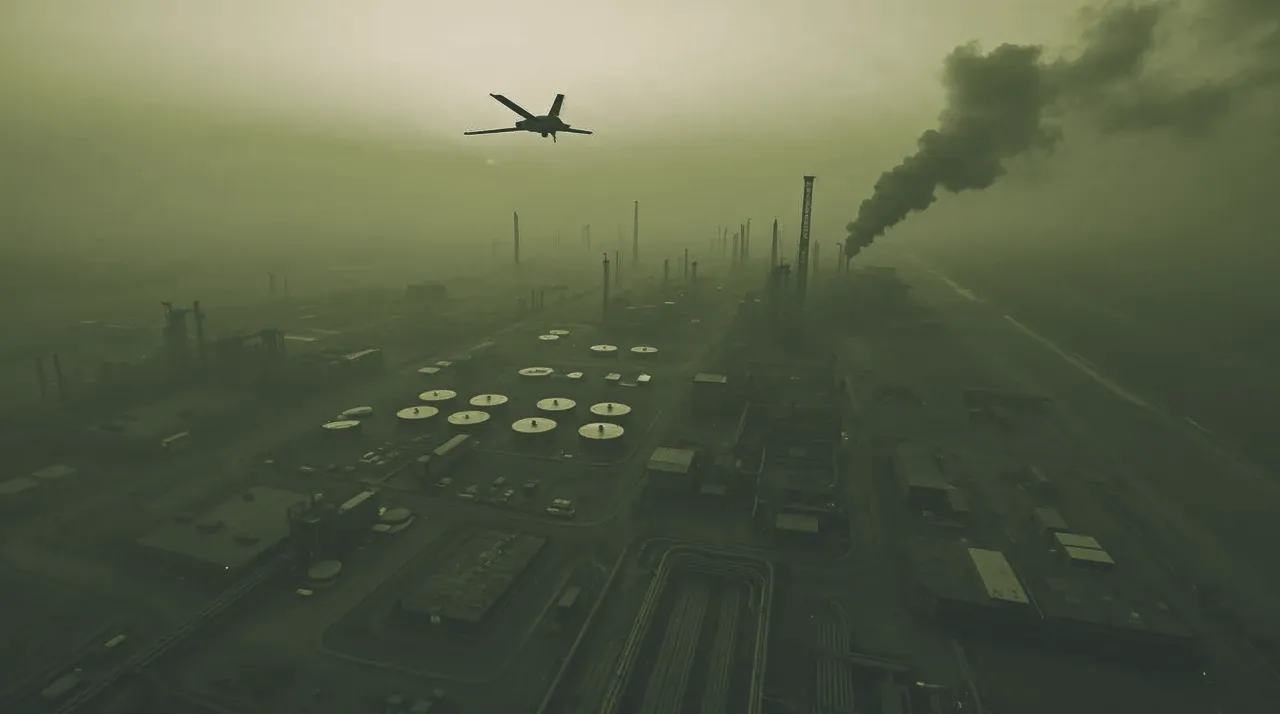
A 660-drone night, a refinery offline until 2027, and a production cut inside Kazakhstan show the campaign has shifted from isolating Crimea to bleeding Russia's energy economy at depth.
What happened
Russia's Defense Ministry said it intercepted 660 Ukrainian drones overnight into Friday, one of the heaviest single-night barrages of the war according to the Associated Press, with state agency TASS saying Kyiv fired more drones than in any attack over the past year. The drones crossed 12 Russian regions, occupied Crimea, and the Azov and Black seas.
Two days ago, the read here was that Ukraine's cheap drones were isolating Crimea and forcing Russia to ration scarce air-defense missiles. The past 48 hours push that argument further. What is doing the damage now is less the price of each drone than the number Ukraine can put up on a single night, and what that volume reaches once it clears the interceptors.
Inside the barrage, Ukraine's Security Service said its drones struck two Russian naval support ships and air-defense systems at Kerch, the Project 15310 cable-layers Volga and Vyatka, both built for the Russian navy, plus the 96-percent-complete ferry Petropavlovsk at the Zaliv shipyard. The same operation hit the radar and launchers of an S-400 battery covering the Kerch Strait, per Militarnyi and Defence-UA. The SBU said the work was the opening of a 40-day campaign that President Volodymyr Zelensky approved the previous day to degrade Russia's hold on Crimea. Russian-installed authorities on the peninsula declared a state of emergency Friday after halting fuel sales to civilians, and a chemical plant in Tula was reportedly hit, a claim CBS News said it could not confirm.
Then the campaign did something new: it cut production in a third country. Kazakhstan slashed output at its Karachaganak oil and gas field by a quarter, Energy Minister Yerlan Akkenzhenov said Friday, after a Ukrainian drone strike earlier in the week shut down the Russian Orenburg plant that processes its gas. "Naturally, we have reduced the gas intake," he told Reuters. A Ukrainian drone launched at a Russian refinery had just dented an OPEC+ member's energy output.

Marcus Schuler
Marcus Schuler edits BattlePolicy, a daily defense-technology brief connecting the companies and capabilities behind modern war to the contest among Europe, the US, Russia, and China.