Lyut
Ukraine's "Fury" — a cheap combat ground robot that turns a remote-controlled machine gun into a mobile turret, built from commercial-drone parts and fielded by special forces. One has led an assault through a minefield; it is the emblem of Ukraine's armed-UGV surge.
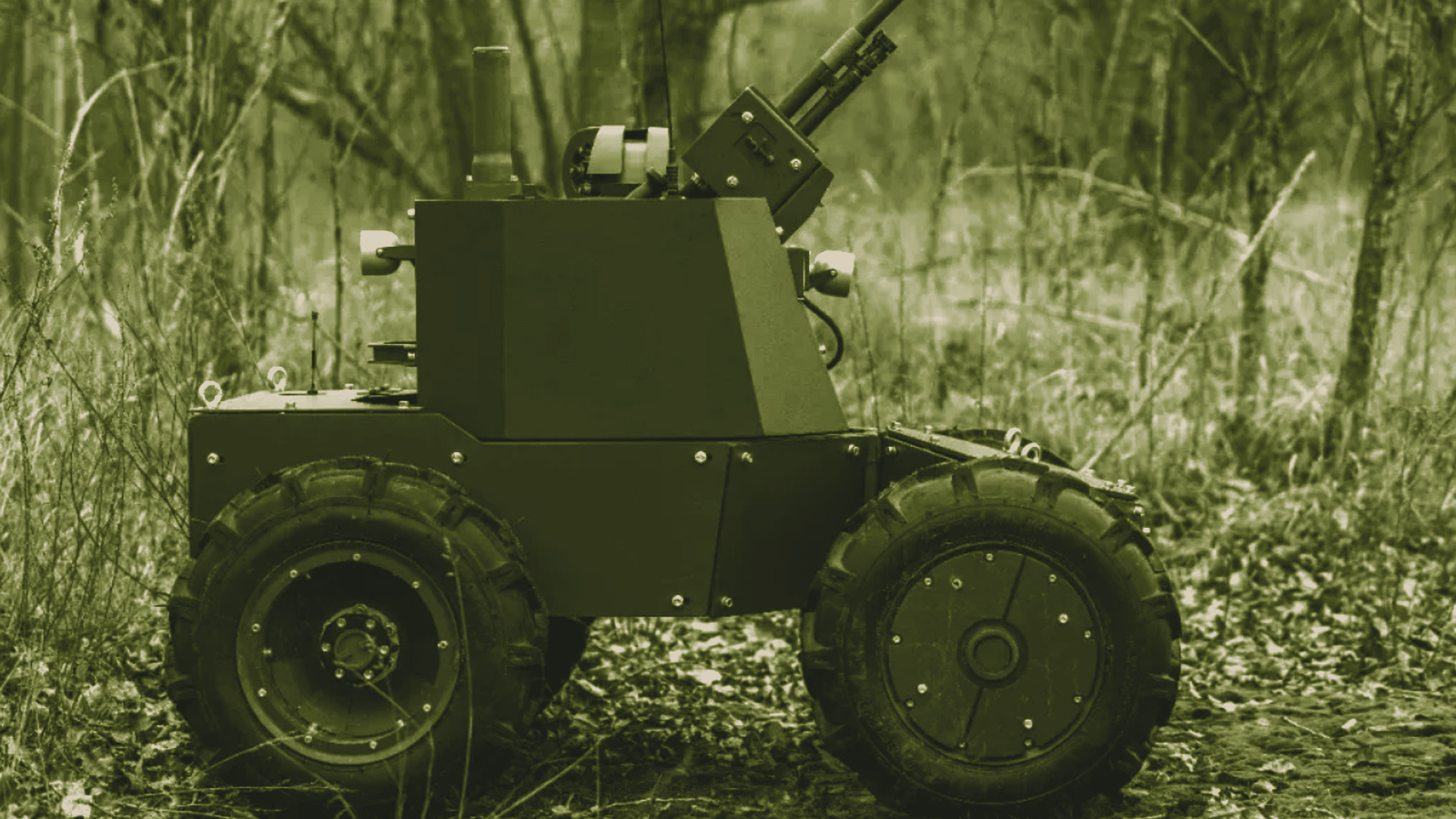
Ukraine's "Fury" — a cheap, tracked combat ground robot that mounts a machine gun as a remote-controlled mobile turret, built largely from commercial-drone components and fielded by front-line and special-forces units. One Lyut led an assault down a road through a minefield and rocket fire; another archetype of Ukraine's armed-UGV surge, it is the combat counterpart to logistics robots like TerMIT — and a window into the country's chaotic, prolific ground-robot industry.
Overview
The Lyut (Ukrainian: Лють, "Fury") is an armed unmanned ground vehicle (UGV) designed to put a remote-controlled machine gun on the battlefield without a human behind it — a small "robotic mini-tank" carrying a 7.62 mm PKT machine gun that functions as a mobile, tele-operated turret, per The Defense Post. It can suppress and engage enemy positions, run diversionary maneuvers and mark targets, all while its operator stays in cover. Crafted as an experimental platform in 2022 and refined through front-line feedback, the Lyut is built deliberately cheap, using the kind of communication components found in commercial drones to keep cost down. It is one of the most recognizable systems in Ukraine's fast-growing fleet of combat ground robots, selected for procurement through the Brave1 defense-tech cluster.
🔒 The full Lyut file is for BattlePolicy Pro members. Below the line: development history, design and capabilities, variants, the combat record, advantages and limitations, comparable systems, outlook, the full specifications table, our sourcing, and the analyst assessment — procurement, suppliers and the BattlePolicy verdict. Unlock the full file with BattlePolicy Pro →
Below this point
- Development
- Design & capabilities
- Variants
- Combat record / operational use
- Advantages
- Drawbacks / limitations
- Counterparts
- Outlook
- Key specifications
- Sources
- Analyst Section
- Procurement & contracts
- Suppliers & related companies
- Comparable systems — analyst view
- Analyst note