A-29 Super Tucano
The Embraer A-29 Super Tucano is the world's default light-attack aircraft — a $1,000-per-hour turboprop with 60,000 combat hours from Colombia's FARC strikes to Afghanistan and Nigeria, 290+ ordered by 20+ air forces, and a counter-drone role added in 2025.
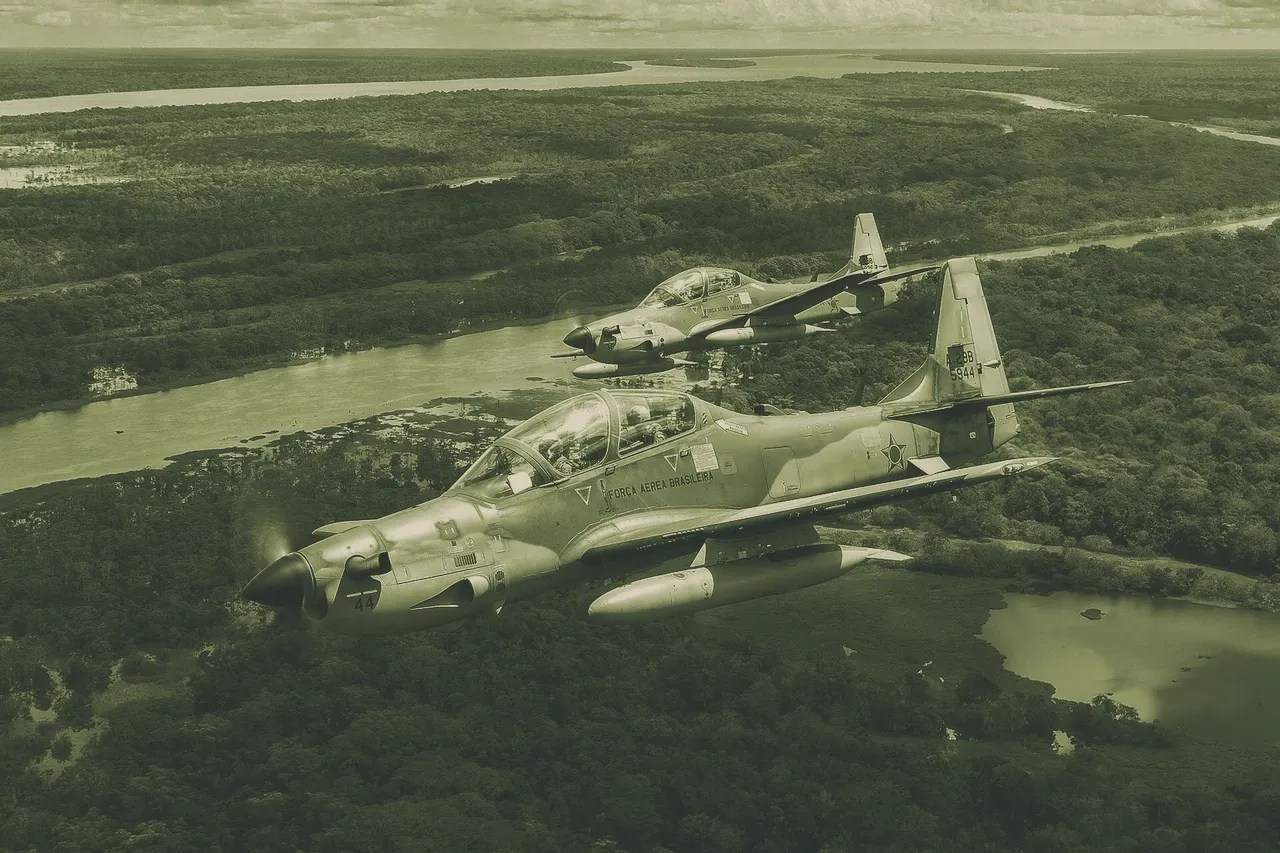

The thousand-dollar-an-hour air force — the Embraer A-29 Super Tucano is a turboprop that drops guided bombs for roughly the cost of running a business jet, and it has quietly become the most consequential combat aircraft of the counterinsurgency era: decisive against the FARC (including the 2008 strike that killed the group's number two), the backbone of Afghanistan's air arm until the collapse, Boko Haram's hunter in Nigeria — over 290 ordered by more than 20 air forces, with a fresh order wave running from Paraguay to NATO-standard Portugal and, since 2025, a new job: killing drones.
Overview
The A-29 Super Tucano (Embraer EMB 314) is what airpower looks like when the requirement is honest: a single PT6A turboprop (~1,600 shp) carrying machine guns, rocket pods and precision-guided bombs at up to 320 knots, flown off austere strips, with modern computerized weapons employment, secure communications and night-vision compatibility — at a reported $1,000–1,500 per flight hour against $30,000-plus for fast jets, and $10–20 million per airframe. Developed from the Tucano trainer and in Brazilian service since 2003, it has flown more than 600,000 hours, 60,000 of them in combat, across three production lines (Brazil, the SNC line in Jacksonville, Florida, and now OGMA in Portugal). Its combat ledger is the genre's reference: Colombia's air campaign that broke the FARC's leadership, the Afghan Air Force's strike arm from 2016 to the 2021 collapse, Nigeria's war on Boko Haram and ISWAP, Philippine counterinsurgency, and border policing across Latin America and Africa. The 2024–26 order wave — Paraguay, Uruguay, Panama (its first combat aircraft), a second Philippine batch, an undisclosed US FMS customer, and Portugal's twelve NATO-configured A-29Ns — confirms the market verdict, while Embraer's 2025–26 counter-UAS expansion (with AI specialist Valkyrie Aero) points the type at the drone-saturated wars this lexicon documents: the cheapest crewed answer yet proposed to the cheap-mass threat.
🔒 The full A-29 Super Tucano file is for BattlePolicy Pro members. Below the line: development history, design and capabilities, variants, the combat record, advantages and limitations, comparable systems, outlook, the full specifications table, our sourcing, and the analyst assessment — procurement, suppliers and the BattlePolicy verdict. Unlock the full file with BattlePolicy Pro →
Below this point
- Development
- Design & capabilities
- Variants
- Combat record / operational use
- Advantages
- Drawbacks / limitations
- Counterparts
- Outlook
- Key specifications
- Sources
- Analyst Section
- Procurement & contracts
- Suppliers & related companies
- Comparable systems — analyst view
- Analyst note