Airbus Tiger
Europe’s multinational attack helicopter — the Airbus Tiger is a twin-engine, tandem-seat platform that combines a chin-mounted cannon, anti-tank missiles, and a mast-mounted sight to give France, Germany, and Spain an anti-armour, fire-support and reconnaissance capability.
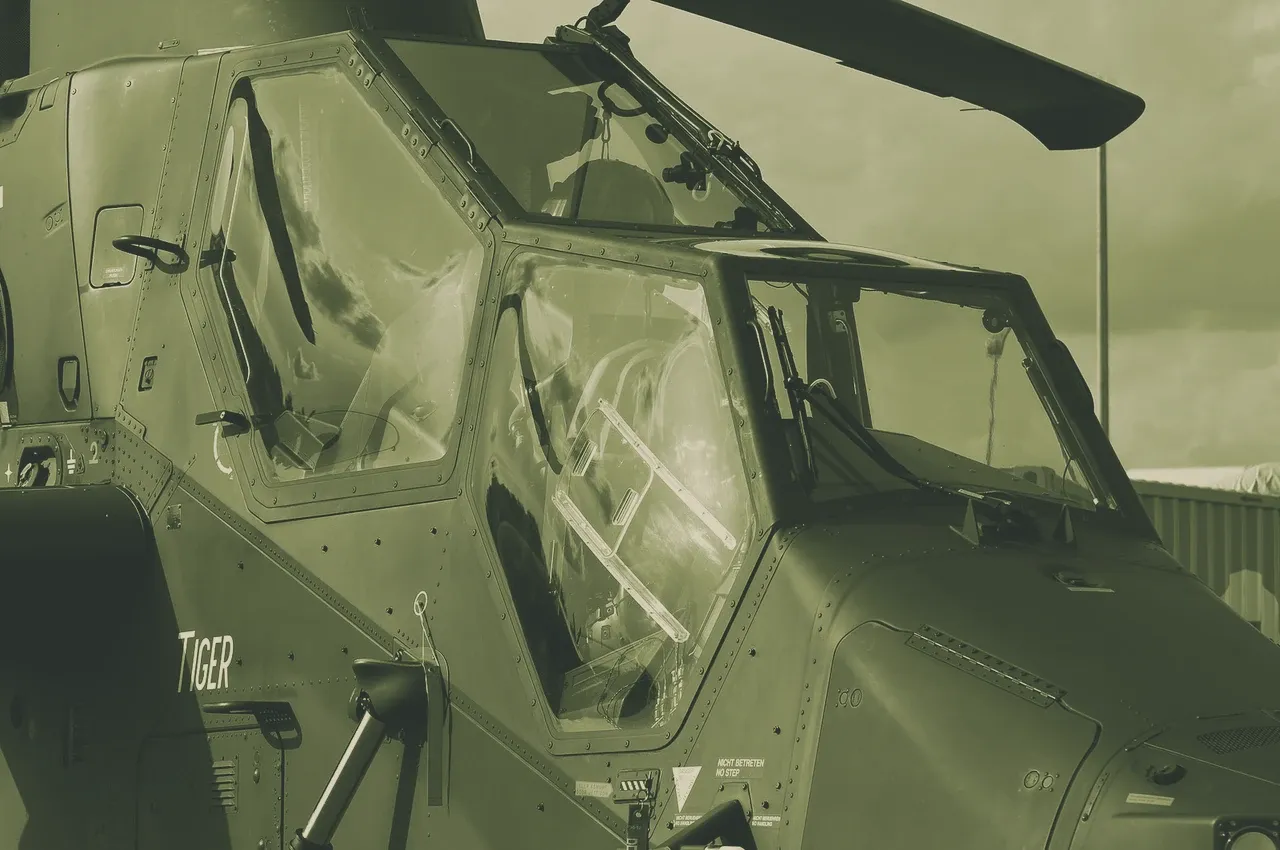
Europe’s flagship attack helicopter — a twin-engine, tandem-seat rotorcraft that arms France, Germany and Spain with a 30 mm cannon, anti-tank missiles and mast-mounted sensors for anti-armour, close fire support and armed reconnaissance.
Overview
The Airbus Tiger (formerly the Eurocopter EC665) is a dedicated attack helicopter operated by France, Germany and Spain. It fills the same anti-armour and escort role as the American AH-64 Apache but on a lighter airframe optimized for the European theatre. Three main domestic variants were built — the HAP (escort/fire support) and HAD (multi-role/anti-tank) for France and Spain, and the UHT (anti-tank) for Germany — and the type has since been upgraded to the HAD-F standard in French service. Australia, the sole export customer, retired its Tigers early and replaced them with AH-64E Apaches.
Development
Work on a Franco-German attack helicopter began in the mid-1980s under the name “PAH-2,” with the first EC665 prototype flying in 1991. Army Recognition notes that series production was approved in 1999, and the initial HAP variant entered French service in 2005, followed by the German UHT in 2008 and the multi-role HAD around 2011. Spain joined the programme later, ordering the HAD for its Army Airmobile Forces. France completed the upgrade of 30 airframes to the modernised HAD-F standard in January 2026, a milestone covered by Zona Militar. Australia’s 22 locally designated ARH Tigers, delivered from 2004, were withdrawn in 2024 after a troubled service life and replaced by AH-64Es; the story is outlined by the Royal Aeronautical Society.
Design & capabilities
The Tiger is a classic tandem-seat, twin-engine attack platform with a four-blade main rotor and a high-set tail rotor. It carries a chin-mounted 30 mm GIAT 30 cannon on the HAP and HAD variants, while the German UHT omits the gun and relies on missiles and rockets. Army Recognition details the four underwing hardpoints that accommodate a mix of ATGMs, 68 mm rocket pods, and air-to-air missiles. The sensor suite is built around a mast-mounted sight — the Strix roof sight on the HAP, replaced by the Osiris mast sight on the HAD and UHT — which provides FLIR, TV and laser designator channels for all-weather targeting. A helmet-mounted display, RWR/laser warning receivers and chaff/flare dispensers complete the survivability package. Power comes from two MTR390 turboshafts (MTR390-2C in the HAP, uprated MTR390-E in the HAD/UHT), giving a maximum speed of about 315 km/h and a ferry range of roughly 800 km.
Variants
- EC665 HAP (appui-protection): French fire-support/escort variant; 30 mm chin cannon, 68 mm rockets, Mistral AAM, mast-mounted sight. No anti-tank missile.
- EC665 UHT (Unterstützungshubschrauber Tiger): German anti-tank variant; PARS 3 LR and HOT 3 ATGMs, Stinger AAM, mast-mounted sight; no chin gun.
- EC665 HAD (hélicoptère d’appui-destruction): Multi-role upgrade for France and Spain; uprated MTR390-E engines, Hellfire II (France) or Spike-ER (Spain) ATGMs, plus the 30 mm cannon and Mistral/Stinger AAM.
- HAD-F: French mid-life upgrade delivering 30 airframes with modernised avionics, a new tactical data-link and improved self-protection; completed in January 2026.
- ARH (Armed Reconnaissance Helicopter): Australian variant based on the HAP, later upgraded with Hellfire II capability; retired 2024.
Combat record / operational use
France first deployed the Tiger in Afghanistan in 2009, then used it extensively over Libya (2011), Mali (Operation Serval, 2013) and the Central African Republic (Operation Sangaris), where it conducted fire-support, convoy-escort and armed-reconnaissance missions. Germany and Spain have operated the type on deployments but without the sustained combat exposure of the French fleet. The Australian experience was less positive: high ownership costs, poor availability rates and the complexity of maintaining a small fleet led Canberra to retire all 22 Tigers in 2024 and acquire AH-64E Apaches, as reported by the Royal Aeronautical Society.
Advantages
- Mast-mounted sight allows the helicopter to scan and engage from behind cover, reducing exposure.
- Common 30 mm cannon on French and Spanish variants provides powerful close-in fire.
- Multi-national programme amortises development across three core operators.
- Lightweight airframe (~6–6.6 t MTOW) offers good power-to-weight and agility.
- Flexible armament: Hellfire II, PARS 3 LR, Spike-ER, rockets, AAM.
Drawbacks / limitations
- High through-life costs and low availability have dogged the programme, epitomised by Australia’s early withdrawal.
- The German UHT lacks a cannon, limiting its close-fire flexibility.
- The Tiger carries fewer ATGMs and less armour than the heavier AH-64E or Ka-52.
- Small operator base limits export economies of scale; no foreign sales beyond Australia materialised.
- The MTR390 engine family, though reliable, does not share commonality with the T700/CT7 families used on many NATO helicopters.
Counterparts
- Ka-52 Alligator (Russia)
- Z-10 (China)
Outlook
With 30 upgraded HAD-Fs delivered, France is likely to keep the Tiger as its primary attack helicopter into the 2040s. Spain continues to operate its HAD fleet, while Germany has indicated it will replace its Tigers with the lighter H145M armed scout — a decision that would leave only two European operators of the platform. Combat experience in the Sahel validated the Tiger’s utility, but the programme’s long-term future hinges on whether France and Spain can sustain affordable fleet-wide availability.
Key specifications
| Spec | Value |
|---|---|
| Crew | 2 |
| Length / wingspan | 14.08 m (fuselage) / main rotor 13.0 m |
| Max speed | ~315 km/h |
| Service ceiling | ~4,000 m |
| Combat radius / range | range ~800 km (combat radius not publicly established) |
| Payload | no troop capacity; 4 underwing stations for weapons |
| Hardpoints | 4 |
| Radar / sensors | Strix roof sight (HAP) / Osiris mast sight (HAD/UHT) with FLIR, TV, laser designator; helmet-mounted display; RWR/laser warning |
| Powerplant | 2 × MTR390 turboshaft (MTR390-2C HAP; MTR390-E HAD/UHT) |
| Armament | 30 mm GIAT 30 cannon (HAP/HAD); ATGM: Hellfire II (FR/ES), PARS 3 LR + HOT 3 (DE), Spike-ER (ES); 68 mm rockets; AAM: Mistral (FR/ES) or Stinger (DE) |
Sources
- Army Recognition — Tigre EC665 Eurocopter. https://www.armyrecognition.com/military-products/air/helicopters/attack-helicopters/tigre-ec665-eurocopter
- Zona Militar — “Airbus completed the delivery of 30 modernized Tiger HAD-F attack helicopters to the French Army.” https://www.zona-militar.com/en/2026/01/12/airbus-completed-the-delivery-of-30-modernized-tiger-had-f-attack-helicopters-to-the-french-army/
- Royal Aeronautical Society — “The Apache’s enduring reign.” https://www.aerosociety.com/news/the-apache-s-enduring-reign/
- Wikipédia — Eurocopter EC665 Tigre. https://fr.wikipedia.org/wiki/Eurocopter_EC665_Tigre